Best mirrorless camera: top compact system cameras reviewed
Looking for a lens-swapper? Look no further than our guide to the best mirrorless camera


Despite having only been “a thing” for a little over ten years, the best mirrorless camera is a thing of wonder; mirrorless has roundly ousted DSLRs as the enthusiast’s picture-taker and video-capturer of choice.
Key to their appeal is that they offer the flexibility and performance of a DSLR in a (generally speaking) more compact package. That’s because, while mirrorless cameras have large sensors and interchangeable lenses just like a DSLR, they don’t need to accommodate the bulky mirror and pentaprism you’d find in a DSLR’s optical viewfinder setup. It’s for this reason that mirrorless cameras are also known as compact system cameras or CSCs.
While they all have that one thing in common, there are big differences in price, specification, features and performance. This guide features our favourite models across the entire category: entry-level, premium, video-centric, stills-centric and all-rounder. If you’re shopping for a mirrorless camera and feeling a little overwhelmed by the breadth of choice, start here.
Buying tips
Video, photos – or both?
Some cameras here excel at video, others are masterful with still photos, and one or two are flexible all-rounders. Consider your requirements carefully before buying.
Select your sensor
From Medium Format to Micro Four Thirds, mirrorless camera sensors vary wildly in size. A bigger sensor usually means a larger, heavier camera (and often a higher asking price) but can also give you more detail, improved low-light performance and the ability to shoot with a shallower depth of field.
Lens is more
Mirrorless cameras support interchangeable lenses, but manufacturers tend to use their own systems. Before you pick a camera, consider the range of lenses on offer and how they might suit (or not suit) your needs.
Diminishing returns
Mirrorless cameras start out quite affordable but prices rocket up exponentially for premium and even mid-range models. So do consider if a slight bump in shooting speed or the ability to record 8K rather than 4K video is truly vital before shelling out big bucks.
Our pick of the best mirrorless cameras to buy today
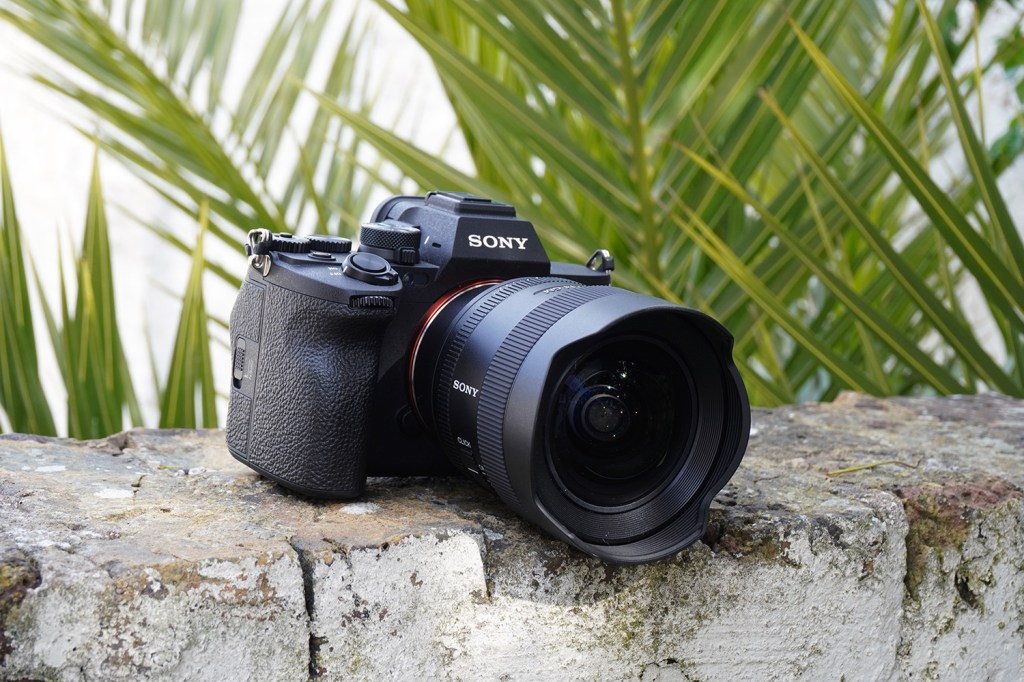
Sony A7 IV
Pitched as Sony’s ‘standard’ mirrorless camera, the fourth addition to the A7 line is an all-rounder with premium performance. As good for stills as it is for video, the A7 IV benefits from a 33MP full-frame sensor. Paired with the same Bionz chip found in the flagship A1, it hits an ideal sweet spot between detail and low-light performance. Recording skills are similarly strong: footage is sharp and clean out of the camera, while a range of tools and profiles give filmmakers plenty to play with. A fully articulating touchscreen also makes it easier to frame yourself. It’s fairly pricey compared to some APS-C and Micro Four Thirds alternatives and suffers from cropped footage in certain circumstances, but the A7 IV is still the most compelling mirrorless hybrid for most people right now.
Stuff Says…
Pricey compared to some, Sony’s mirrorless all-rounder has the prowess and the performance to deliver premium stills and video

Fujifilm X-H2S
New hero of Fuji’s X-Series, the X-H2S is a true speed demon. While its fifth-gen X-Trans CMOS sensor isn’t a seminal upgrade, it does deliver continuous shooting rates to rival pricier systems: up to 40fps with the electronic shutter. Tracking autofocus is both rapid and reliable, with up to seven stops of in-body image stabilisation making a big difference when shooting handheld. That 26.1MP sensor also captures wonderfully detailed, dynamic yet true-to-life stills, even at higher ISOs. Rolling shutter improvements are also noticeable when recording 6.2K footage at 30fps, with the X-H2S’s video skills representing a real step up. A pared-back control layout won’t please Fuji die-hards, but the X-H2S is ergonomic in the hand – and brilliantly compact without the optional battery grip. The only major drawback? It costs as much as some full-frame cameras.
Stuff Says…
Class-leading speed, exceptional autofocus and wonderful stills quality make the X-H2S the best APS-C camera in Fuji’s range
Tech spec:
Sensor: 26.1MP CMOS • Lens: Fuji X mount • Screen: 3in, 1.62m-dot vari-angle touchscreen • Viewfinder: 0.5in, 5.76m-dot OLED EVF • Continuous shooting: 15fps • Video recording: 6.2K at 30fps • Dimensions: 136x93x85mm • Weight: 660g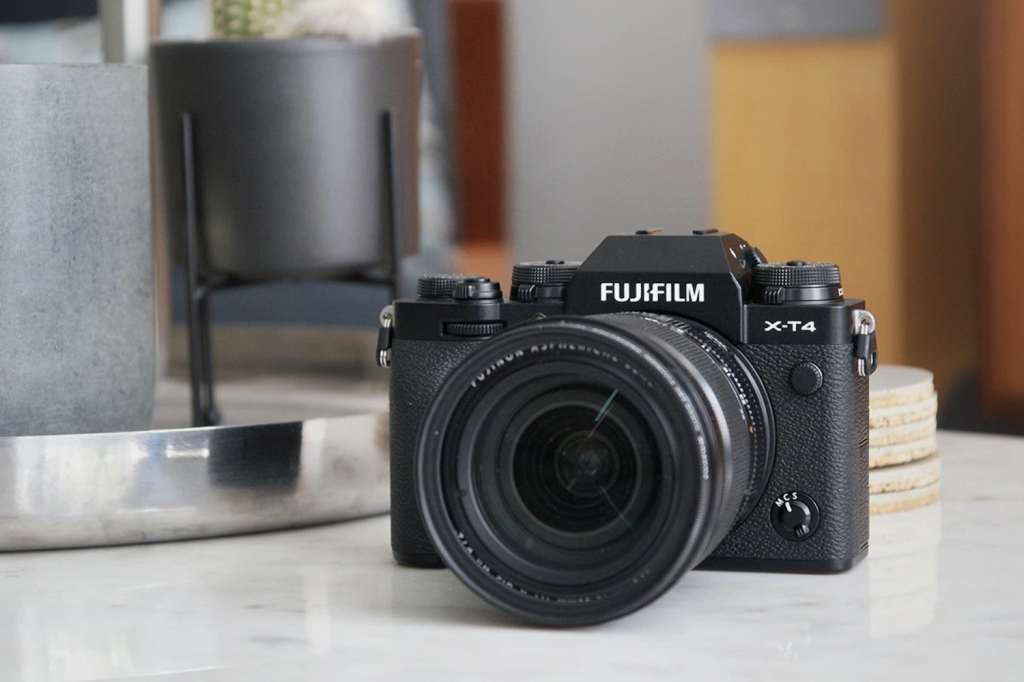
Fujifilm X-T4
The former flagship of Fujifilm’s retro-inspired X Series range, the X-T4 remains a true all-rounder in the mould of Ian Botham (and thankfully lacking in Beefy’s iffy politics and dress sense). Capable of rattling off richly coloured and pin-sharp stills at a brisk 15fps (30fps with a crop), it’ll also capture beautiful 4K video at up to 60fps. It’s built like a tank too, which makes it a touch on the heavy side for vlogging and such – but with its stonking battery life and a reasonable price tag, we’re happy to endure a bit of arm-ache.
Stuff Says…
Reliable, capable and relatively compact, Fuji’s former mirrorless flagship is built like a tank and performs like a rocket
Tech spec:
Sensor: 26.1MP CMOS • Lens: Fuji X mount • Screen: 3in, 1.62m-dot vari-angle touchscreen • Viewfinder: 0.5in, 3.69m-dot OLED EVF • Continuous shooting: 15fps • Video recording: 4K at 60fps • Dimensions: 135x94x64mm • Weight: 607g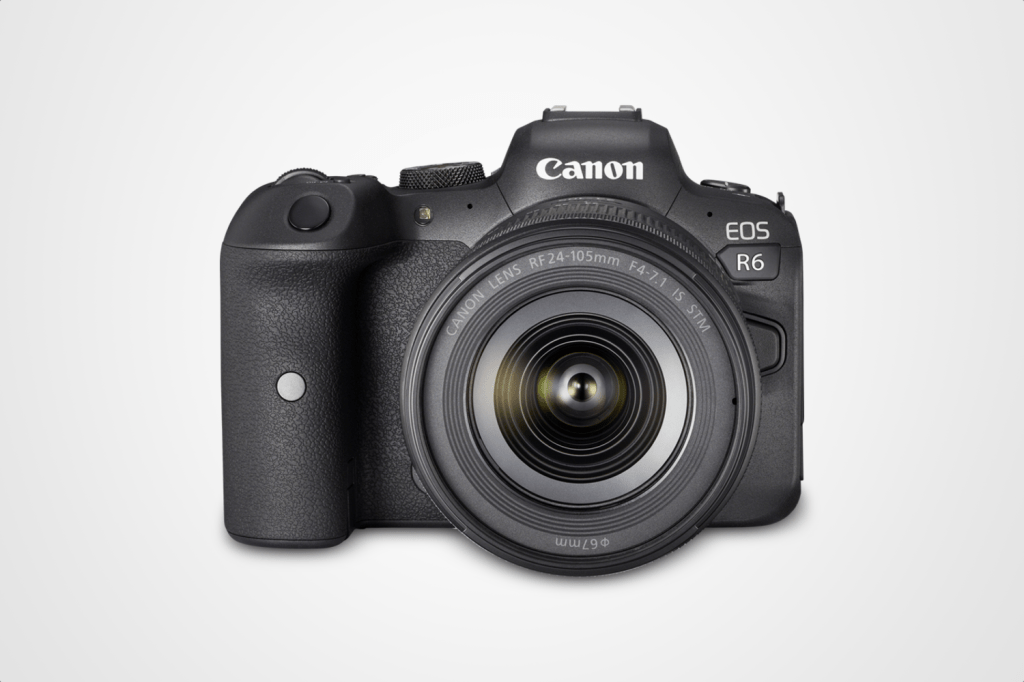
Canon EOS R6
Arguably the number one DSLR maker in the world, Canon has been slow to get its mirrorless act together, but now the company has caught up with upstart rivals like Sony, Panasonic and Fujifilm thanks to stellar models like the EOS R6. Toting a 20.1MP full-frame sensor and a quasi-DSLR design (albeit smaller and lighter), it’s a fast and well-equipped all-rounder that’s as comfy snaffling up 4K footage as it is snapping crisp low-light stills. It’s a little pricier than its closest rivals, and long video shooting sessions can cause overheating, but we love its nimble autofocus and in-body stabilisation.
Stuff Says…
A full-frame all-rounder that shoots sharp, focuses fast and excels in low lighting, the R6 is a superb Canon camera – albeit an expensive one
Tech spec:
Sensor: 20.1MP CMOS • Lens: Canon RF mount • Screen: 3in, 1.62m-dot articulating touchscreen • Viewfinder: 0.5in, 3.69m-dot OLED EVF • Continuous shooting: 12fps • Video recording: 4K at 60fps • Dimensions: 138x98x88mm • Weight: 598g
Panasonic Lumix GH6
Micro Four Thirds might seem insufficient for a modern mirrorless camera, but Panasonic’s latest model is its best yet for video. The smaller sensor delivers some of the best image stabilisation around (up to 7.5 stops), while the relatively lightweight body benefits from excellent handling. Thanks to forced-fan cooling, the GH6 can record at any resolution and frame rate for as long as the memory card allows. Star of the show is 5.7K Apple ProRes, but all of the 10-bit 4K video modes look fantastic out of the camera. Depth By Defocus isn’t as fast or accurate as hybrid autofocus systems, but it’s still more effective than the GH5 Mark II.
Stuff Says…
Brimming with creative potential, this is the best video camera Panasonic makes right now
Tech spec:
Sensor: 25.2MP Live MOS • Lens: Micro Four Thirds • Screen: 3in, 1.84m-dot articulating touchscreen • Viewfinder: 3.69m-dot OLED EVF • Continuous shooting: 14fps • Video recording: 5.7K at 60fps • Dimensions: 138x100x100mm • Weight: 823g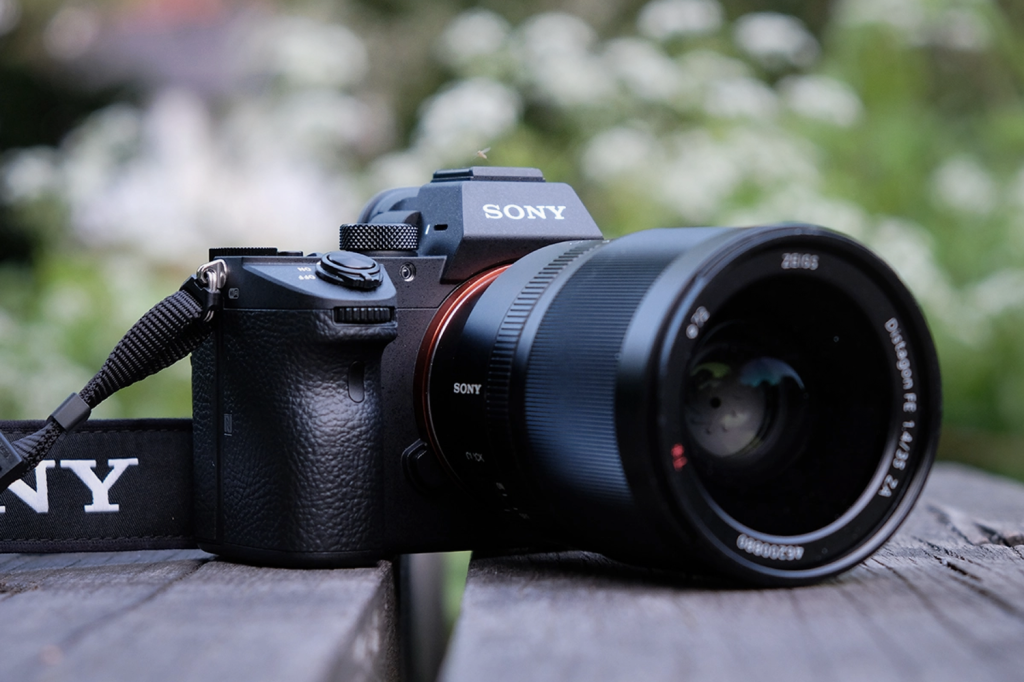
Sony A7S III
Don’t let its “low” 12.1MP resolution fool you: the Sony A7S III is arguably the best mirrorless choice for filmmakers on the market. Able to capture 4K footage at up to 120fps, output pristine 16-bit RAW footage to an external recorder via HDMI and record in a dizzying variety of profiles, speeds and resolutions, it delivers video with glorious dynamic range and detail. Class-leading real-time AF and in-body stabilisation add yet more weight to its video credentials, and the full-frame sensor’s excellent sensitivity makes it a dazzling low-light performer for both stills and video.
Stuff Says…
Big pixels, superb autofocus and a menagerie of modes make Sony’s third-gen A7S a 4K recording tool fit for all conditions
Tech spec:
Sensor: 12.1MP CMOS • Lens: Sony E-mount • Screen: 3in, 1.44m-dot vari-angle touchscreen • Viewfinder: 0.64in, 9.44m-dot OLED EVF • Continuous shooting: 10fps • Video recording: 4K at 120fps • Dimensions: 129x97x81mm • Weight: 699g
Fujifilm GFX100S
Fujifilm has achieved something special by fitting a huge 102MP medium-format sensor in such a compact camera. With brisk AF and in-body stabilisation, the GFX100S is as close to a point-and-shoot medium-format camera as the world has ever seen, although it’s still chunky by mirrorless standards – not to mention frighteningly expensive. And yet, when you see the beautiful bokeh, wide dynamic range and razor-sharp detail its huge images deliver, you might be straight on the phone on the bank manager. A stunning pro-quality camera that’s surprisingly easy to live with.
Stuff Says…
Inescapably expensive, the GFX100S squeezes all the benefits of a medium format sensor into a package that’s remarkably compact and accessible
Tech spec:
Sensor: 102MP medium format • Lens: Fuji G mount • Screen: 3.2in, 2.36m-dot touchscreen • Viewfinder: 0.5in, 3.69m-dot OLED EVF • Continuous shooting: 5fps • Video recording: 4K at 30fps • Dimensions: 150x104x87mm • Weight: 900g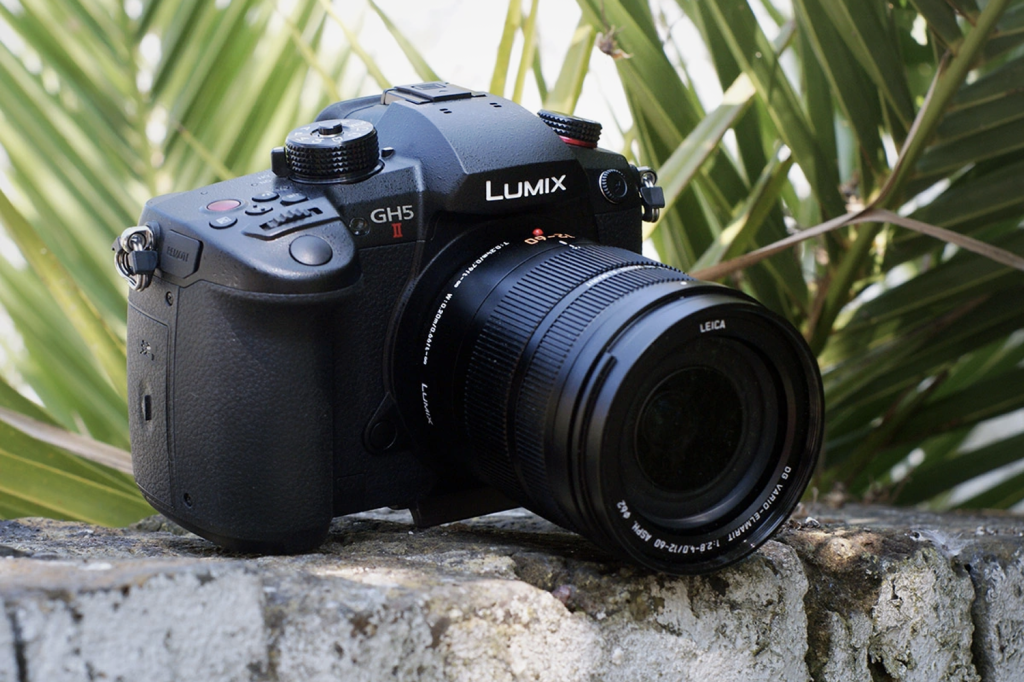
Panasonic Lumix GH5 Mark II
The first GH5 was a landmark mirrorless camera, being the first 4K all-rounder that didn’t feel like it compromised significantly on either video or stills. This 2021 update isn’t a massive leap forward from the original model, but for its price it’s still a brilliantly versatile camera. Vloggers will love its wide range of video options (including wireless live streaming – a first on a mirrorless camera), in-body stabilisation and lightweight, weather-proof build. The slightly slow AF performance and smallish sensor makes still performance solid rather than heavenly, but this is still a fantastically flexible camera.
Stuff Says…
Already one of the best mirrorless hybrids, the addition of live-streaming support cements the GH5’s status as a compact, capable do-it-all camera
Tech spec:
Sensor: 20.3MP Live MOS • Lens: Micro Four Thirds • Screen: 3in, 1.84m-dot articulating touchscreen • Viewfinder: 3.68m-dot OLED EVF • Continuous shooting: 12fps • Video recording: 4K at 60fps • Dimensions: 139x98x87mm • Weight: 727g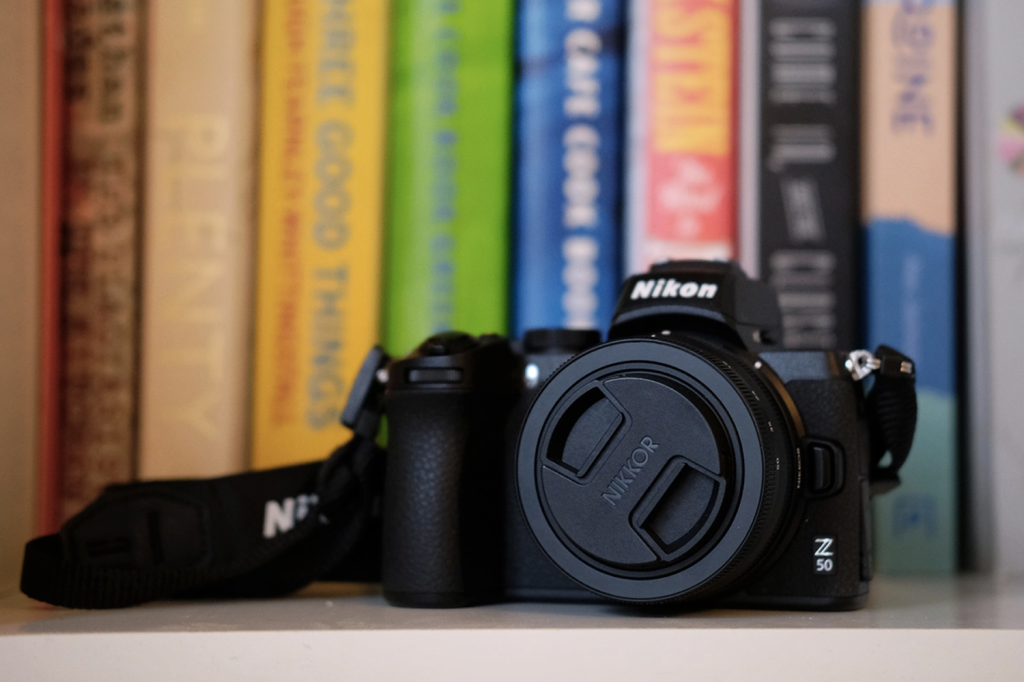
Nikon Z50
The first model in Nikon’s Z-mount range to come with an APS-C sensor, the Z50 is pitched primarily at newcomers to the world of interchangeable lens photography. With its affordable price tag, lightweight plastic build and comfortable handling, it’s an ideal first “proper” camera for those looking to hone their skills. The 20.9MP sensor isn’t stabilised or particularly hi-res, but can capture engaging stills and 4K videos, while pairing the Z50 body with Nikon’s 16-50mm pancake zoom lens makes for a compact and capable travel-friendly setup.
Stuff Says…
Offering pro features from the Z6 without the physical and financial heft, the Z50 is one of the best compact APS-C cameras out there
Tech spec:
Sensor: 20.9MP CMOS • Lens: Nikon Z mount • Screen: 3.2in, 1.04m-dot tilting touchscreen • Viewfinder: 0.39in, 2.36m-dot OLED EVF • Continuous shooting: 11fps • Video recording: 4K at 30fps • Dimensions: 127x94x60mm • Weight: 395g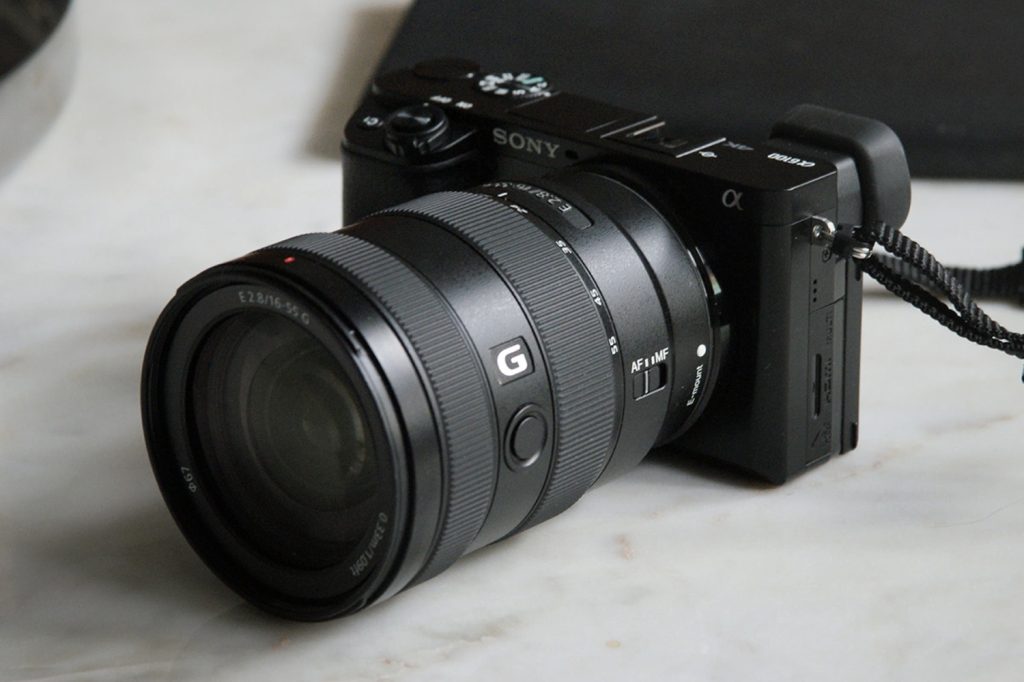
Sony a6100
Another killer entry-level APS-C model, the a6100 is dinky even by mirrorless standards, and both its video (4K at 30fps or 1080p at 120fps is available) and photo performance are pretty ace. They’re underpinned by a superb hybrid AF setup that impresses with its speed, tracking and recognition skills, even if the lack of in-body image stabilisation for the 24.2MP sensor is disappointing (if not unexpected on a cheaper model). Be warned, vloggers and selfie fans: the tilting screen isn’t able to face forwards, so self-shooting can be tricky.
Stuff Says…
Lightweight and affordable, reliable all-round performance makes the A6100 an impressive entry-level option for snappers stepping up from novice status
Tech spec:
Sensor: 24.2MP CMOS • Lens: Sony E-mount • Screen: 3in, 0.96m-dot tilting touchscreen • Viewfinder: 0.39in, 1.44m-dot OLED EVF • Continuous shooting: 11fps • Video recording: 4K at 30fps • Dimensions: 120x67x59mm • Weight: 396g
Blackmagic Pocket Cinema Camera 6K Pro
Let’s get this out of the way quickly: when it comes to shooting stills, the PCC6K Pro is only marginally better than a turnip. But who cares? Blackmagic has delivered a budding cinematographer’s dream, built for filmmaking. Lightweight and blessed with a huge 5in screen, it can shoot 12-bit RAW or lossless ProRes footage at 6K resolution and 13 stops of dynamic range and works with Canon’s hugely popular EF mount – meaning there are hundreds of lenses out there you can try. It’s not for newbies, mind you: with no IBIS or AF tracking, only seasoned video warriors need apply.
Stuff Says…
Unapologetically niche, seasoned cinematographers will be smitten by the Pocket Cinema Camera 6K Pro’s video versatility and superb recording quality
Tech spec:
Sensor: Super 35 • Lens: Canon EF mount • Screen: 5in, 2.1m-dot tilting touchscreen • Viewfinder: Optional OLED EVF • Video recording: 6K at 50fps • Weight: 2.1kgMore mirrorless cameras
Mirrorless cameras accelerated a new generation of photographers and content creators. So-called because they don’t have a mirror mechanism, their design allows for a more lightweight and compact body, giving shooters of all levels a less bulky alternative to traditional DSLRs. With today’s mirrorless models, you get the versatility of large sensors and interchangeable lenses, plus AI-powered autofocus tracking for lightning-fast subject recognition.
The first mirrorless camera to be made widely available was the Panasonic Lumix G1 in 2008. Its Micro Four Thirds system, a format jointly developed by Panasonic and Olympus, is still a popular choice today, although full-frame and medium format sensors provide better resolution and low-light performance.
While many photographers lamented the loss of an optical viewfinder at the beginning of the mirrorless era, real-time electronic viewfinders can now give a crisp and accurate preview of images before you fire the shutter button. But it’s not just about size and speed for stills; most mirrorless cameras are designed to be hybrid and capture high-end video too. As social platforms such as TikTok, Instagram, and YouTube have grown, so have the video specs on next-gen cameras. From vlogging adventures to documenting family milestones, hybrid models can transition from photo to video mode instantly, catering to your diverse creative needs.
Of course, the best mirrorless camera depends on what you shoot and how much you have to spend. If you mainly work outdoors, the extreme weatherproofing on the OM-System OM-1 makes sense. If maximum resolution is key, the 102MP Fujifilm GFX 100 II wins, but at a price. Budding content creators or beginners will do well with Canon’s EOS R50, while at the iconic luxury end, there’s Leica, breaking new ground yet again with the M11-P and authentication for images. Let’s take a look at the latest mirrorless models…

Canon EOS R50
£790 / store.canon.co.uk
What’s the story?
Canon’s second-cheapest RF-mount camera will appeal to those wanting more resolution and features than their smartphone can give them. The R50 is similar to the vlog-friendly EOS M50 but has a newer lens mount, sensor, and processor for faster autofocusing. AI-powered subject recognition is extensive for the price, and modes include Humans, Animals, and Vehicles, for sharp shots even with moving targets. There’s also a dedicated AF mode for vlogging, which is designed for product placements, demonstrations, or tutorials as the camera shifts focus automatically from your face to an object in your hands.
Unlike a smartphone, the EOS R50 gives you a crisp view through its OLED viewfinder, which covers 100% of the frame for accurate composition. There are only three lenses designed for Canon’s APS-C format, but full-frame RF lenses are compatible here – they just won’t be as cheap or compact as the EOS R50 itself. If you’re a Canon fan and have older DSLR lenses, a separate mount adapter will let you use these.
The EOS R50’s plastic build makes it easy to carry around or mount to a travel tripod. With the vari-angle touchscreen, it’s easy to try different shooting angles, including flipped toward you for selfies.
Is it any good?
If you want an entry-level camera for vlogging and sharing your lifestyle online, the EOS R50 is ideal. It supports live streaming to YouTube, can record 4K footage for up to an hour, and knows when you’re shooting vertical or horizontal video, meaning it’s ready for social channels. Bluetooth and Wi-Fi make it painless to send content straight to a smartphone via the Canon Camera Connect app for speedy uploads.
The EOS R50’s optional guided interface can walk inexperienced photographers through different shooting scenarios, and in-camera focus bracketing expands the depth of field for macro and food shots without any processing. The EOS R50 is light on exposure controls, apart from the mode dial on top. When you switch between them, an optional screen appears to explain what it does and when to use it. Image colours are as rich and accurate as more expensive mirrorless Canon cameras, but there’s no in-built stabilisation (IBIS) to steady handheld shots. If you’re an aspiring vlogger, the EOS R50 will give you better quality than your phone without a steep learning curve. It’s not weather-sealed, so you’ll need to keep your content creation indoors unless the conditions are fair.
Stuff Says…
Easy-to-use and affordable for those stepping up from a smartphone
Tech spec:
Sensor size APS-C Resolution 24.2MP Continuous shooting 15fps Max video 4K 30p Weight 375g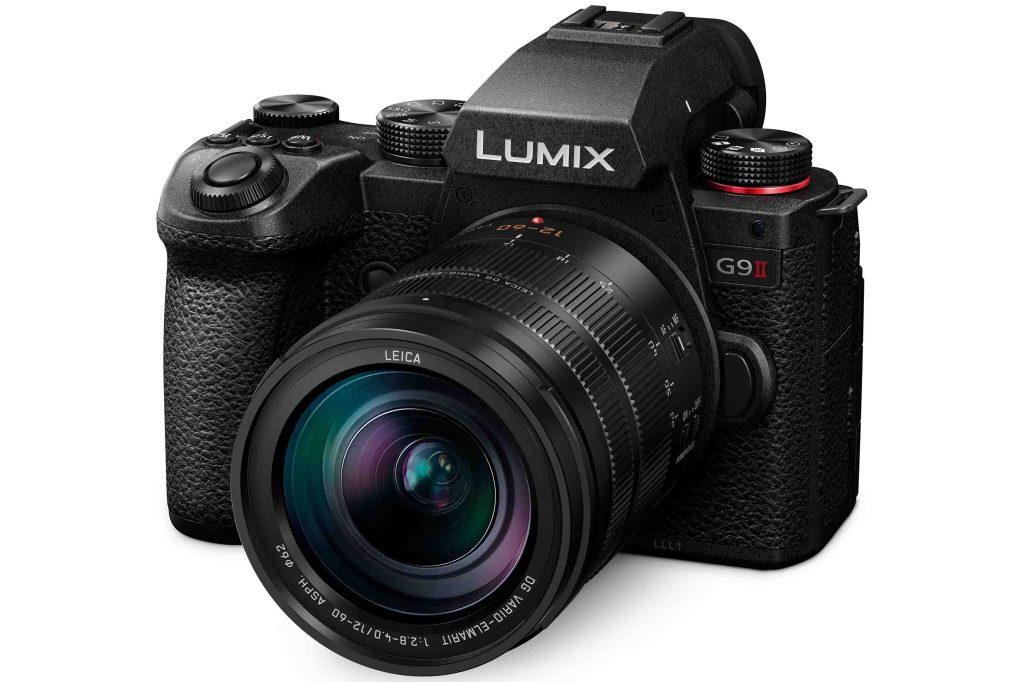
Panasonic Lumix G9 II
£1,699 / panasonic.com
What’s the story?
Panasonic’s latest Micro Four Thirds (MFT) camera comes almost five years after the G9, with major upgrades for wildlife and action shooters. The highlight is phase-detection autofocus, which features for the first time on a G-series camera and tracks fast-moving subjects such as wild animals and race cars more accurately. As with the original, the MFT sensor size effectively doubles the focal length of lenses, so you get frame-filling shots without having to carry massive optics.
The Lumix G9 II gets a new processor, and this supports other high-speed features, including a 60fps continuous shooting speed with full autofocus. The vari-angle screen LCD has better resolution for live view and playback, and the camera’s grip is more contoured for balanced handling even when you’re using heavier lenses. The button layout is almost identical to the Lumix S5 II, placing controls such as ISO and drive mode at your fingertips for quick changes, but the LCD top plate for quick-glance settings has been lost to make way for the power switch. As a truly hybrid camera, the G9 II places a big, red video recording button on the top plate for easy access, especially when you’re looking through the viewfinder rather than at the controls.
Over its predecessor, the camera’s video specs have seen the biggest boost. The maximum 5.7K ProRes RAW is only available if you attach a portable solid-state drive, but 4K at a frame rate of 120fps offers smooth, slow-mo footage that’s more than enough for advanced creators.
Is it any good?
Although the MFT sensor generates more noise than Panasonic’s L Series full-frame cameras, the format does keep the body size down for greater portability than some mirrorless rivals. While the 25.2MP stills resolution is modest, a high-res mode gives you 100MP images for larger prints or extra leeway when cropping. If you prefer handheld shooting, the G9 II’s eight-stop IBIS allows you to get away with slower shutter speeds in low light.
Although the lack of a cooling fan limits recording times, the camera is a true video hybrid, and you can add your own LUTs and colour profiles to see graded footage as you shoot. The G9 Mark II makes the most sense if you’re upgrading from the G9 or already dedicated to the MFT system.
Stuff Says…
Panasonic gives action lovers a fast, feature-packed camera with improved autofocus
Tech spec:
Sensor size Micro Four Thirds (MFT) Resolution 25.2MP Continuous shooting 60fps Max video C4K 60p Weight 658g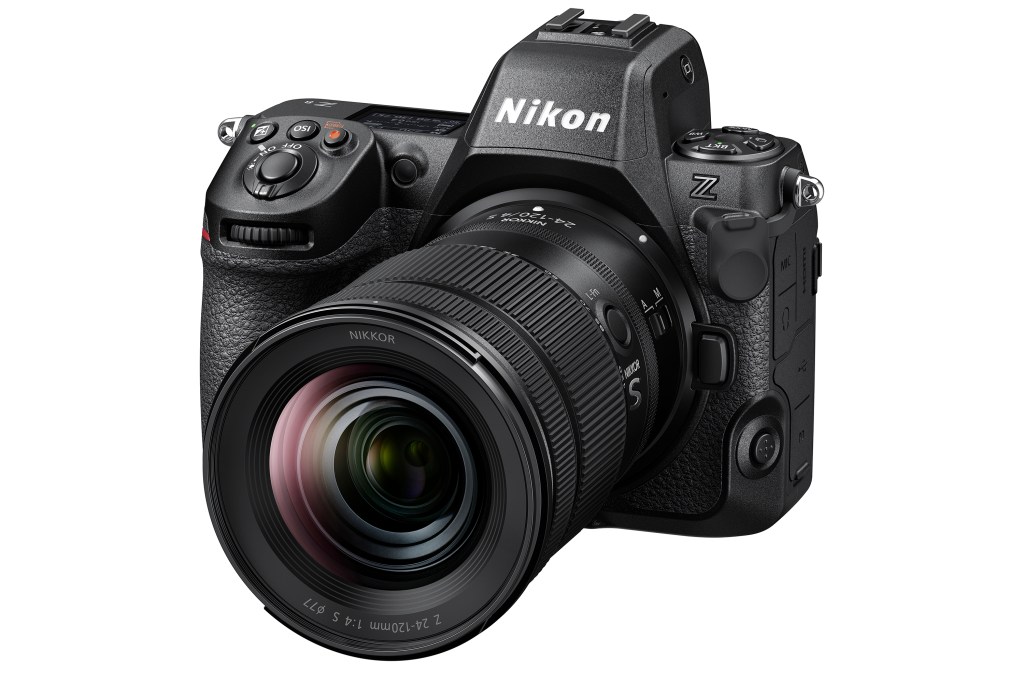
Nikon Z 8
£3,999 / nikon.co.uk
What’s the story?
The Z 8 is a natural successor to the D850 DSLR and an exciting upgrade for Nikon fans. It’s the tenth Z-mount camera, and the seventh with a full-frame sensor, featuring all the power of the flagship Z 9 in a smaller, cheaper body. It’s 400g and £1,300 less than its big sibling, but still a bit too sizable if you travel a lot.
The Z 8 is hard to recommend for one genre as it excels for all. You get a stacked 45.7MP sensor, and RAW file capture at up to 20 frames a second, which increases to 120 fps at 11 MP resolution. Nikon has also removed the mechanical shutter entirely, making it utterly silent and discreet in all situations. Videographers can record 8K at 30fps for over an hour, which is enough for commercial productions. To get slow-mo 120fps footage, the resolution drops to 4K. There are dual memory card slots for SD and CFexpress Type B cards. While helpful for using older SD cards, dedicating both slots to the faster CFExpress format would enhance performance, especially for 8K video.
The magnesium alloy weather-sealed body is well-built to withstand years of heavy use, while the button layout will feel similar to traditional Nikon users. There’s an LCD panel up top to help you check settings at a glance, and a four-way joystick to select autofocus.
Is it any good?
If you’re a professional or serious hobbyist, Nikon has combined everything you’d want from a full-frame hybrid camera. The resolution and image clarity are excellent, although they can’t match the Leica M11-P and might leave demanding landscape photographers wanting more. The battery life of 340 shots is average, and photographers who shoot away from power will want spares. On paper, the viewfinder resolution lags behind competitors such as the Canon EOS R5, but the real-world performance is impressive and makes it easy to follow subjects.
The Z 8’s autofocus can track pretty much everything – even aeroplanes thanks to an Aircraft AF mode. If you’re a wedding photographer all about capturing candid moments, the eye AF will lock onto a bride among guests in a heartbeat. For wildlife, Nikon has said it’s adding a firmware update in 2024 to improve the bird detection feature. If you’ve already bought into the Nikon design and ecosystem, the Z 8 will be hard to beat.
Stuff Says…
Nikon’s near-perfect mirrorless will appeal to serious enthusiasts and DSLR upgraders
Tech spec:
Sensor size Full-frame Resolution 45.7MP Continuous shooting 120 fps Max video 8.3K 60p Weight 910g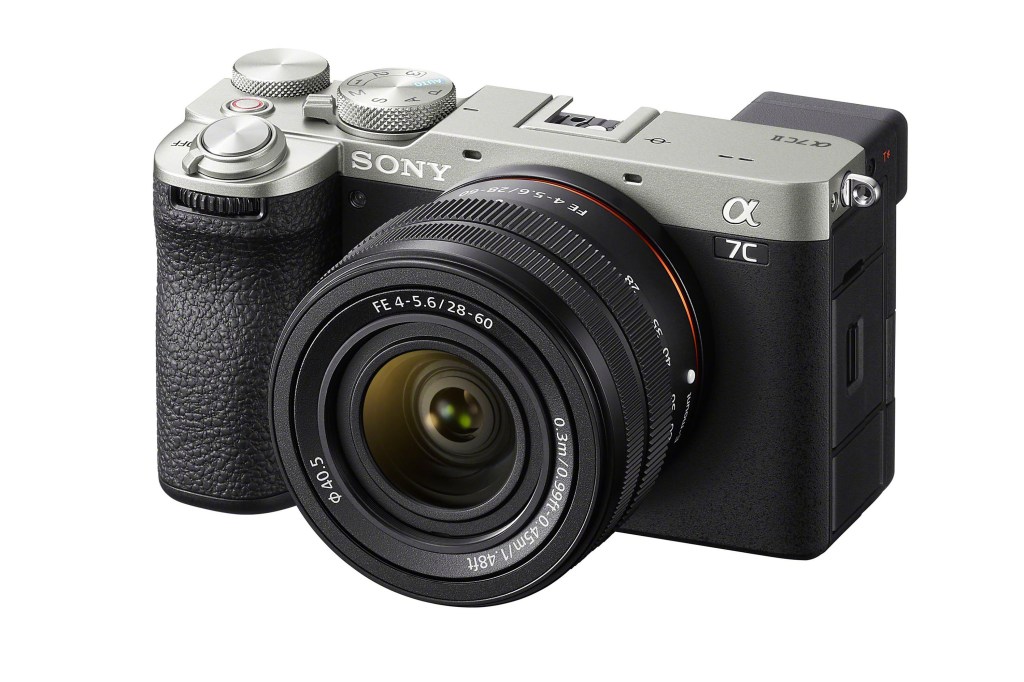
Sony A7C II
£2,099 / sony.co.uk
What’s the story?
Sony arguably conquered the mirrorless market by making portable cameras that are powerful and trendy. The full-frame Sony A7C II is an upgrade from the original A7C, with a speedier processor, major improvements to autofocus thanks to AI, and a higher-resolution 33MP sensor.
You get 10fps continuous autofocus shooting, and a buffer capacity to store 1000 JPEGs or 44 RAW files in one burst. Sony is hoping to entice creators with 4K60p footage, while extra features such as focus breathing correction and four-channel audio recording will appeal to those who take video seriously. The 7-stop in-body stabilisation is ideal if you mainly shoot hands-free, especially in low light.
Handling has been improved on the second-gen A7C II, with an extra control dial at the front, and a C1 button around the back for custom settings. Sony says the now standard Sony NP-FZ100 lasts up to 540 shots – more than enough for a day about town. Sony has added another control dial to the front of the camera. In addition to the rear dial, it means you can tweak the aperture and shutter speed without having to delve into camera menus.
Is it any good?
The camera’s full-frame sensor will appeal to serious photographers and creators, and it produces accurately coloured shots with great dynamic range even in tricky lighting. Only one SD card slot means that you can’t record in multiple formats, or switch between video and stills on two cards.
The A7C II isn’t designed for action, but the autofocus algorithms can still pick up people, vehicles and animals equally swiftly – with excellent eye detection for portraits. The stabilisation gives smooth footage when you’re walking, reducing the need to use a gimbal. There’s no official protection rating, but Sony says the A7C II is sealed against dust and moisture, and it will hold up well on rainy days or even hot holidays while travelling.
The rangefinder-style A7C II is suited to on-the-go users, and if style is important to you, it’s nice to look at but slightly boxy to hold. Being so compact, it is still comfortable to carry around all day and take on trips where you don’t want to be weighed down. But it’s not easy to handhold the camera with heavier Sony lenses, making it best suited to smaller primes for portraits and street shots.
Stuff Says…
Sony blends compact proportions and connectivity for on-the-go enthusiasts
Tech spec:
Sensor size Full-frame Resolution 33MP Continuous shooting 10fps Max video 4K 60p Weight 514g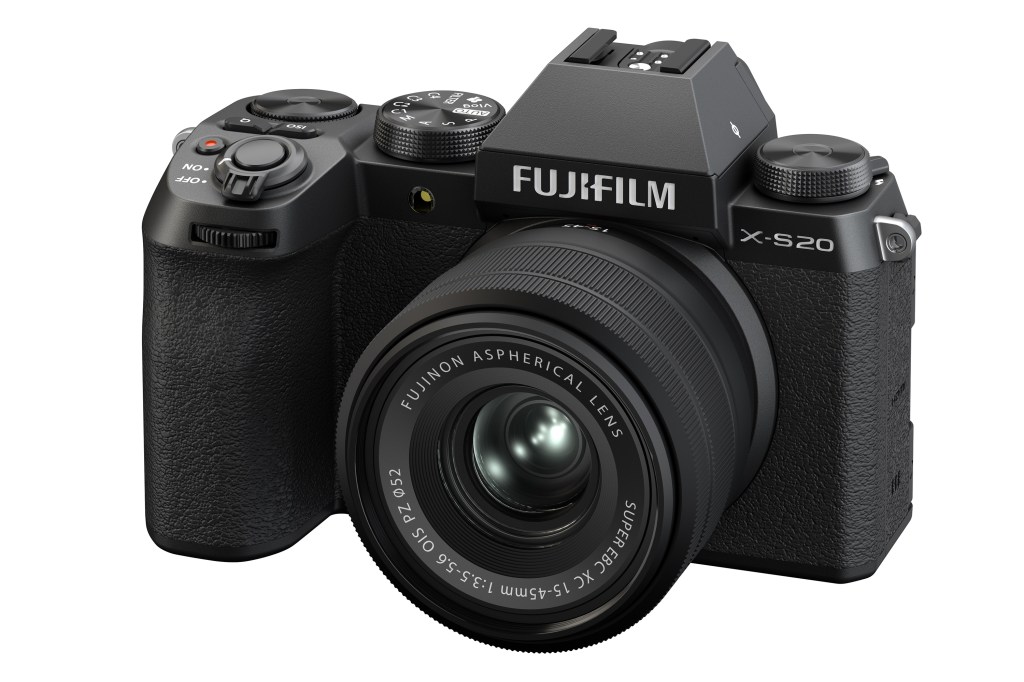
Fujifilm X-S20
£1,249 / fujifilm-x.com
What’s the story?
Fujifilm’s latest entry-level APS-C camera is so well-specced and designed that it will appeal to advanced users as well as beginners. If you’re a smartphone photographer wanting a versatile camera for snaps, vlogs and all-around video creation, you’ll find plenty of features to help your social channels.
The Vlog mode on top of the mode dial is a first for Fujifilm and works similarly to Canon’s AF Vlogging mode on the EOS R50 by prioritising products when you’re presenting. If you don’t have a wide aperture lens, a background defocus mode can smooth out messy locations and cluttered bedrooms. The 3-inch vari-angle screen pulls out for vlogging and quirky compositions, then tucks away neatly to keep it protected in your bag.
The X-S20 is easy to operate out of the box and looks similar to the X-S10 that came before. Control dials are kept to a minimum and can be customised to suit your shooting style. It shares the same processor and battery as the more expensive X-T5 which Fujifilm says gives up to 800 shots – a class-leading amount. The X-S20 has a built-in flash that pops up when activated. This spreads light evenly for subjects that are several metres away, but for close-up work, you’d want a dedicated macro flash or ring light.
Is it any good?
The Fujifilm X-S20 is incredibly light, but the textured grip gives it a premium feel and ergonomic handheld experience. The 26.1MP APS-C sensor delivers plenty of detail with a standard 18-55mm kit lens and Fujifilm’s colour science is punchy and pleasing. If you shoot in JPEG format, the Film Simulations also let you play around with the aesthetic of images in-camera so you don’t have to do any editing.
The video performance is near-perfect for hybrid content creators, although you only get one SD card slot. It’s easy to shoot and send footage straight to a phone for social sharing. But with 6.2K video recording and the ability to record Apple ProRes RAW or Blackmagic RAW formats, the X-S20 offers hardcore video outputs too. Fujifilm doesn’t quote a maximum video recording time without overheating issues. The X-S20 doesn’t have a built-in cooling fan, but it’s compatible with Fujifilm’s cooling fan accessory to extend video in heated conditions.
Fujifilm’s X- X-Series lenses tend to be smaller than those on full-frame cameras – and there are plenty to choose from. The X-S20 builds on the versatility and easy operation of the X-S10 but with better battery life and video.
Stuff Says…
Top video features for vloggers, plus battery life that goes the distance
Tech spec:
Sensor size APS-C Resolution 26.1MP Continuous shooting 30fps Max video 6K30P Weight 491g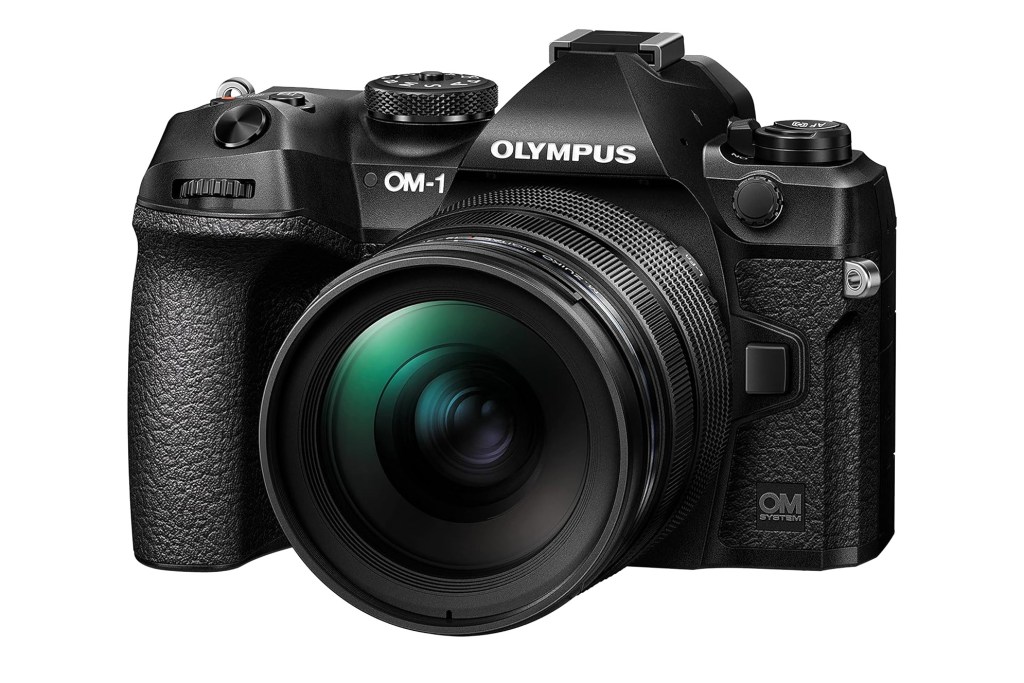
OM-System OM-1
£1,979 / omsystem.com
What’s the story?
If your style of photography involves hiking, camping or generally embracing outdoor adventures, the OM-1 will be an obvious choice. With an IP53 rating against dust and splashes, it has serious weatherproofing for use in adverse conditions and is popular with macro and landscape photographers.
The OM-1 is the last new camera with an etched Olympus logo – it’s now the flagship model of OM Digital Solutions, which bought Olympus’ imaging division in 2021. The Micro Four Thirds CMOS sensor has a new stacked design, and while the same 20MP resolution matches previous Olympus sensors, 1,053 AF points cover the sensor for greater autofocus accuracy and speed.
Computational photography features are boosted by a processor that’s three times faster than the Olympus OM-D E-M1 Mark III. You get a Handheld High Res for 50MP photos, which increases to 80MP with a tripod. Then there’s Live ND Mode to mimic long exposure effects and built-in focus stacking to give you sharper shots of bugs, flowers and even landscapes with front-to-back sharpness. Built-in 5-axis stabilisation also gives you up to 8 stops of compensation against camera shake when you’re in low light. The OM-1 can capture 4K 60fps video internally, and there are two SD card slots for recording. If you’re after shake-free video footage but don’t have a tripod, IBIS allows you to capture run-and-gun style.
Is it any good?
While OM-System might not yet have the brand recognition of some rivals, and while it can’t compete with full-frame cameras for sheer resolving power and noise handling, it makes sure you get reliable performance even in hostile shooting conditions. The camera’s control layout and build will be familiar if you’ve used Olympus’s OM-D E-M1 series before, with a compact DSLR-style design and comfortable hand grip that outshines many comparable Micro Four Thirds models.
The intelligent modes such as focus stacking work well, rather than being a gimmick, and take away a lot of processing work with software. Handling isn’t always intuitive though, as you can’t use the touchscreen to navigate menus and the dials can be fiddly.
The OM-1 puts in impressive burst shooting performance for wildlife, and you get up to 120fps with fixed focus or 50fps with continuous focus. As with most rivals, there are tracking autofocus modes for people, dogs, birds and vehicles including planes, which work by using AI to detect learned subjects. If you want a camera for the wilderness that’s stabilised, protected and capable, the OM-1 is the top performer.
Stuff Says…
A rugged build and extreme weatherproofing for adventurous, outdoorsy types
Tech spec:
Sensor size Micro Four Thirds Resolution 20.37MP Continuous shooting 120fps Max video 4K60p Weight 599g


 Sam Kieldsen
Contributor
Sam Kieldsen
Contributor