An early hands-on with the Galaxy S26 proved to me Samsung has settled for second place
Minor hardware refreshes that fall further behind on battery

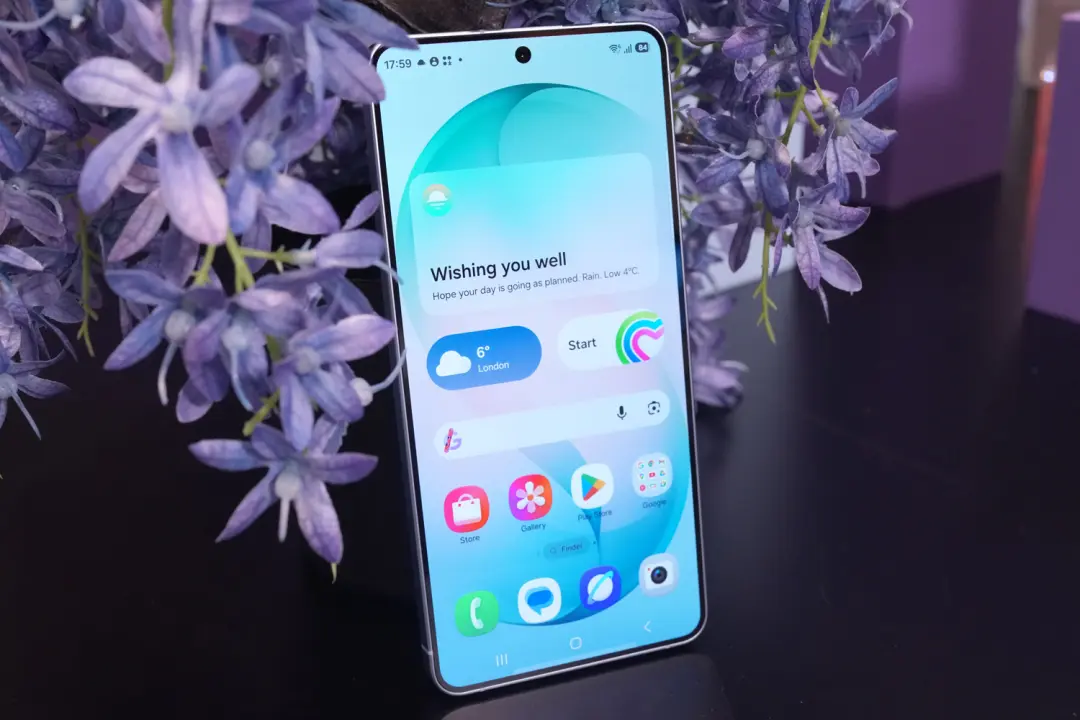
As both a tech writer and gadget fan in general, the Samsung Galaxy S26 and Galaxy S26 Plus are deeply frustrating devices. The two new smartphones are surely destined to be some of 2026’s top sellers, but after trying both ahead of their official reveal I’m not convinced they deserve to be.
Samsung has brought the bare minimum of new hardware, the subtlest of redesigns, and a price hike that will surely have customers wondering if they can squeeze another year out of their current handset before upgrading – or if they should check out an iPhone 17 instead. The firm also spent much of its San Francisco Unpacked event bigging up new Galaxy AI additions that merely bring it up to speed with Google’s Pixel lineup.
Does that mean these are bad phones though? Not at all: on first inspection the Galaxy S26 remains the compact all-rounder Android of choice, with a capable rear camera trio, gorgeous AMOLED screen, and a new home-grown chipset that’ll (hopefully) bring power and efficiency in equal measure.
How we test smartphones
Every phone reviewed on Stuff is used as our main device throughout the testing process. We use industry standard benchmarks and tests, as well as our own years of experience, to judge general performance, battery life, display, sound and camera image quality. Manufacturers have no visibility on reviews before they appear online, and we never accept payment to feature products.
Find out more about how we test and rate products.
Design evolution
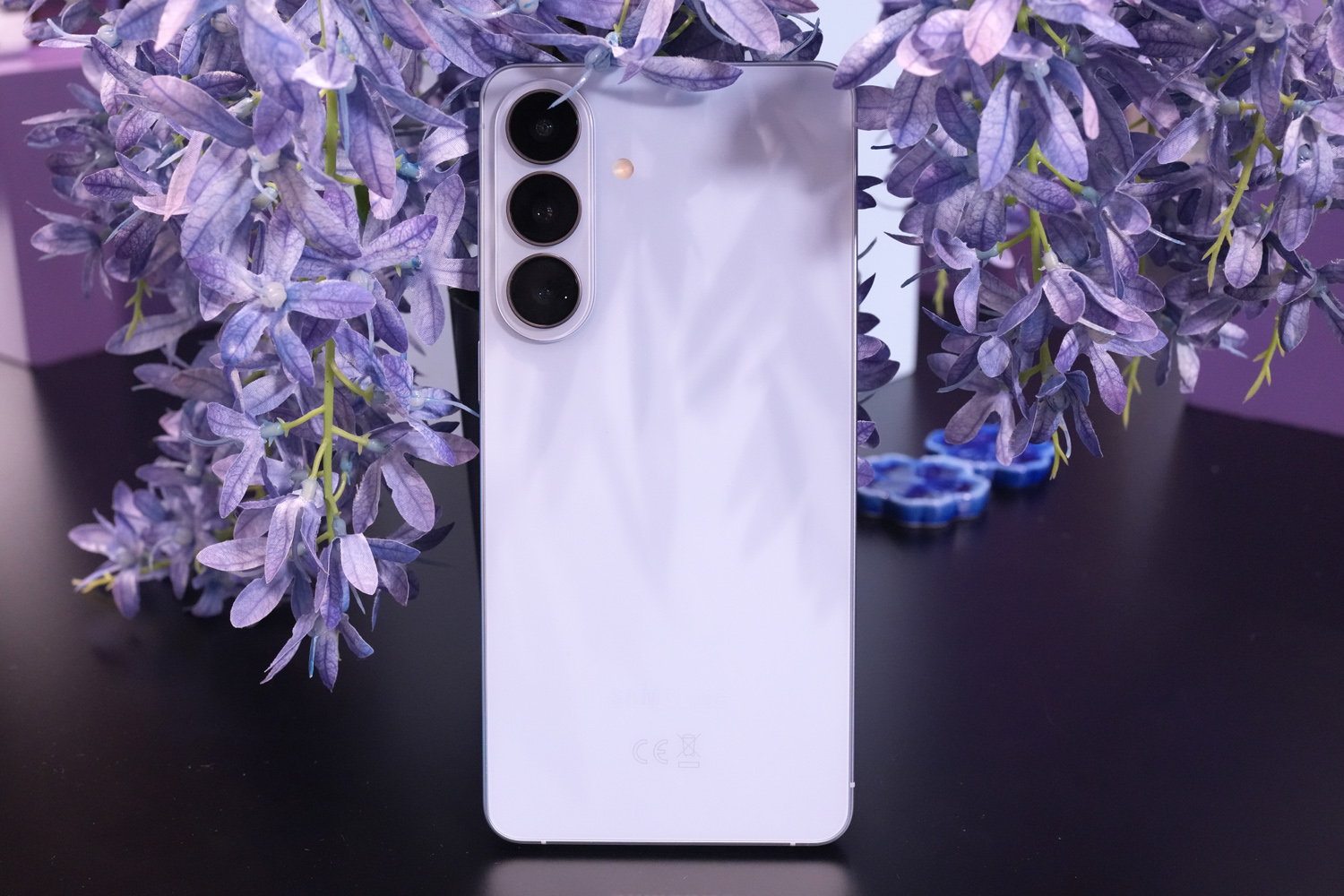
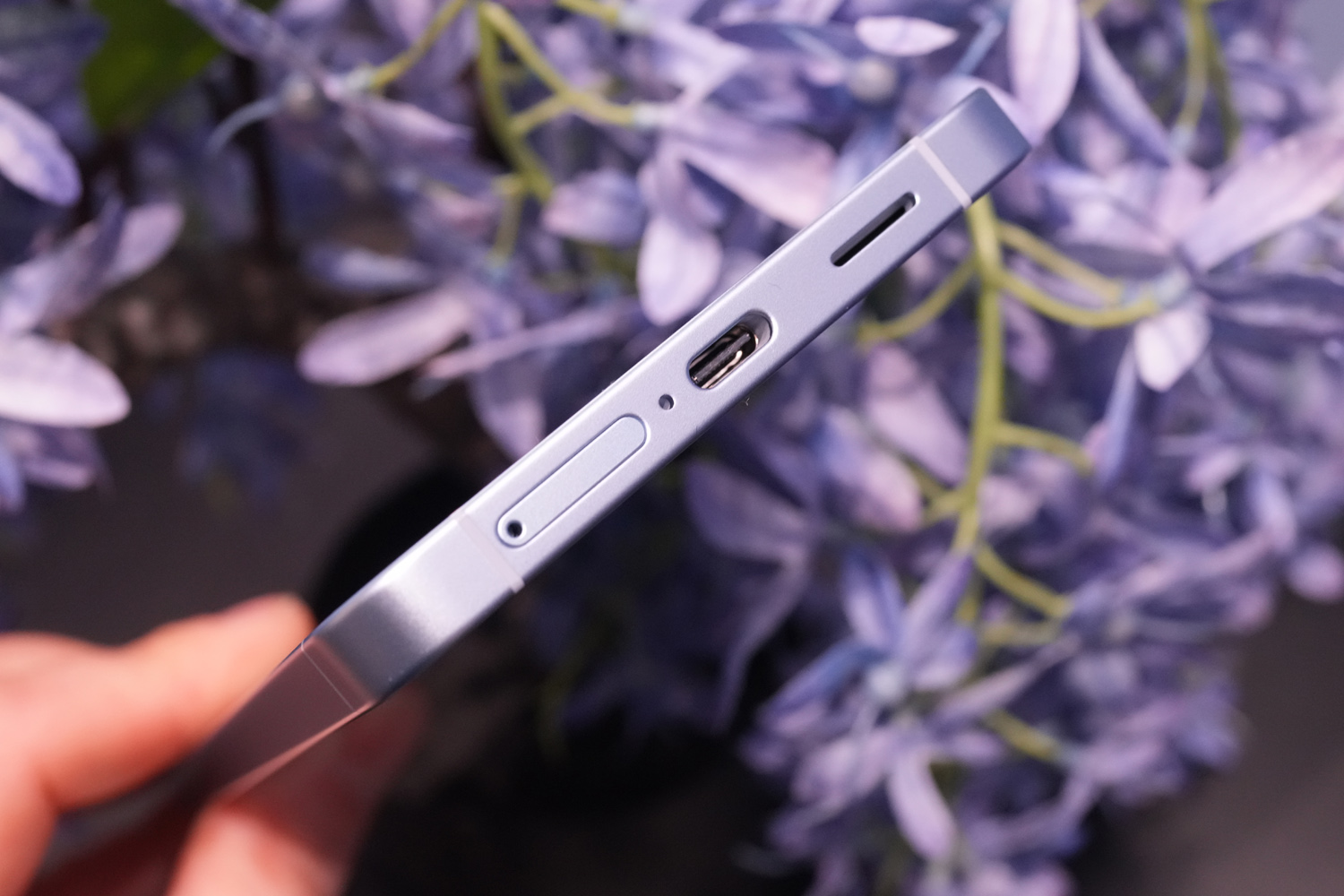
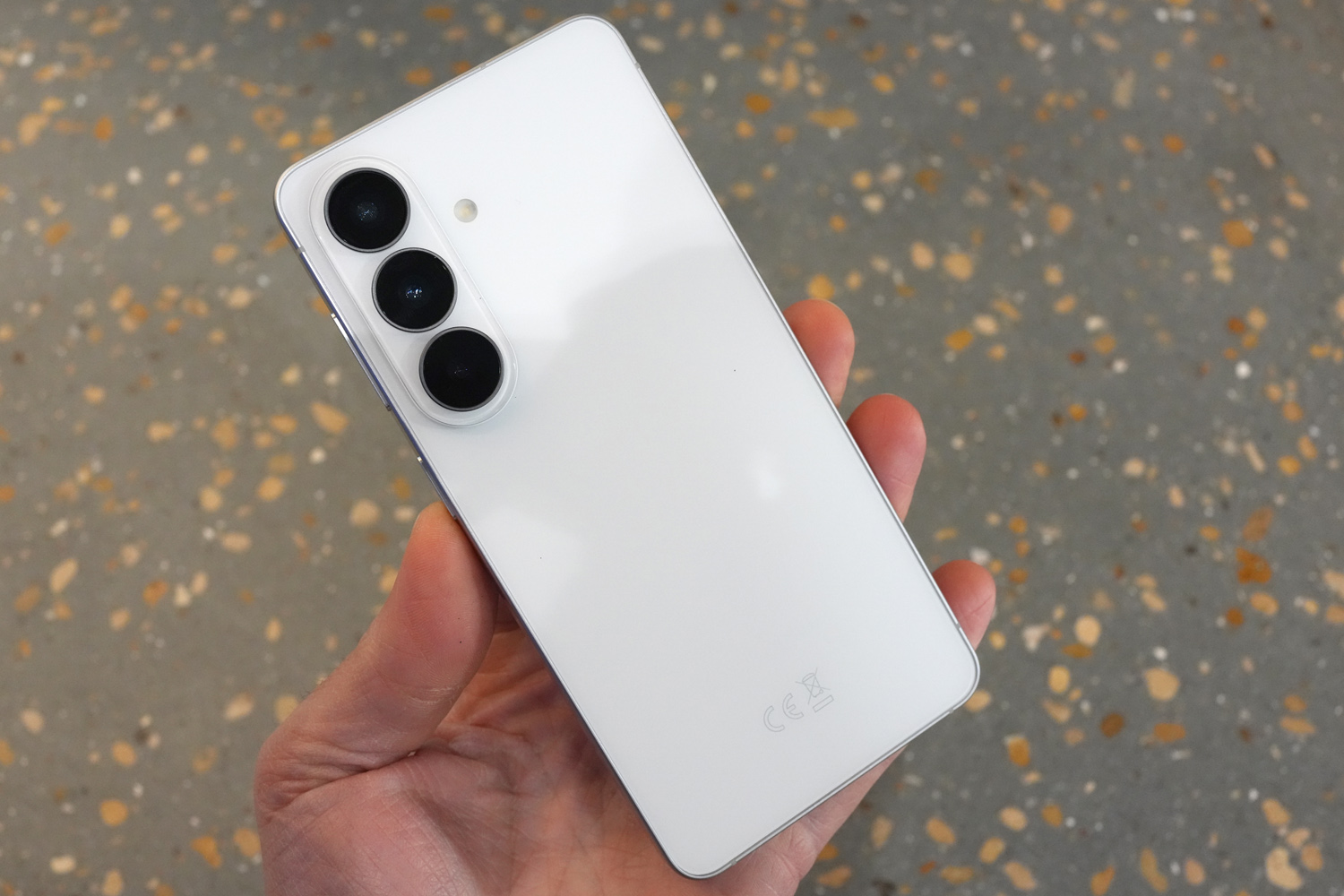
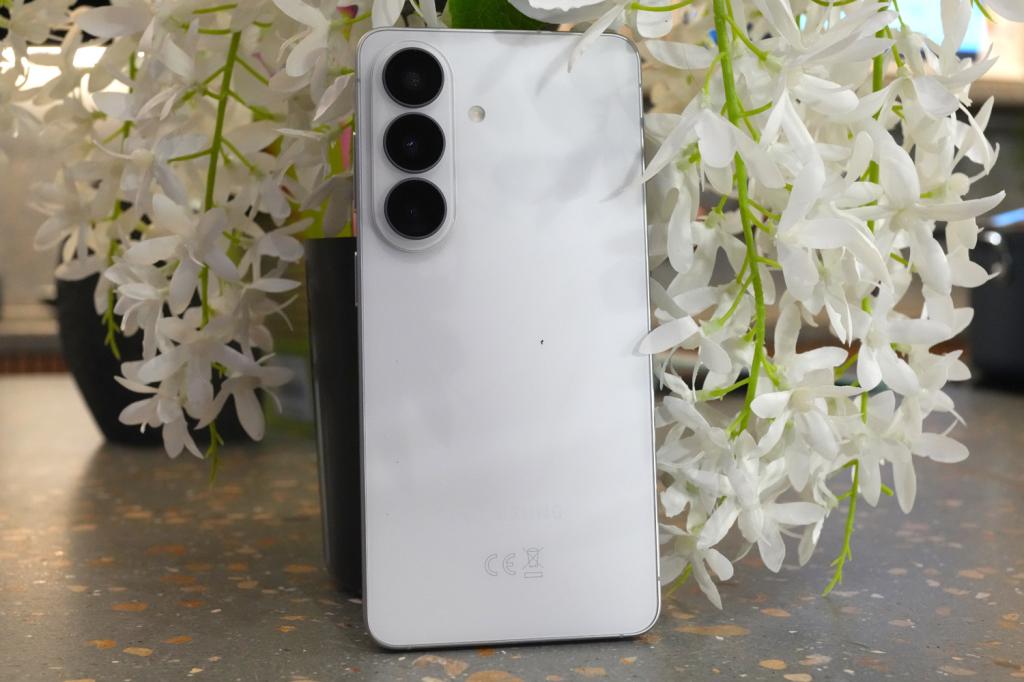
Visual upgrades over last year’s Galaxy S25 are stealthy, with tighter curves at the corners bringing the mainstream models more in line with the S26 Ultra flagship. A raised camera bump at the rear feels inspired by the Galaxy Z Fold 7, and Samsung has ditched the black bezels around the lenses themselves. I’m all for that change, as they looked a little cheap compared to the iPhone 17‘s metal ones.
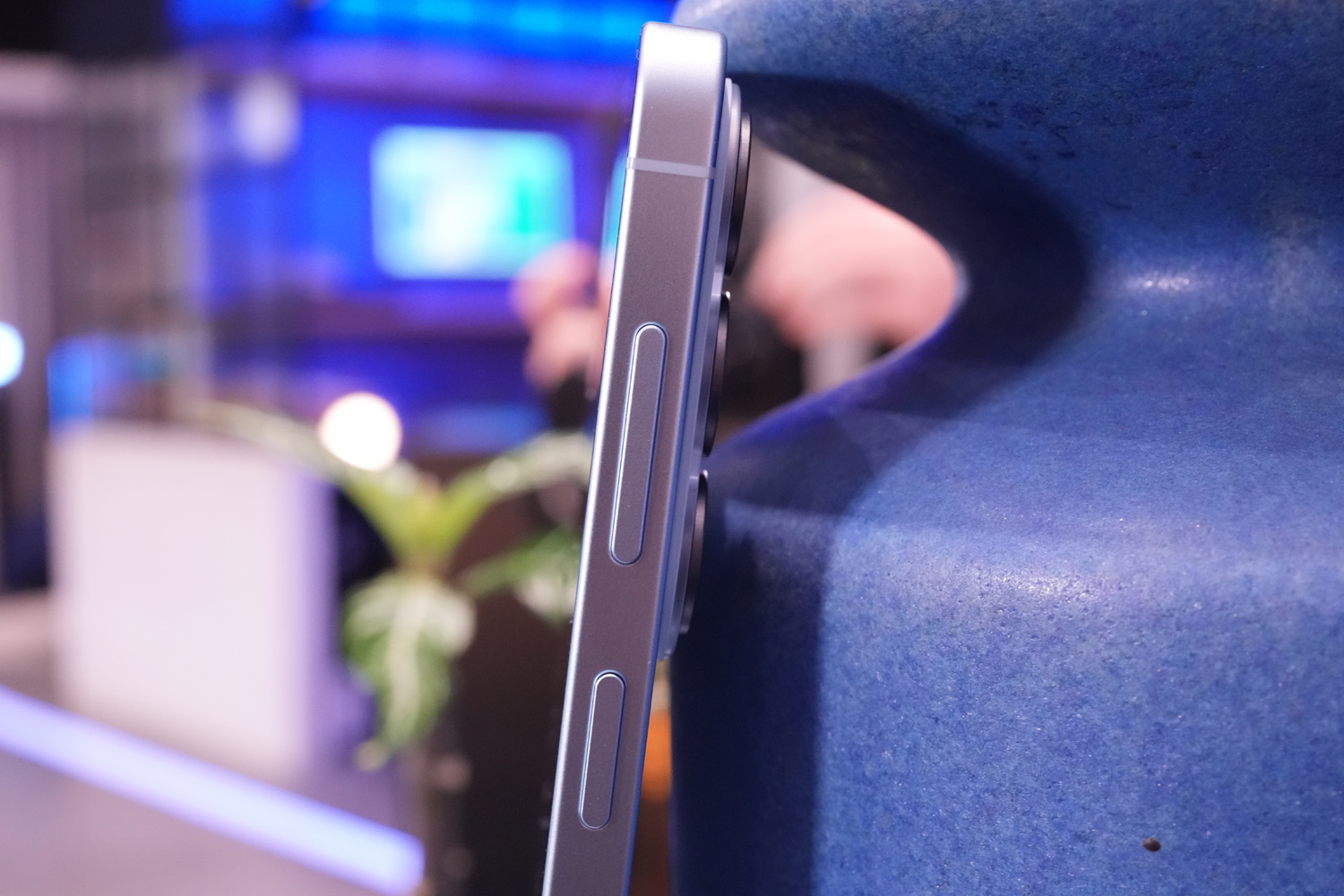
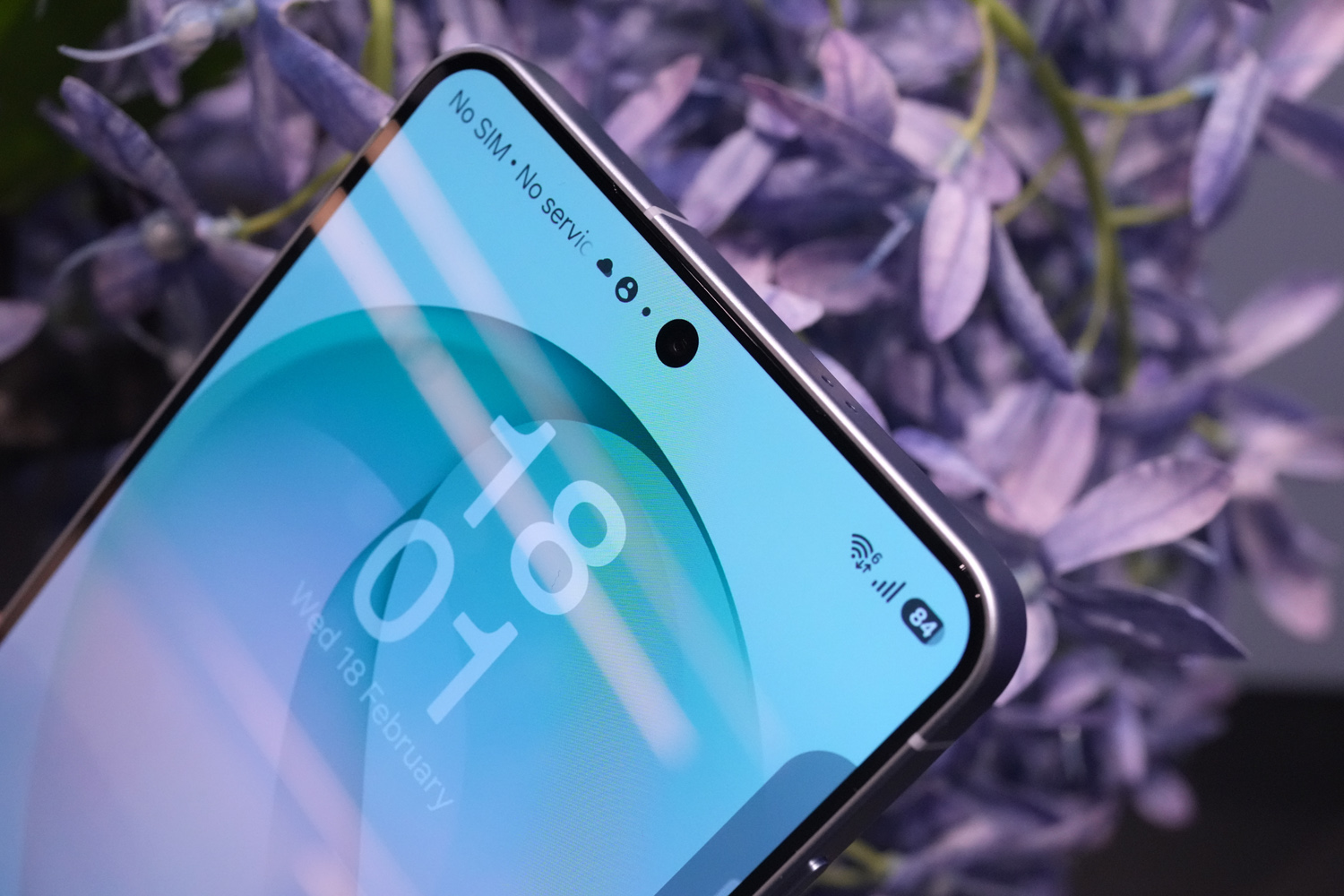
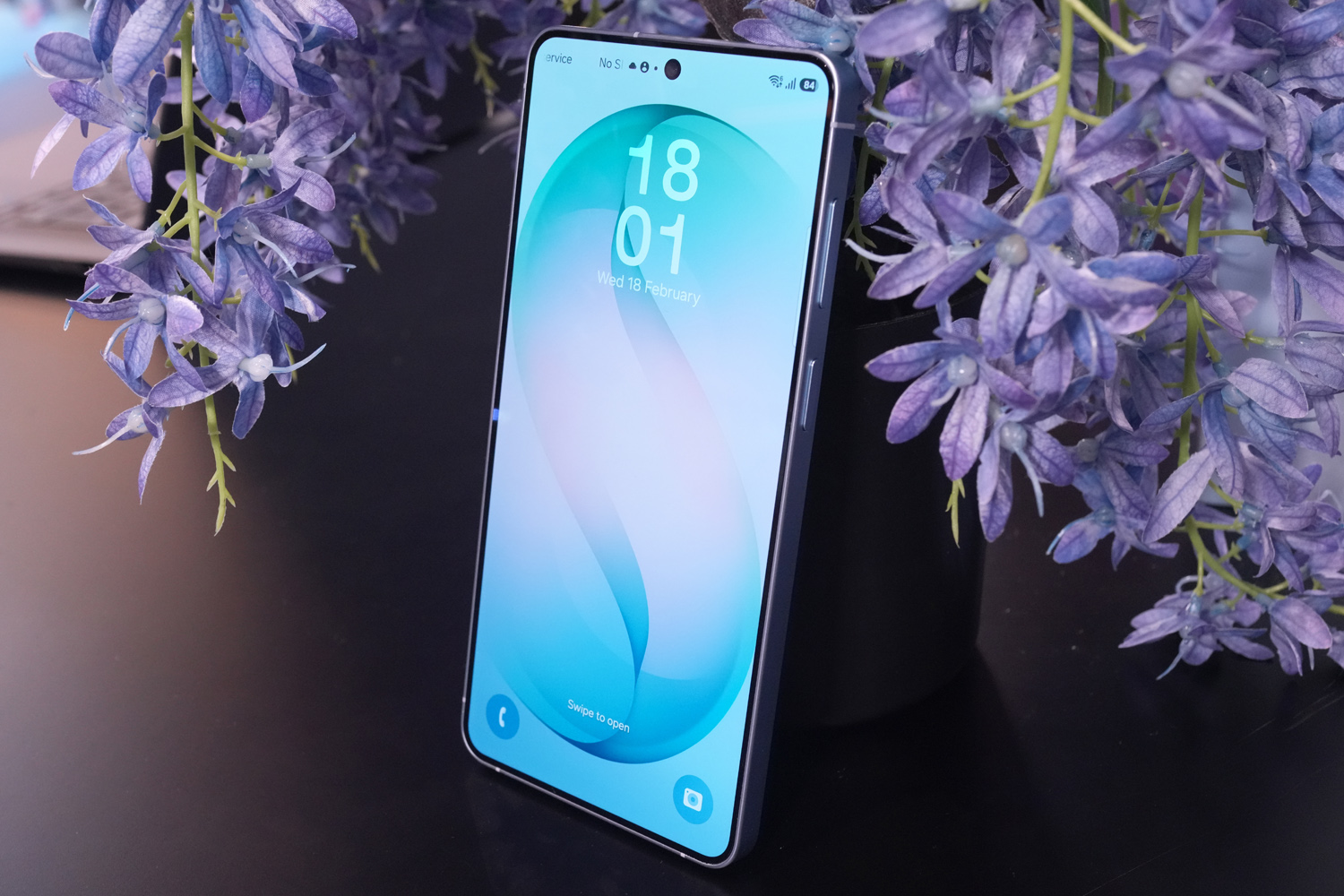
It still feels every bit the high-end handset, with a flat aluminium mid-frame, ultra-skinny display bezels and fingerprint-resistant matte rear glass. The vanilla S26 remains wonderfully compact, while the S26+ is still on the right side of manageable; both are suitably slender and have just the right amount of heft.
On one hand I applaud Samsung for not jumping on the camera control or AI key bandwagon like so many rivals; you’ll just find the standard power and volume buttons at the sides here. I do think the firm could’ve been more adventurous with colours though. The choice of black, white, sky blue and cobalt violet aren’t much of a departure from last year, and not nearly as head-turning as Apple’s Cosmic Orange.
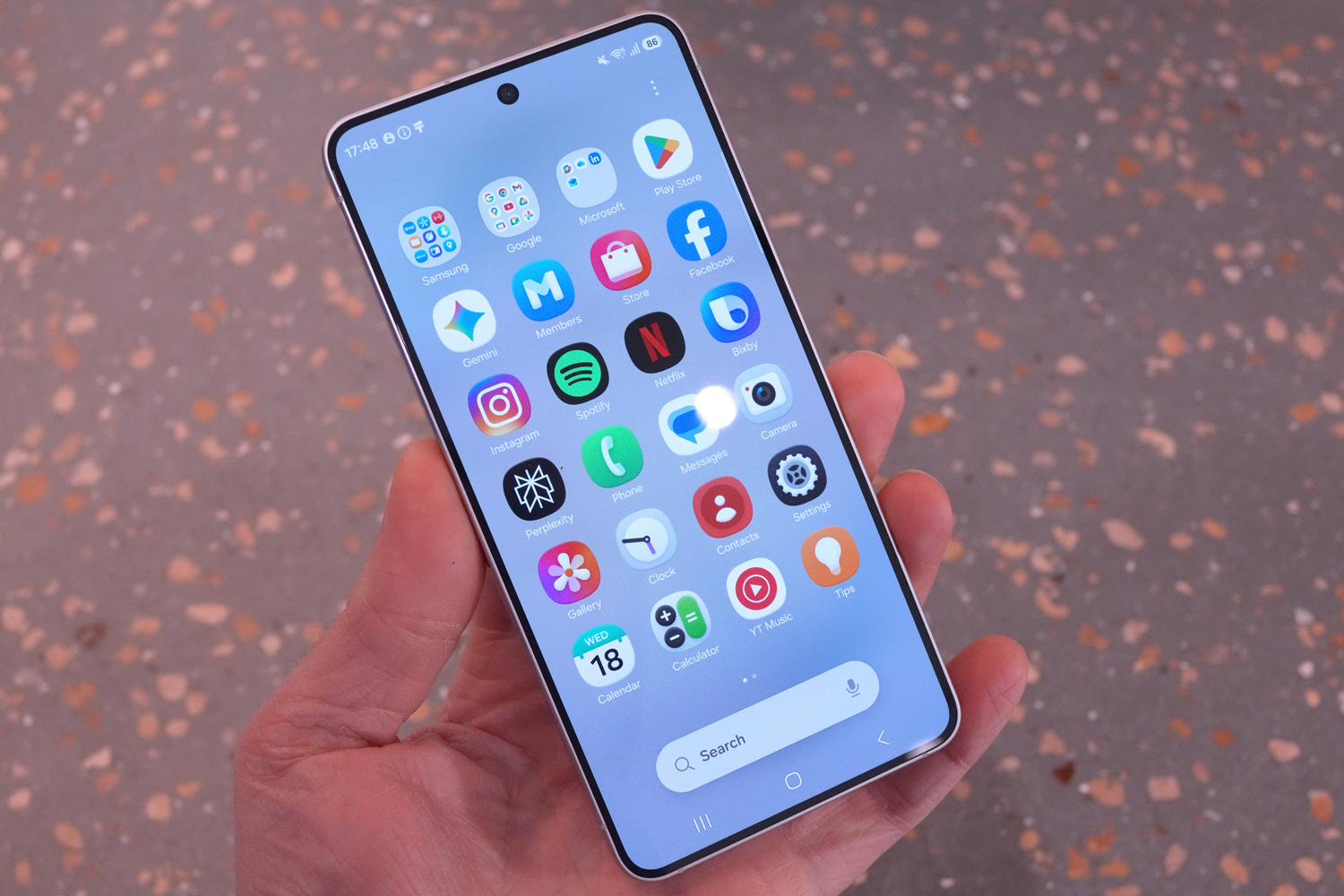
At 6.3in the Samsung Galaxy S26’s screen has grown a sliver from last year, but resolution hasn’t taken a big leap. The S26+ still tops out at 6.7in and an Ultra-matching 3120×1440 pixels. In both cases you’re still getting a glorious Dynamic AMOLED 2X panel with 1-120Hz adaptive refresh rate and plenty of brightness. If you want reflection-busting Gorilla Armor 2 glass or clever Privacy Display tech, however, you’ll need to step up to the S26 Ultra.
- Read more: Samsung Galaxy S26 vs S26+ vs S26 Ultra – what’s the difference between this year’s phones?
Home-grown CPU
Samsung has gone in-house again for the vanilla S26’s chipset, rather than share Snapdragon silicon with the Ultra like last year. The Exynos 2600 is the first of its kind built on a 2nm process and nixes low-power cores in favour of ten higher-strength ones. We’re promised up to 39% performance gains over the previous generation, although only certain territories ever actually got the S25 with that flavour of Exynos so direct comparisons are tricky – I’ve only tried it in the Galaxy Z Flip 7 clamshell. Besides, I wasn’t able to run any benchmarks during my demo session.
With 12GB of RAM as standard, though, Samsung’s take on Android felt as speedy and responsive as you’d hope. A full review will reveal how well it holds up under sustained load and if it’s a more capable gamer than the outgoing Exynos 2500.
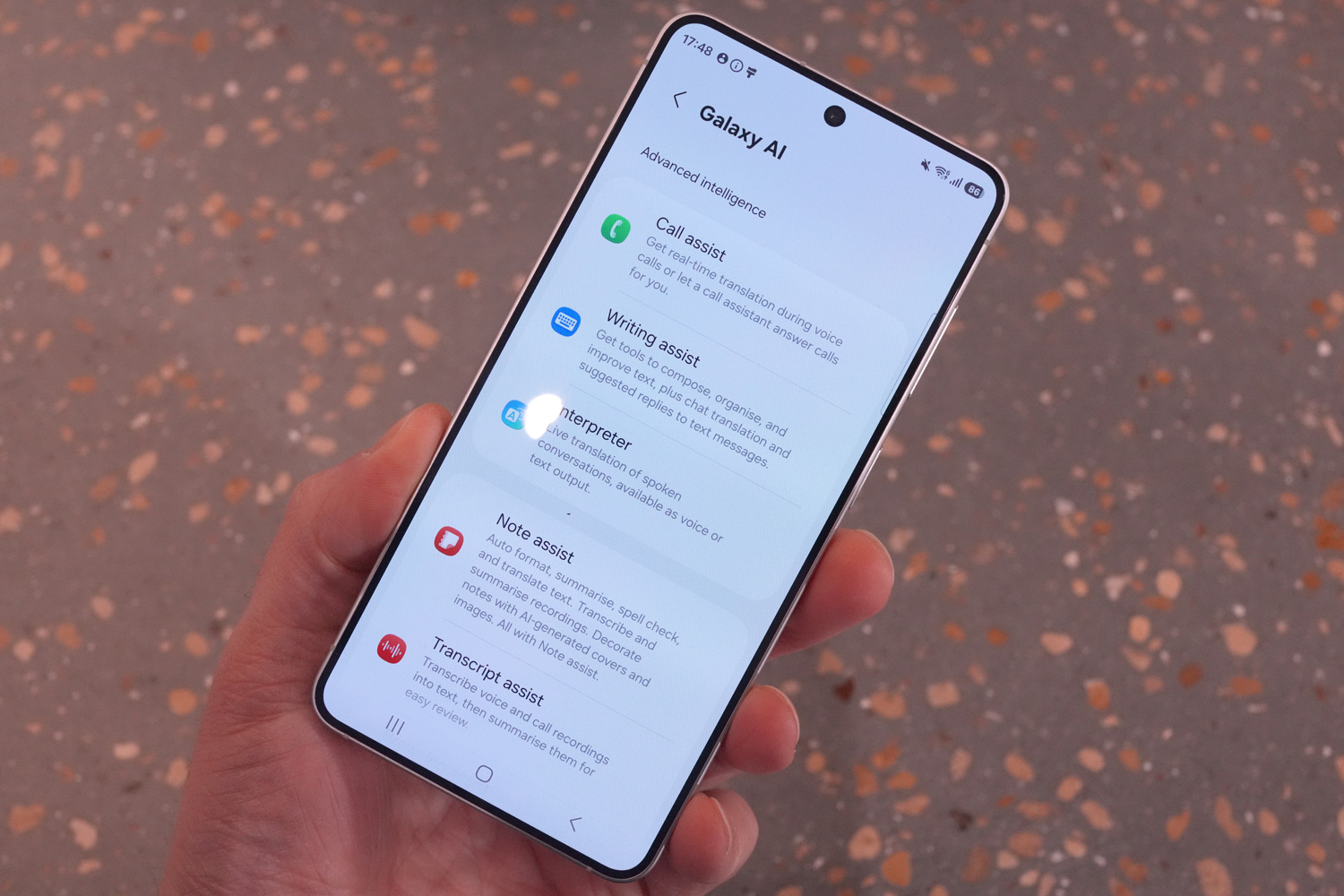
All the artificial intelligence additions were quick to perform too. More features than ever have been pulled under the Galaxy AI umbrella, including Now Nudge – essentially a version of Google’s Magic Cue built for OneUI. It can recognise context from incoming text messages and suggest appropriate information like calendar entries and event locations. The returning Now Bar can prompt you to book an uber to get you to upcoming appointments in time too.
The Audio Eraser now works with third-party apps like Netflix and YouTube, letting you dial down background distractions to more easily hear voices, and the Call Screening function uses a robot voice to intercept spammers and transcribe messages so you can decide whether to pick up the call or not. There are a bunch more ways to generate images, including whole sets of stickers to use in text messages, if you’re into that kind of thing.
OneUI hasn’t changed all that much from last year in terms of looks, so current Galaxy owners should feel right at home.
- Read more: Samsung Galaxy S26 vs Google Pixel 10 vs Xiaomi 17 – which phone is the compact Android king?
Familiar photography
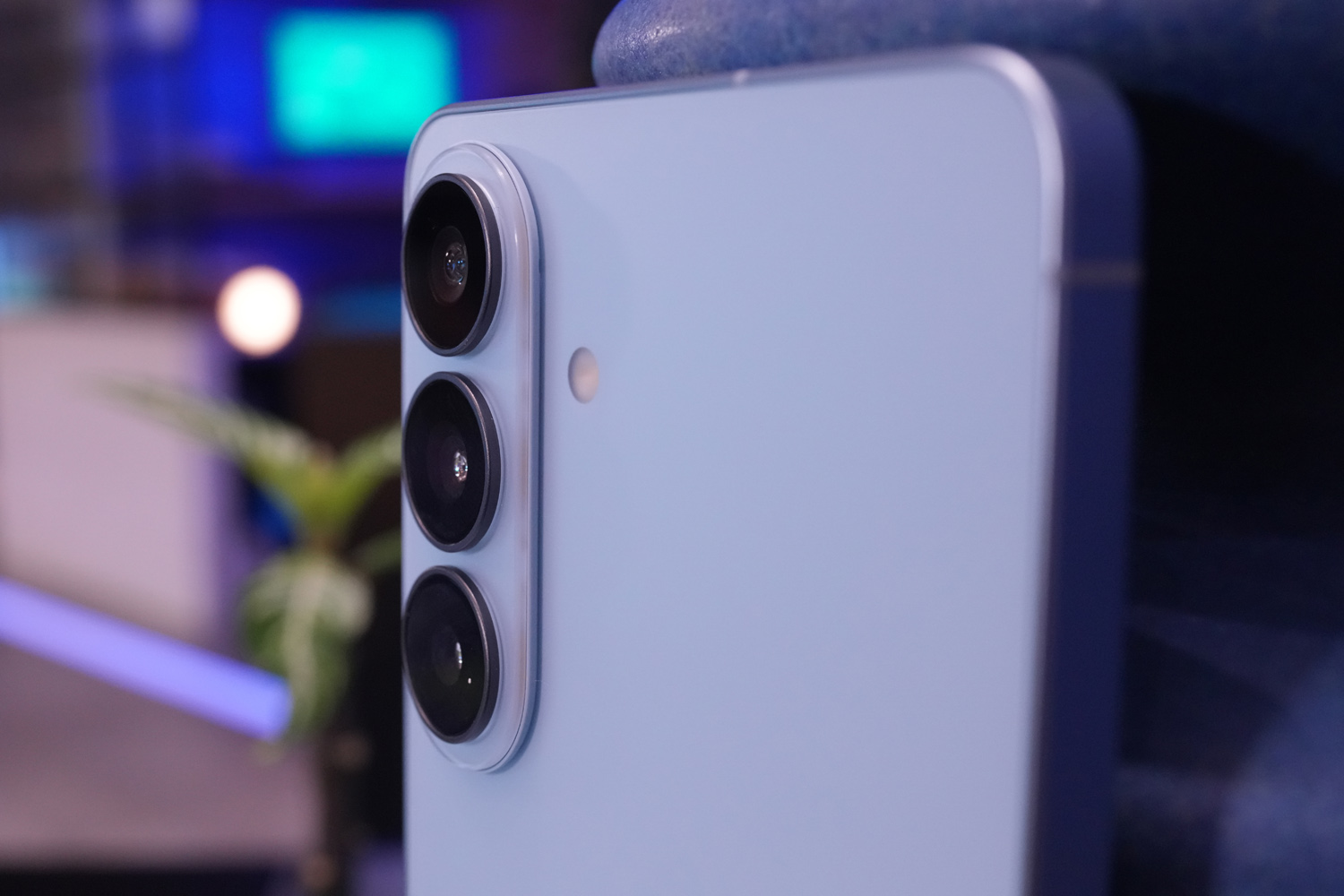
Samsung hasn’t given the camera hardware much attention this year, sticking with the same 50MP main snapper, 10MP telephoto and 12MP ultrawide that have now been putting in a shift for multiple Galaxy generations. The zoom and ultrawide sensors in particular are now well off the pace in terms of pixel count, but the firm’s computational photography and image processing games remain strong: I’m expecting the S26 to still do fairly well across a range of lighting conditions, with the vibrant, high-contrast treatment I’ve come to expect from the brand. Still, it would be shock if it manages to challenge for the lead among ‘mainstream’ flagships.
Battery life feels like the biggest stumbling block so far, at least on paper. Only the regular Samsung Galaxy S26 has seen a capacity increase, and it’s a modest one: 4300mAh is still leagues behind the similarly compact Xiaomi 17 (which admittedly is only on sale in China right now and may see its capacity shrink to meet worldwide regulations). The S26+ keeps the same 4700mAh cell as last year, meaning it has a third less capacity than a OnePlus 15.
A more efficient chipset and software optimisations will only carry these phones so far. I’d be surprised if either make it longer than a day between refuels. Charging speeds haven’t changed between generations either, leaving the regular S26 truly at the bottom of the pile at 25W. The Galaxy S26+ fares a little better at 45W, though that’s still almost a third of what a OnePlus 15 can manage.
Built-in Qi2 magnetic charging still doesn’t make the grade either, meaning you’re relying on magnet-lined cases for yet another Galaxy generation.
Does user experience matter more than having the best hardware?
Yes, hardware is only half the story here. There’s no denying Samsung’s OneUI is slick, fully-featured software that millions of people are happy with. But the firm has a strong track record or rolling out new features to previous-gen handsets in good time, and with only minor changes beneath the skin, even Galaxy S23 and S24 owners may want to think twice about hitting that buy button – especially as prices have gone up across the board.
The base Galaxy S26 starts at $900/£879 and the S26+ opens at $1100/£1099. Those are £80 and £100 increases over last year’s models respectively in the UK, although the outgoing Galaxy S25 did have 128GB of storage as standard. You’re getting 256GB here; a similarly equipped S25 would’ve cost £859, so the apples-to-apples increase is more like £20.
Maybe a full review will prove the package is worth more than the sum of its parts? We’ll find out soon. The two phones go on sale on March 11.


 Tom Morgan-Freelander
Deputy Editor
Tom Morgan-Freelander
Deputy Editor