Stuff’s Mobile World Congress 2026 Awards: greatest phones and gadgets from the world’s largest mobile technology show
From modular laptops and motorised camera phones, to hypercars and paper-like tablets – here are our MWC 2026 award winners


Welcome to Stuff’s Moble World Congress 2026 Awards! This year’s Barcelona phone showcase once again proved that even in a sea of near-identical glass rectangles, there’s still room for surprise and wonder.
Yes, we saw the usual procession of faster chips, brighter screens and AI sprinkled liberally over everything. But it was the bold ideas – the phones that physically move, the laptops that reconfigure themselves, the tablets that feel like paper, and even a full-blown electric hypercar – that really cut through the noise on the Barcelona show floor.
Some of these devices are heading to shops sooner rather than later. Others may remain ambitious concepts. All of them, though, remind us that consumer tech can still take risks rather than simply iterate.
Without further ado, here are Stuff’s MWC 2026 award winners.
Leica Leitzphone


Camera brand tie-ins are often little more than a logo and a preset or two. But the Leica Leitzphone goes much further.
While it’s based on the Xiaomi 17 Ultra, Leica’s fingerprints are all over it – and not just in the colour science. The fibreglass rear ditches the China-only dual-tone look for a stealthy all-black finish, complete with Leica’s unmistakable red dot and a knurled metal frame that feels more camera than phone.
Specs-wise, the oversized camera module houses a 1-inch main sensor, a 200MP telephoto with continuous 75–100mm zoom, a 50MP ultrawide and a 50MP front camera – a serious setup for smartphone shutterbugs.
Elsewhere, the mechanical control ring around the camera island seals the deal. Twist it to adjust zoom, ISO, shutter speed, exposure value or focal length, with haptic feedback mimicking a proper Leica body. The camera app has also been reworked with Leica fonts, icons and colour profiles, including nods to the M9 and Monopan film.
Honor MagicPad 4
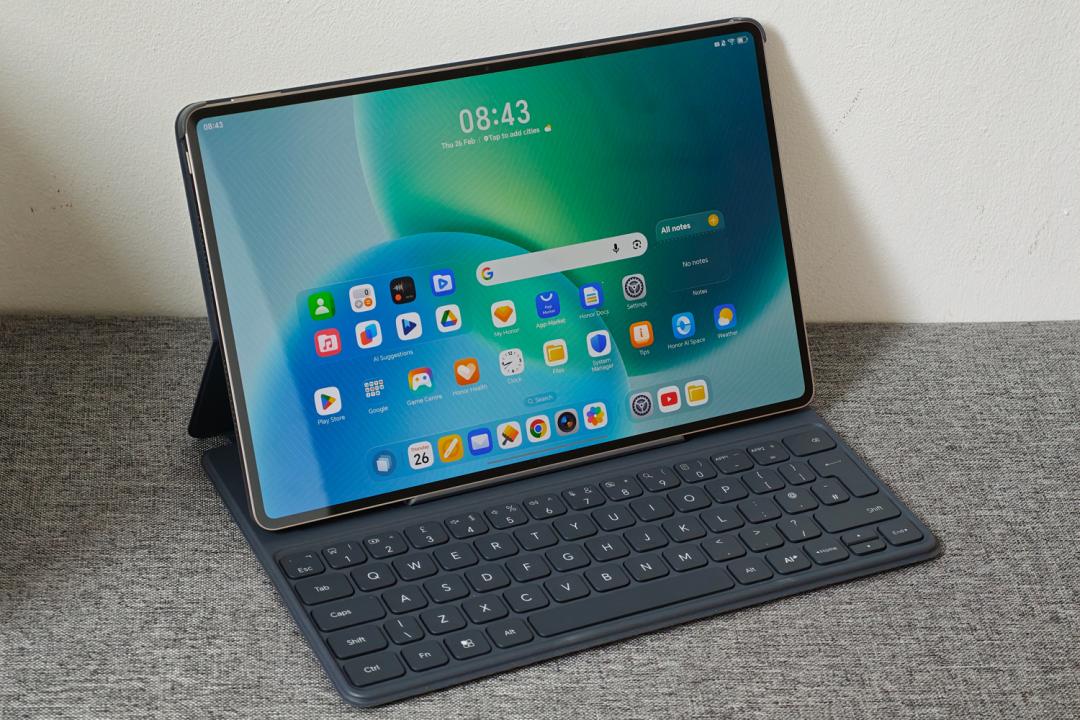
At just 4.8mm thick, the Magic Pad 4 undercuts most rivals on slimness, yet still manages to feel reassuringly rigid thanks to its aluminium unibody shell. The real headline, though, is the 12.3in OLED display.
With a 3000×1920 resolution, up to 165Hz refresh rate, and HDR peaks of 2400 nits, it’s an absolute treat for streaming and gaming alike. Black levels are properly inky, colours are rich without looking cartoonish, and motion feels gloriously fluid.
Under the hood sits Qualcomm’s Snapdragon 8 Gen 5, paired with up to 16GB of RAM and backed by a 10,100mAh battery with 66W wired charging. It’s more than capable of juggling multiple apps, handling demanding games, and stretching across a few days of mixed use without panic.
MagicOS 10 atop Android 16 brings split-screen multitasking and a desktop-style mode for serious work sessions, while long-term software support looks reassuringly competitive.
- Read more: Honor MagicPad 4 review
Honor Robot Phone
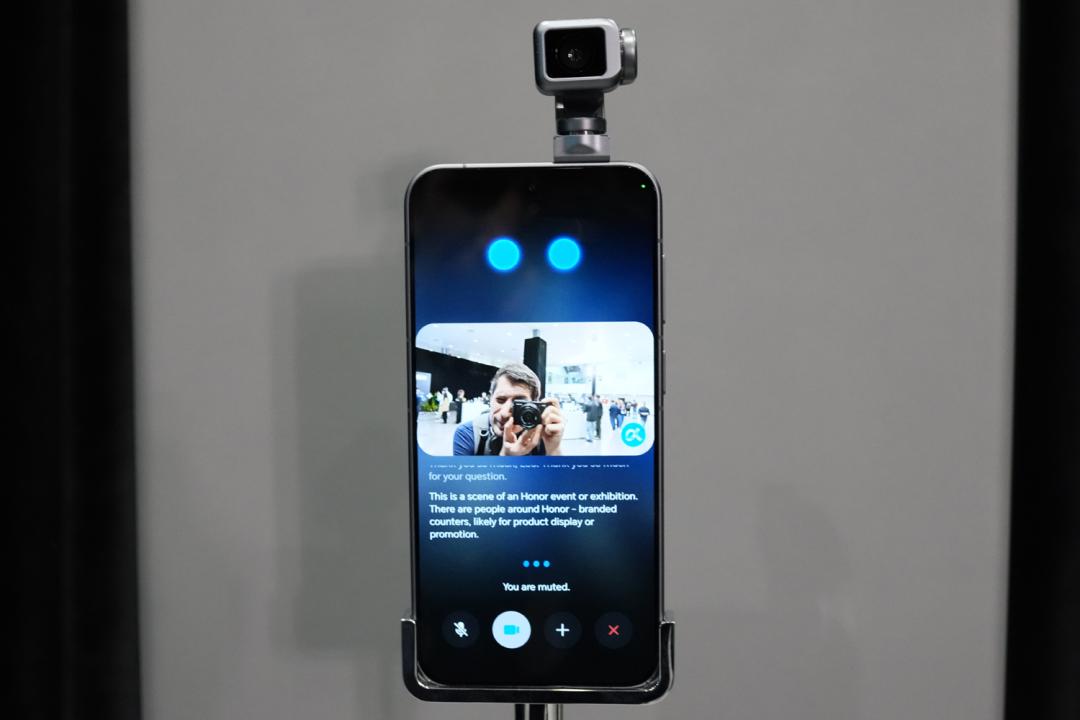
Honor’s Robot Phone mixes the cookie-cutter smartphone formula up by replacing the traditional rear camera island with a motorised, three-axis gimbal that physically unfolds from the body when you open the camera app.
It sounds absurd – until you see it track a subject smoothly across a room, lock on using AI object recognition, and spin through 90-degree or 180-degree shots with stabilisation that puts most phones to shame.
The gimbal houses a 200MP sensor and delivers four degrees of freedom once deployed. When you’re done filming, it folds back into the chassis and a protective door slides over the mechanism. Despite the complexity, it wasn’t nearly as bulky as expected in the hand.
Honor’s broader ambition is bigger than vlogging, though. The motorised module doubles as the phone’s eyes, enabling multi-modal AI interactions where the assistant responds to what it can physically see. During demos, it described its surroundings in real time, complete with animated eye graphics onscreen.
Specs beyond the camera remain under wraps, but a full launch is slated for the second half of 2026. If it ships as shown, it won’t just be one of the year’s most unusual phones – it might be one of the most capable for creators, too.
Tecno modular concept
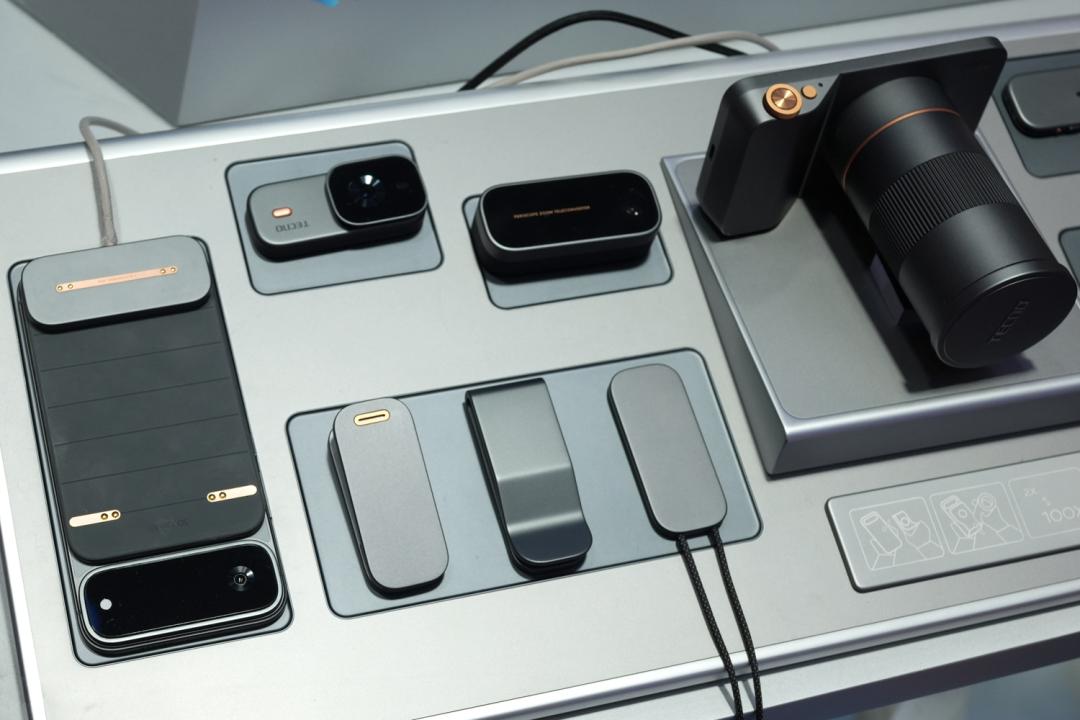
We’ve been promised modular phones before. They rarely end well. But Tecno’s latest attempt is at least doing it with some flair.
The concept handset measures as little as 4.9mm thick in its base configuration – impressively slim even before you start snapping things onto it. Tecno calls its system Modular Magnetic Interconnection Technology, which means magnets built into the chassis that allow add-ons to attach cleanly and securely to the rear.
Up to ten modules are reportedly in development, including interchangeable camera lenses, a gaming attachment, and even a magnetic power bank. It’s a throwback to Moto Mods and Google’s Project Ara ambitions, but packaged in something that looks modern and desirable.
Whether it ever makes it to shelves is another matter entirely. Still, as a showcase of how thin and adaptable a modular smartphone could be, this is one of the more intriguing concept directions we’ve seen on the show floor.
- Read more: A modular phone, a neon-glowing handset, and one that matches your outfit – Tecno’s MWC trio is wild
Lenovo ThinkBook Modular AI PC Concept
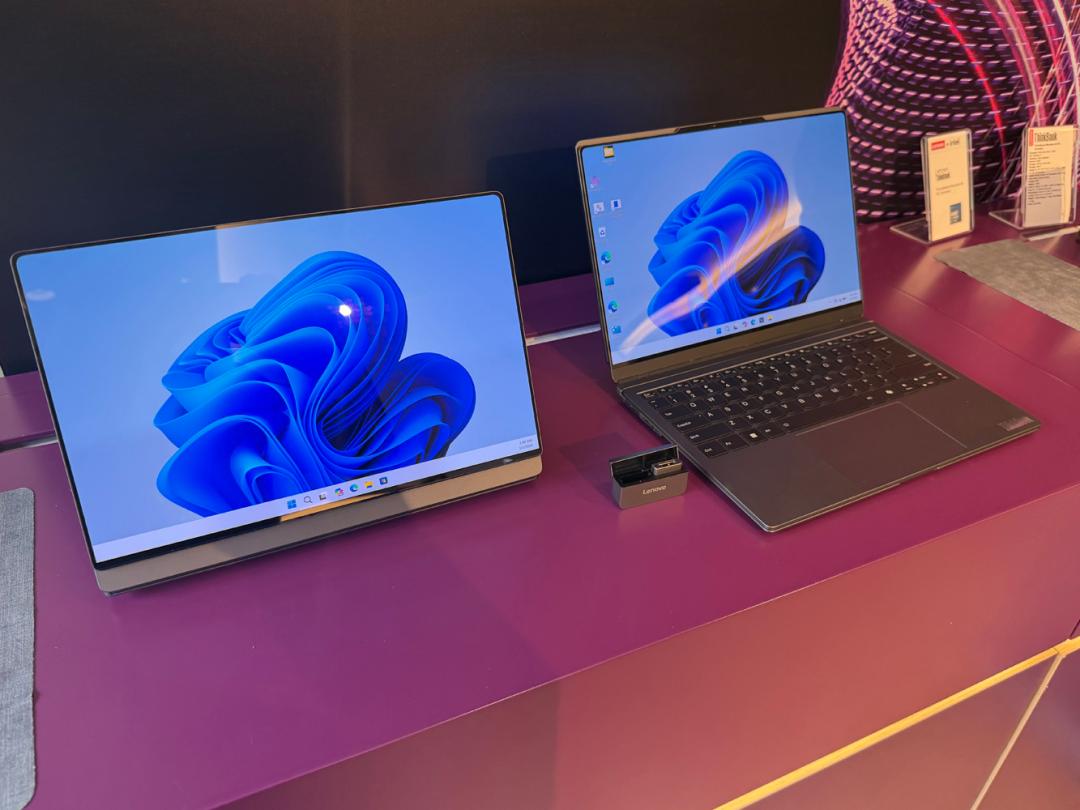
At first, Lenovo’s concept is a fairly standard 14-inch laptop. Look closer though, and you’ll spot a second display magnetically attached to the back of the main screen. Pop it off, and you’ve got a lightweight tablet. Reconnect it via a proprietary cable, and it becomes a fully fledged second display.
Both panels can be used in portrait, and the Bluetooth keyboard can detach too, letting you build a dual-screen setup almost anywhere.
The modularity doesn’t stop at screens, though. Lenovo is also experimenting with swappable ports, so you can slot in USB-A or HDMI modules depending on what your day demands – a refreshingly practical spin on vanilla computing.
There’s no confirmed release date, but compared to many show-floor prototypes, this one felt surprisingly finished. If it makes the leap from concept to consumer product, it could be the most adaptable work machine of the year.
Xiaomi Vision GT
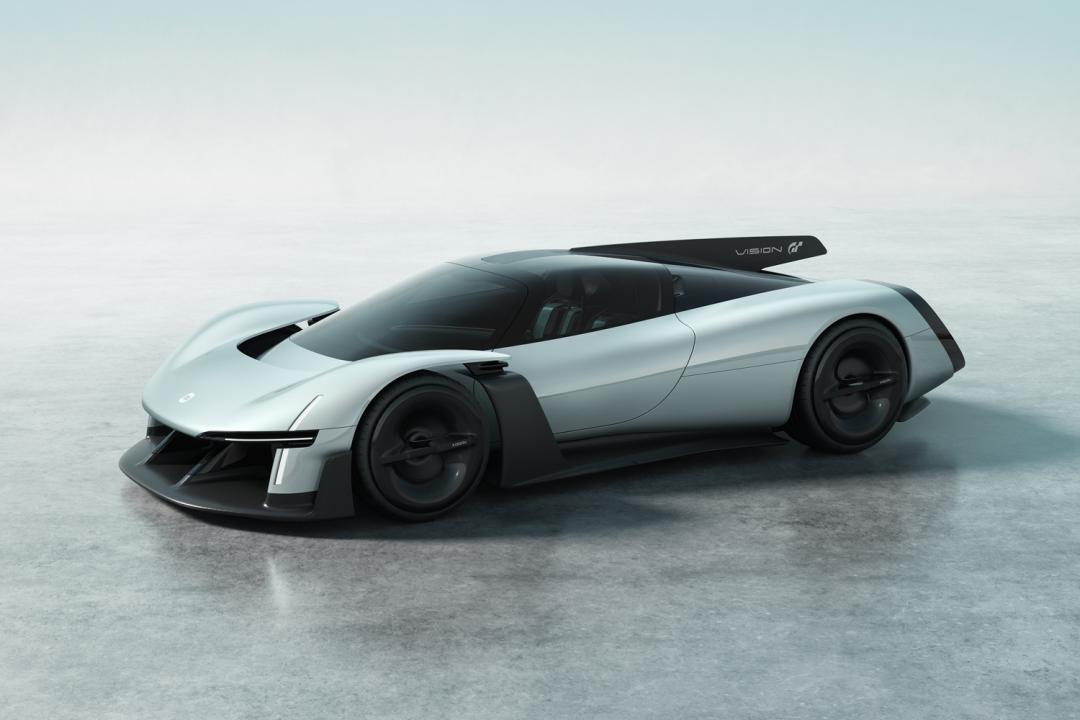
Most brands roll into MWC with thinner phones and bigger camera sensors. And while Xiaomi did show off its impressive 17 Ultra, it also decided to park a hypercar on its stand.
The Xiaomi Vision Gran Turismo – originally created for the long-running Gran Turismo game series – has now made its physical world debut. Low-slung, teardrop-shaped and unapologetically dramatic, it looks like it’s been lifted straight from an engineer’s fever dream.
Xiaomi calls its design philosophy “Sculpted by the Wind”, and the details are as theatrical as the silhouette. An Active Wake Control System uses micro-perforations around the halo-shaped taillight to manage airflow, while vortex-inspired Accretion Rims sit flush with the tyres, using turbine fins and a magnetic stabilising system to reduce drag and cool the brakes.
Inside, the “Sofa Racer” cabin blends performance theatrics with comfort, while Xiaomi Pulse and HyperVision software throw plenty of tech into the mix.
- Read more: Xiaomi’s bonkers electric hypercar just made its global debut – and it’s pure Gran Turismo fantasy
TCL Note A1 NXTPAPER
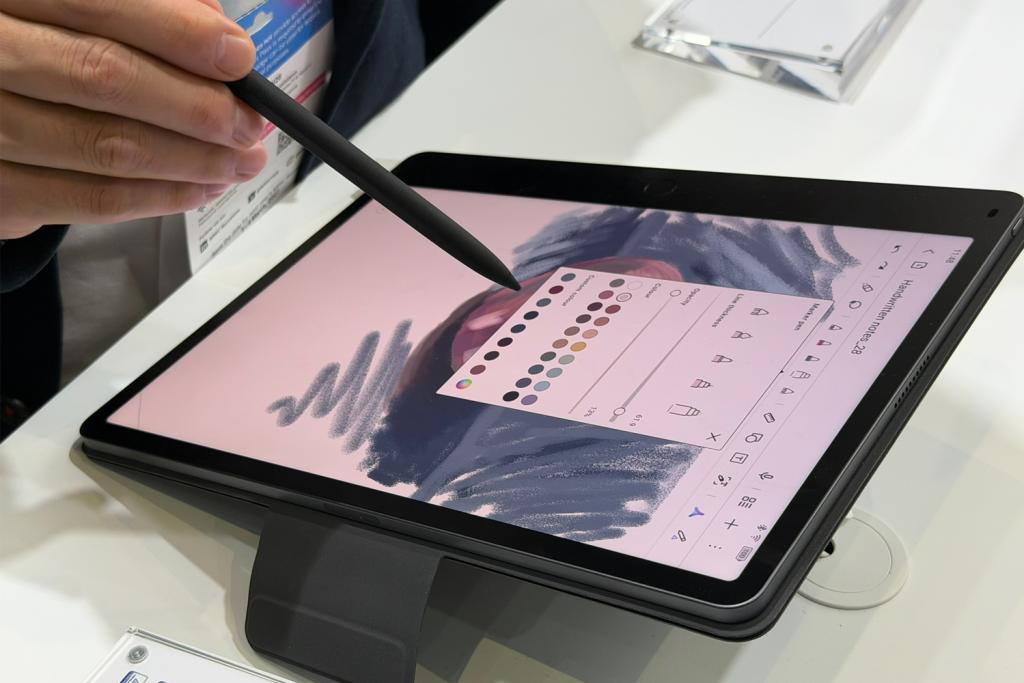
The Note A1 NXTPAPER is a digital notepad that leans hard into eye comfort and tactility, with the aim of recreating a paper-like reading and writing experience.
Despite appearances, it isn’t using E Ink, either. Instead, TCL’s NXTPAPER Pure LCD technology combines a matte anti-reflective layer with a subtly textured surface designed to soften glare and add friction when writing. The result is a screen that looks and feels far less harsh than a typical tablet display.
It’s also smooth for something pitched at note-takers. The 120Hz refresh rate keeps pen input and scrolling fluid, while the bundled T-Pen Pro supports 8192 pressure levels and low-latency input, complete with haptic feedback that changes depending on your writing tool.
At 5.5mm thin and around 500g, it feels more like a digital notebook than a conventional tablet. It runs a modified version of Android with full Google app support, and TCL’s Inspiration Space tool lets you circle on-screen content and collect it into a central hub, complete with source links.


 Esat Dedezade
Contributor
Esat Dedezade
Contributor