Sony RX1R III review: full frame on a small scale, but with a few frustrations
Opulent fixed-lens compact brings speed and clarity

Stuff Verdict
Sony’s latest luxury compact absolutely delivers on image quality, but the RX1R III is ruinously expensive and lacks features that make rivals so much more fun to use.
Pros
- Image quality is sublime for its size
- Fast, smart and accurate autofocus
- Lens-based controls very intuitive
Cons
- Fixed touchscreen can make composition tricky
- Focus selection can be a struggle with no D-pad or joystick
- No image stabilisation
Introduction
Fans of wallet-busting compact cameras probably have TikTok to thank for the RX1R III. Sony’s last full frame, fixed lens flagship launched an entire decade ago; since then rival Fujifilm’s retro-inspired snappers have become social media sensations, while Leica has gone from strength to strength with well-heeled stills shooters.
That’s not to say this is an opportunistic update. Sony might’ve stuck with the ageing RX1R II‘s Zeiss Sonnar 35mm lens, but it has stepped up to a more detailed 60.2MP sensor and squeezed ten years of autofocus improvements into a redesigned body.
Landing at an eye-watering $5099/£3899, the RX1R III is more than double the price of the current compact darling, the Fujifilm X100VI – but its full-frame sensor ought to have the Fuji beat for clarity. It also undercuts the medium format Fujifilm GFX100RF and is considerably cheaper than a Leica Q3. Does that make it the new fixed lens sweet spot for serious stills shooters?
How we test cameras
Every camera reviewed on Stuff is tested in a range of lighting conditions, with a variety of subjects and scenes. We use our years of experience to compare with rivals and assess ergonomics, features and general usability. Manufacturers have no visibility on reviews before they appear online, and we never accept payment to feature products.
Find out more about how we test and rate products.
Design & build: pocket rocket
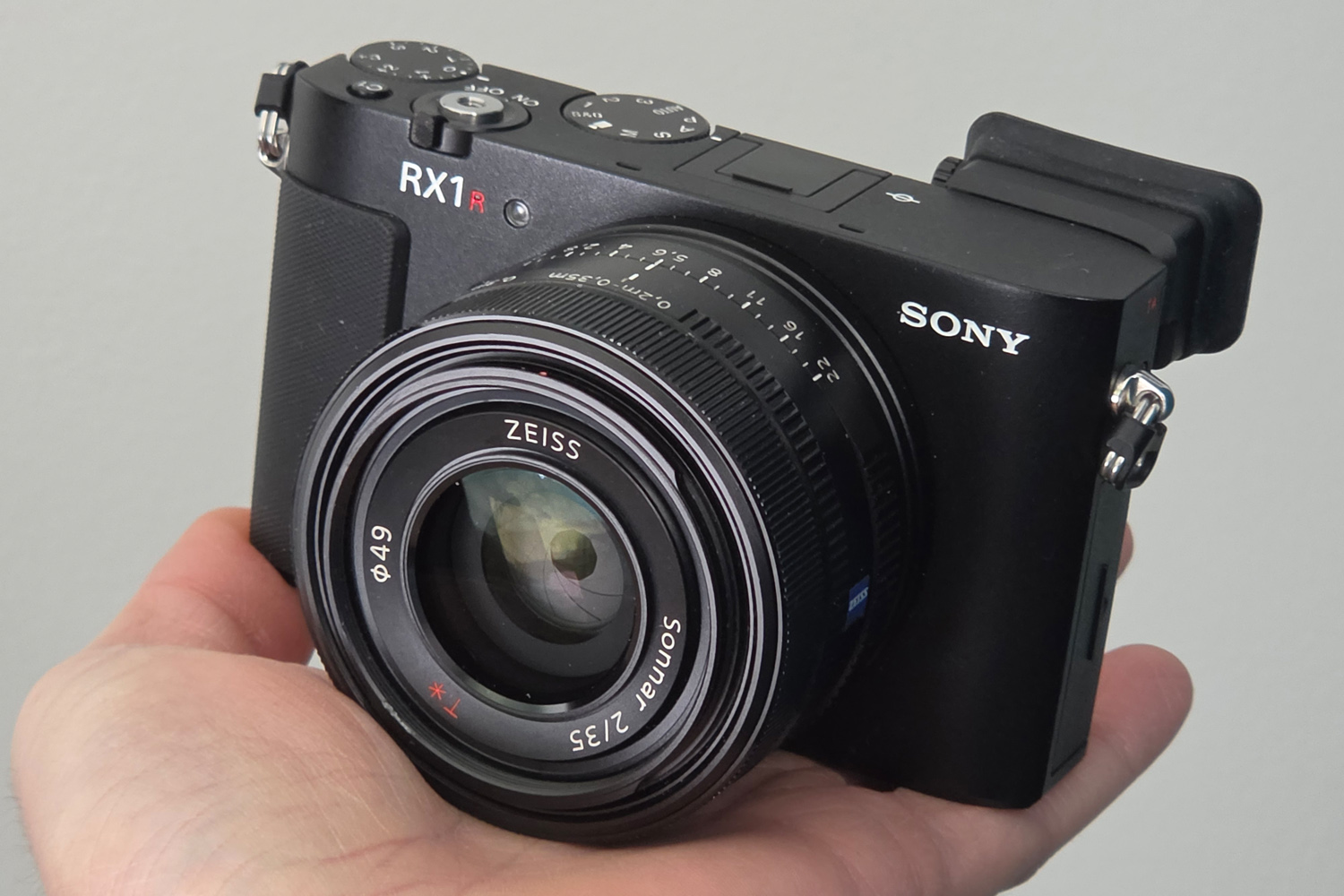
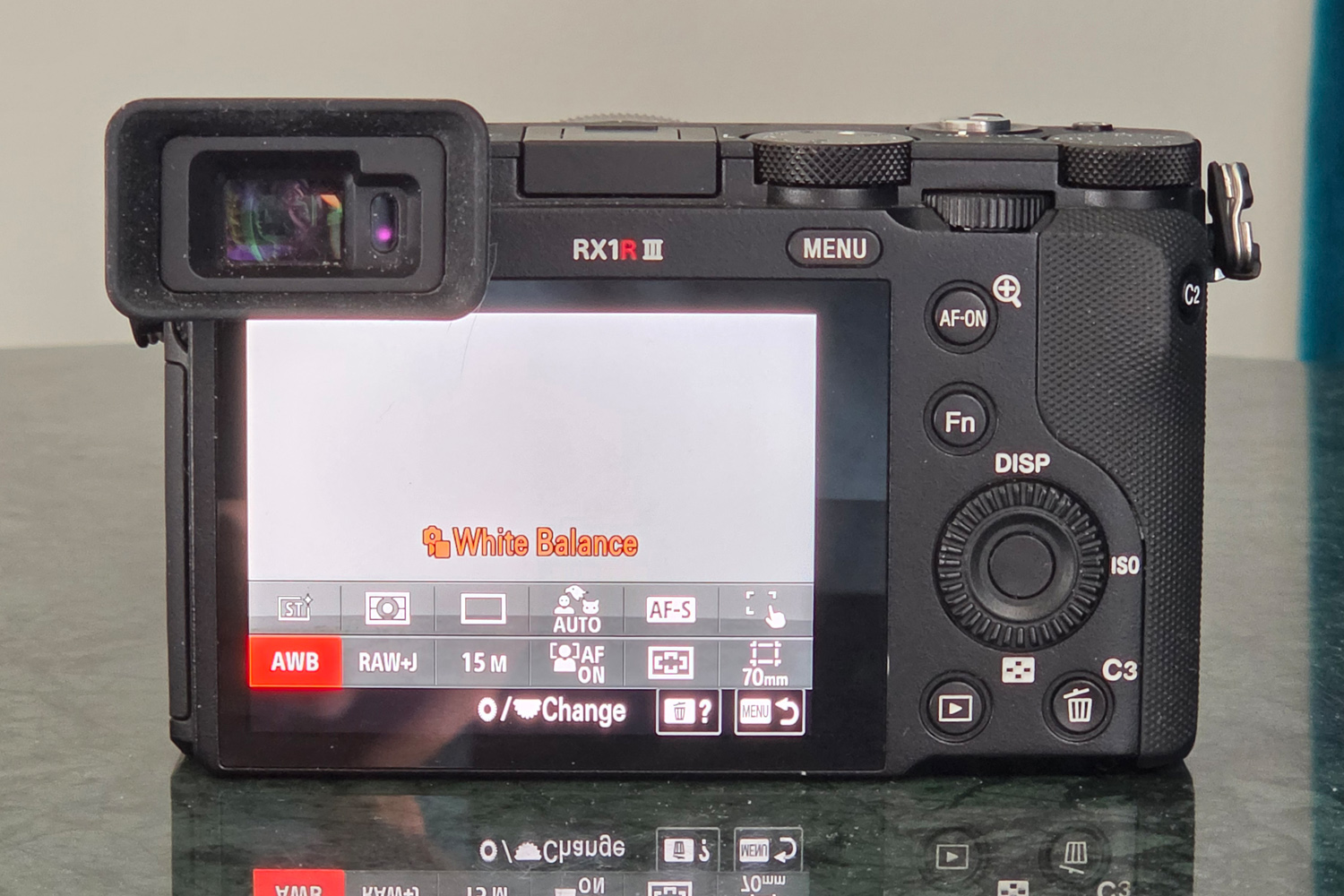
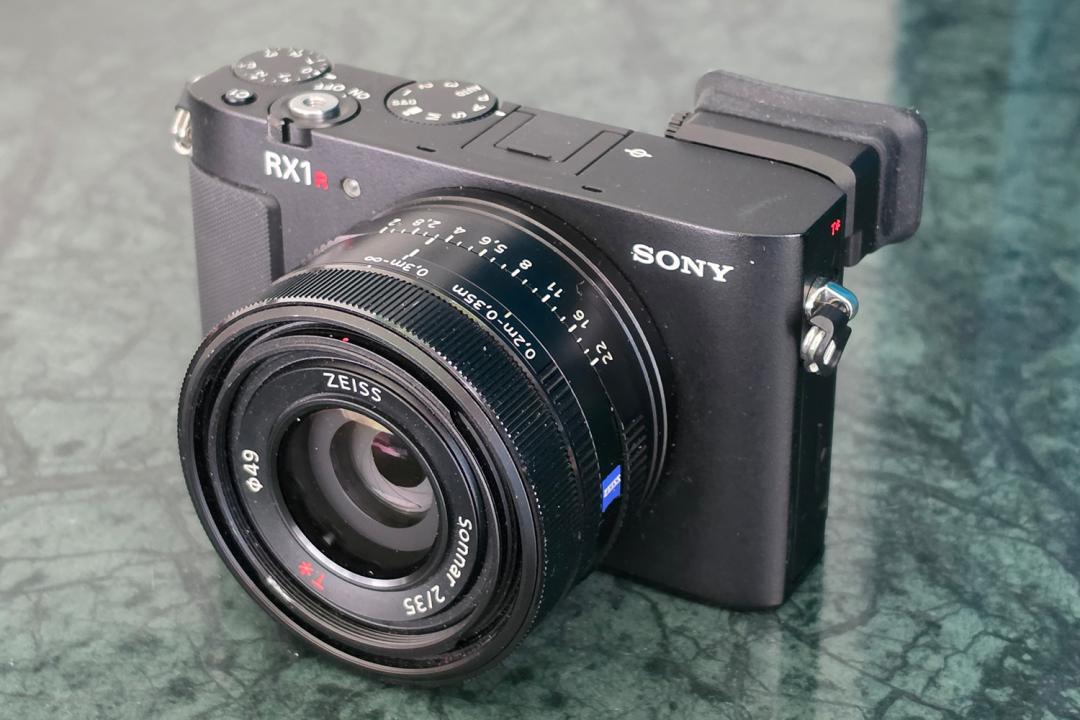
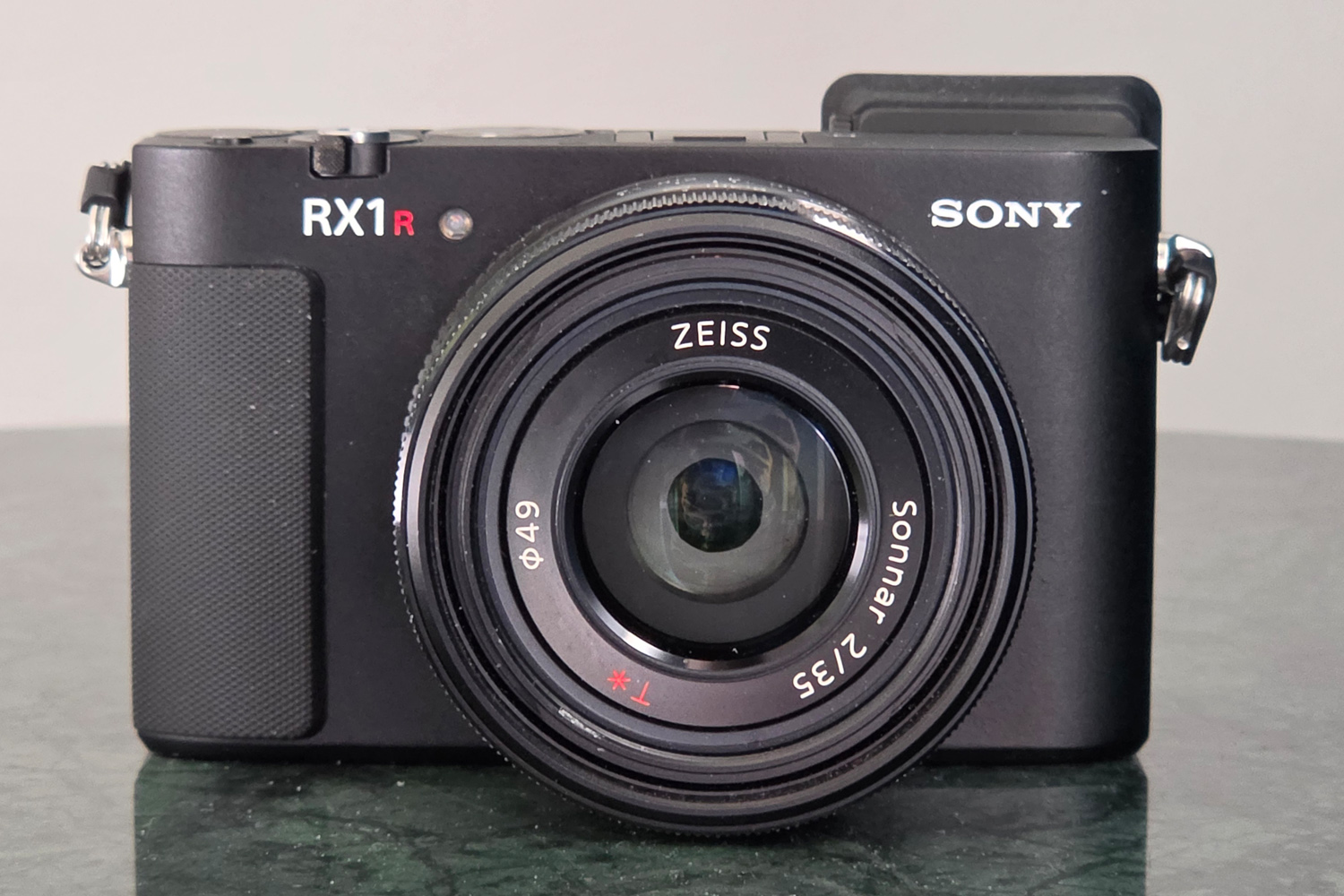
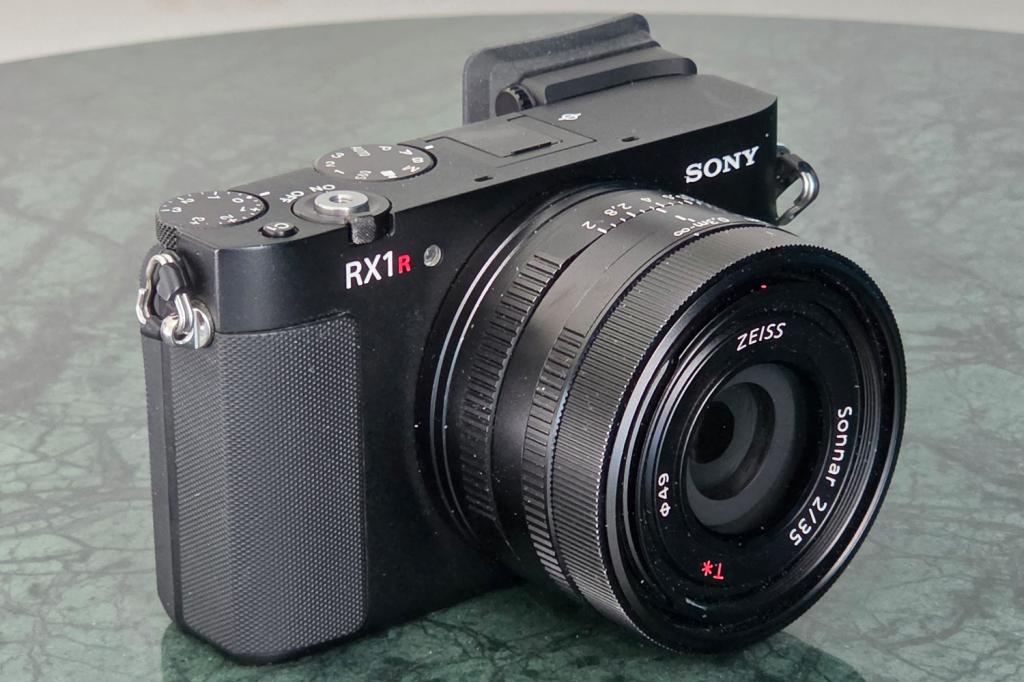
For a photographic powerhouse, the RX1R III is impressively small. The camera body easily sits in an outstretched palm yet Sony has found room for a 3in touchscreen and good selection of dials and physical controls – along with the star of the show, a Zeiss-badged 35mm f/2.0 lens.
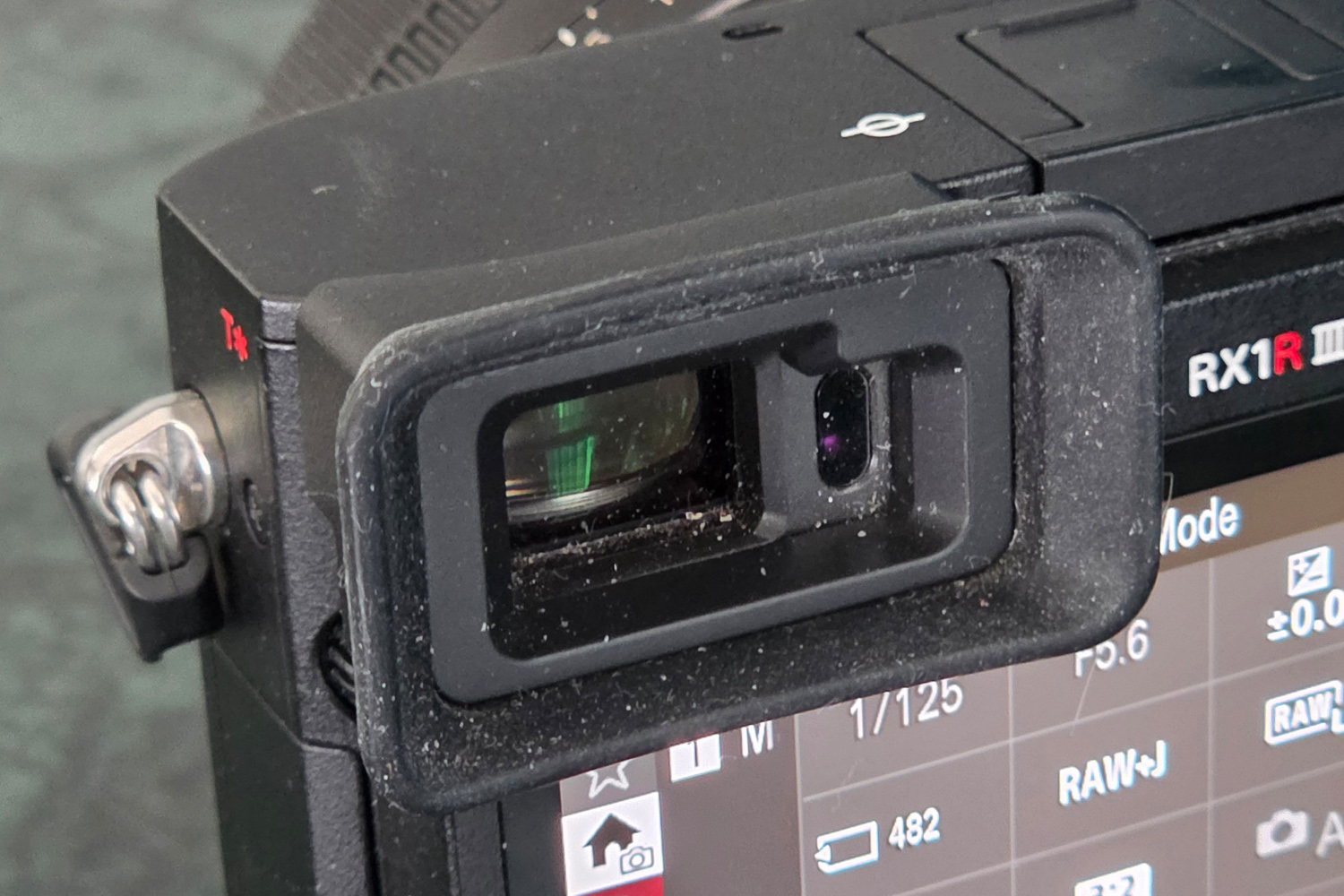
There’s also a fixed electronic viewfinder, rather than the pop-up one seen on the RX1R II; I like that it’s always there when you want it, even if the resolution isn’t quite on the level of Leica or Fujifilm’s best. The deep rubber eye cup bundled in the box is worth fitting if you’ll be outdoors in strong sunlight. It’s secured with a screw so never fell off when I had the camera loose in my bag.
The all-metal body feels suitably tank-like, although Sony makes no claims about weather sealing and doesn’t offer any kind of lens protection filter, like Fujifilm does for the X100VI. The protruding lens also stops the RX1R III from being as as pocket-friendly as its cheaper APS-C rival. I used it with a neck strap, but it’s small enough that a wrist strap would also be a good choice.
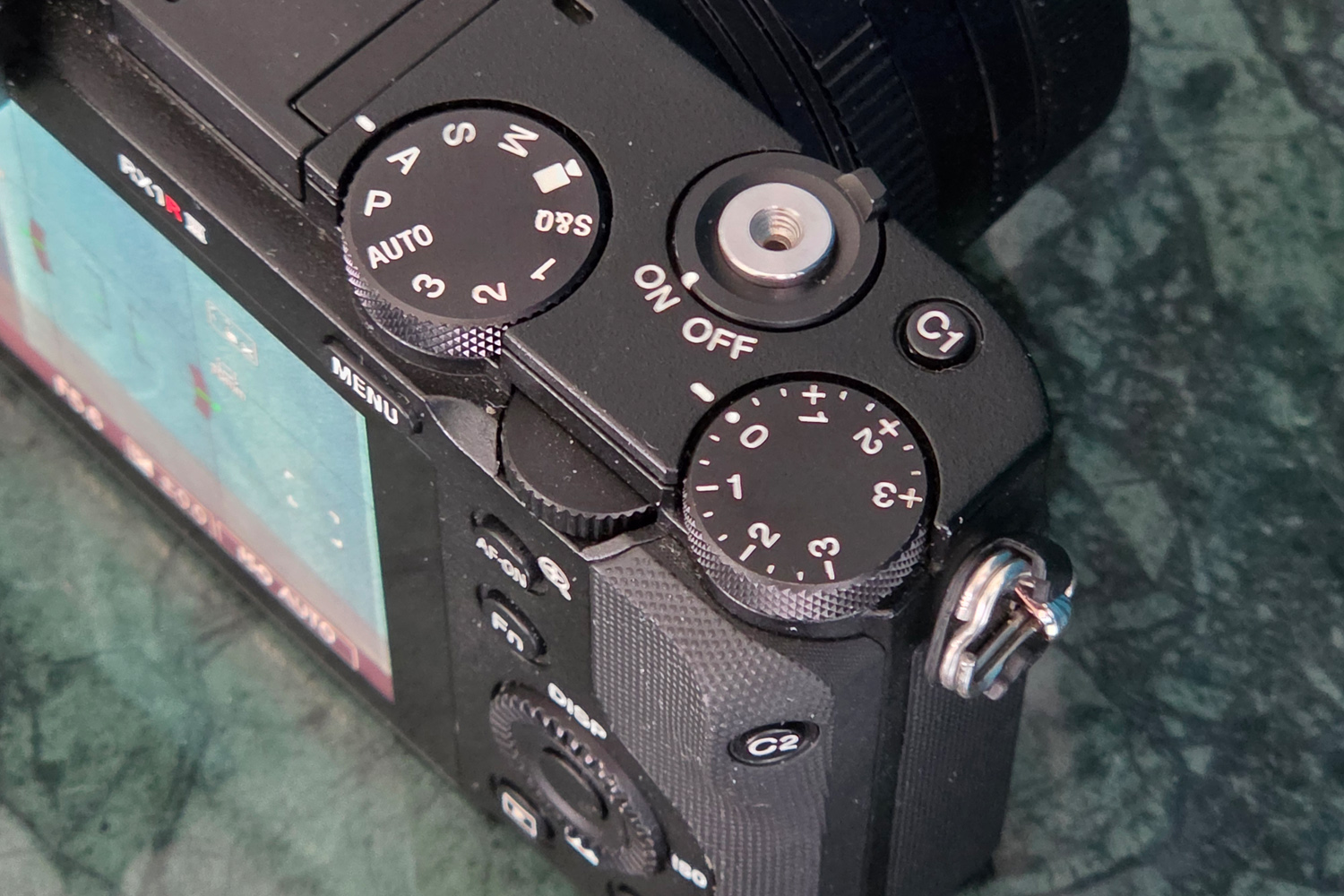
Ergonomics aren’t great off the bat, with a hand grip that’s very subtle and a very small thumb rest on the rear panel. The compact buttons can also be tricky to differentiate by touch. Things are better on the top plate, where you’ll find PASM and exposure compensation dials. A customisable thumb wheel sits just below them.
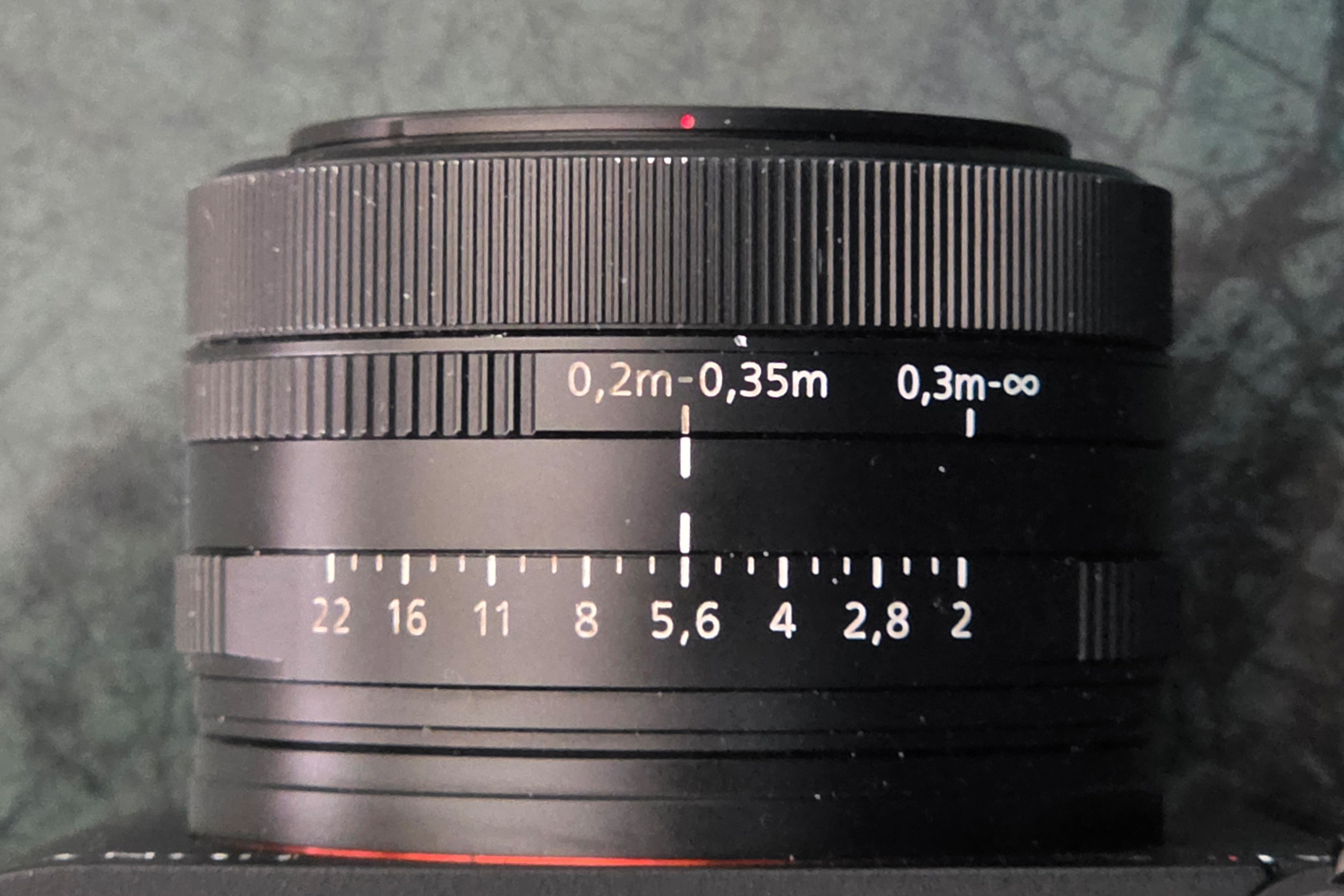
Aperture control is via a dial on the lens itself, along with focus distance: you can swap between 30cm-infinity and 20-35cm when shooting closeups. It all feels wonderfully mechanical as you twist, though it could use a few more ridges to aid with grip.
One minor design quibble? Sony has massively shrunk the orange accent around the lens barrel. It’s something I felt gave the outgoing RX1R II a bit of personality.
Features & battery life: keep it simple
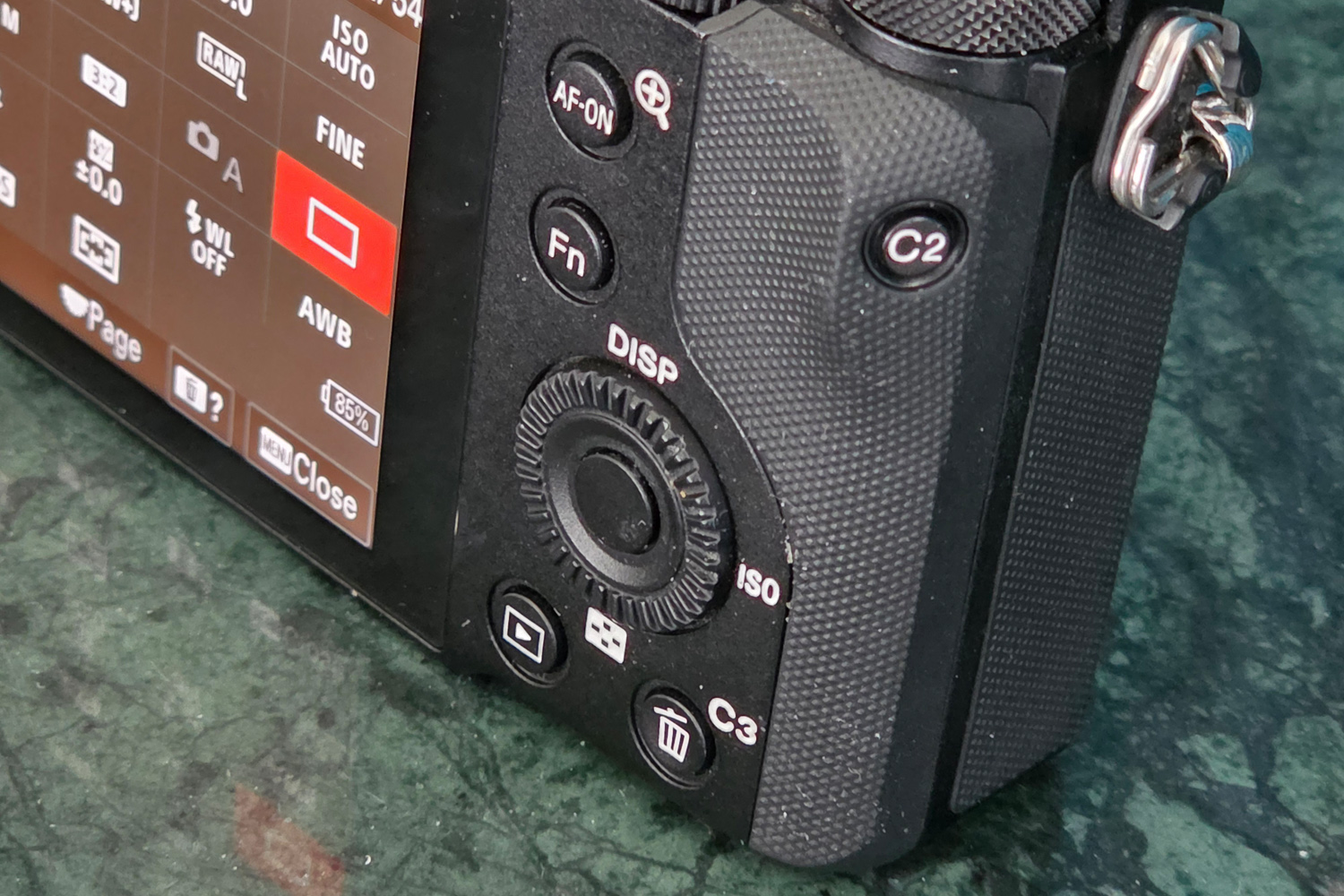
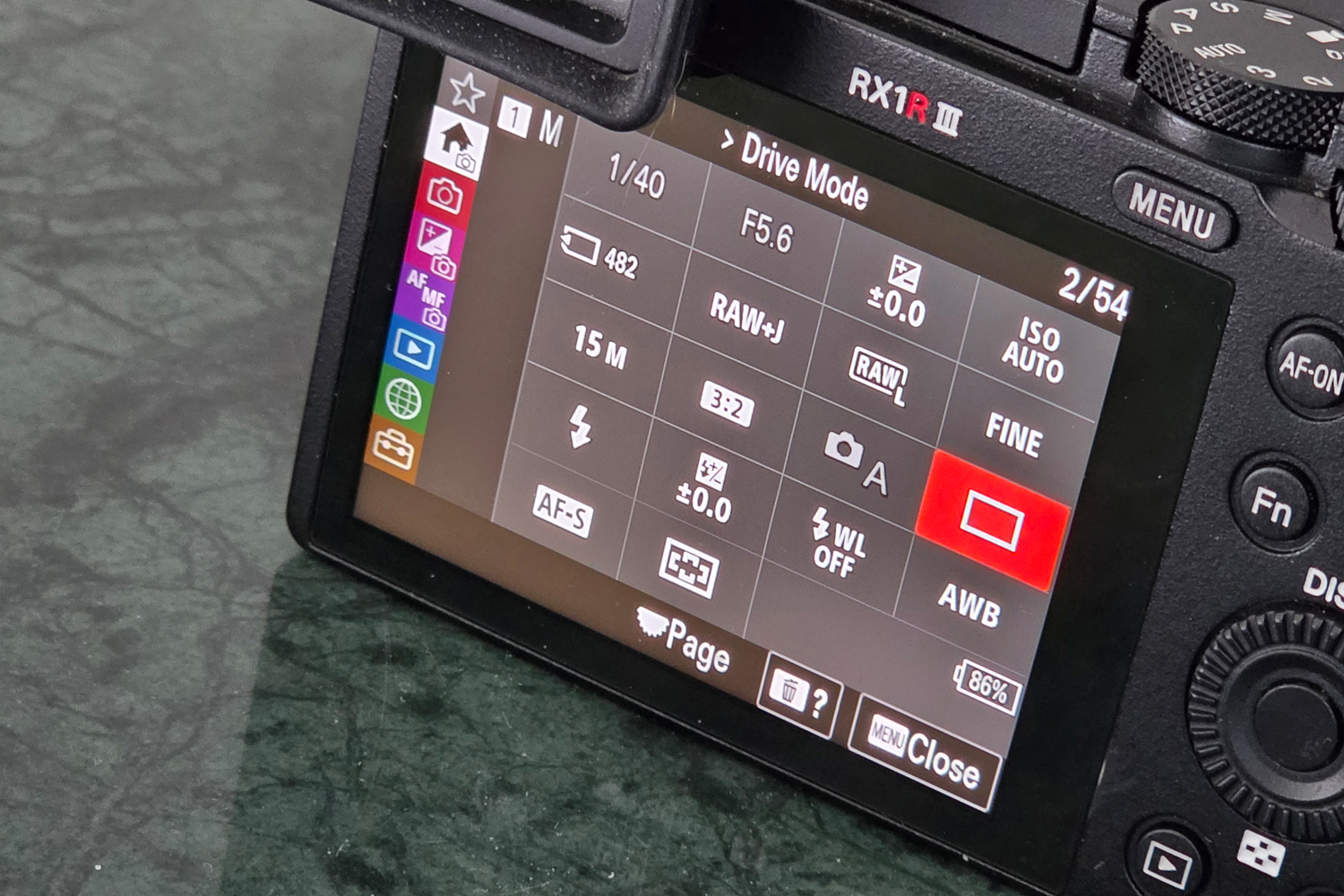
The RX1R III’s fixed touchscreen might be easier to operate, but in other respects is a step back from the previous generation’s tilting display. It has a high resolution and is plenty bright enough for outdoor shooting, but isn’t nearly as helpful when attempting high- or low-angle shots. The 4:3 aspect ratio means it’s also smaller than some rivals’ 3:2 screens.
Changes between models are a mixed bag elsewhere too. Swapping the outgoing RX1R II’s video button to a customisable one that defaults to focus selection meant I never accidentally started recording a clip, but moving the focus point is a two-step process using the rear control wheel. It’s hard to work out which mode you’re in, resulting in ISO or display changes I didn’t want. Until that muscle memory builds up it can be frustrating.
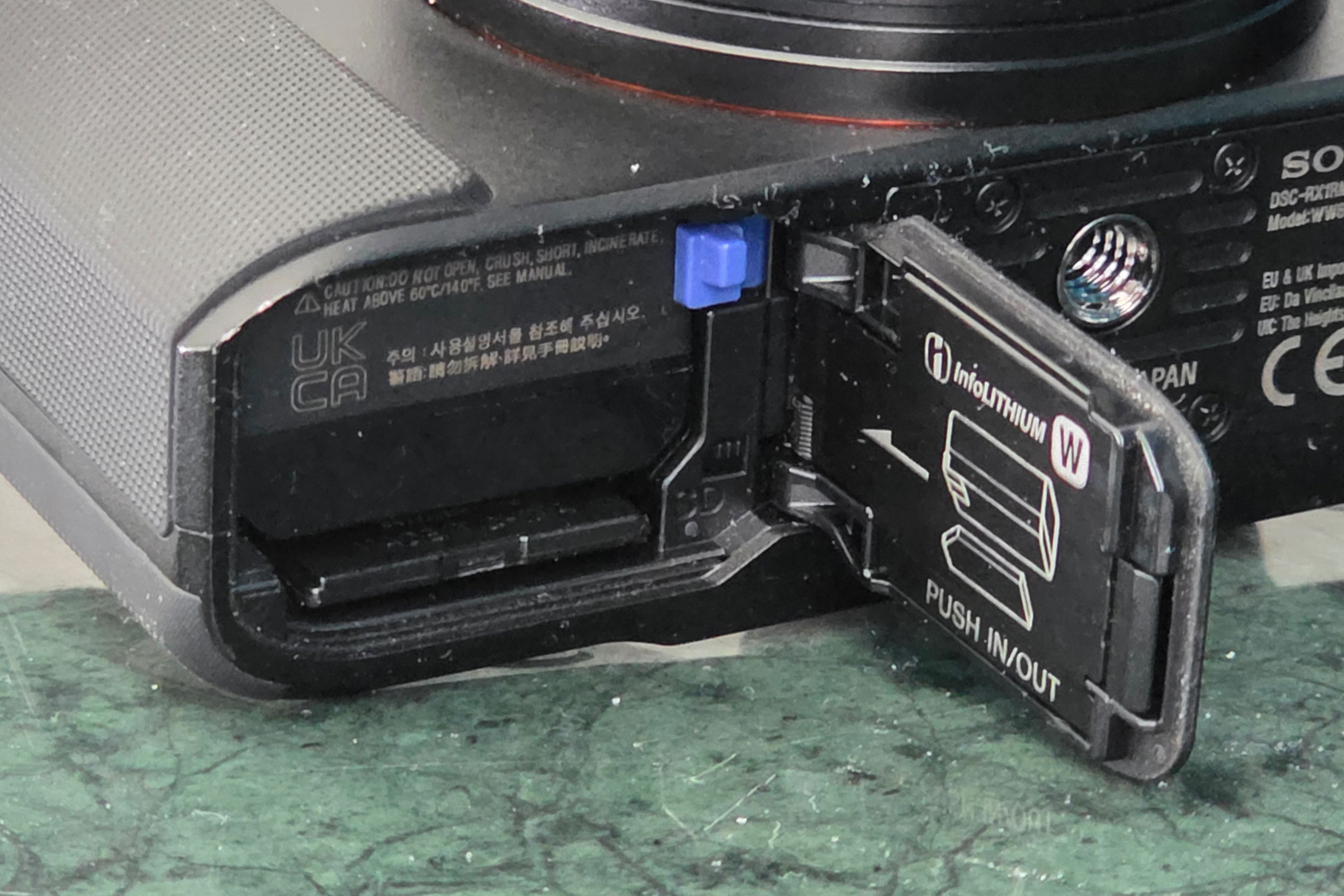
There’s no built-in flash, but you can at least add one using the hot shoe. Budget for a lens hood if you want one, as Sony doesn’t put one in the box, and definitely plan on picking up at least one extra battery. I never got close to the claimed 270-300 shots, and would often run out of battery before the end of a busy shooting day.
Connectivity is decent given the camera’s compact nature, with a micro-HDMI video output and 3.5mm microphone port as well as a USB-C for power and data transfer. You can’t plug in headphones for audio monitoring though. This is primarily a stills camera, with Sony limiting video recording to 4K/30 in order to keep chipset temperatures in check. Wi-Fi and Bluetooth are both on board for wireless control and file sharing through Sony’s smartphone companion app, which is comprehensive but easy to navigate.
Performance: fast to focus
Nearly everything about the RX1R III is fast. The camera starts up pretty much instantly and Sony’s hybrid phase/contrast detect autofocus system felt especially nippy to lock on. The automatic subject detection was able to pick out people, animals, birds, insects and vehicles with impressive accuracy, even in low light, while the 693 user-selectable focus areas cover almost the entire frame. The only waiting is for the lens to move its large amount of glass around as it seeks focus, and I’d hardly call that slow.
The leaf shutter is silent, making this a great choice for incognito street shooting, though I still missed the tactile thunk of my usual system camera.
Continuous shooting also suits street photography just fine at 5fps. This isn’t a camera for wildlife or sports snapping, as even with the digital crop you just won’t get close enough to your subjects. ‘Zooming’ to 50mm drops the resolution to 29MP and a 70mm crop dips further to 15MP, but both are impressively useable. I like that the camera can save a full-size RAW alongside the cropped JPEG, but didn’t like how it defaults to the last used crop between power cycles – or isn’t clear on which zoom level you’re at in the UI. Translucent borders like those seen on the Fujifilm X-E5 would be a sensible inclusion.
The mechanical shutter maxes out at 1/2000sec, which isn’t the speediest for low ISO shooting in bright conditions. There’s also no ND filter like you find on the Fuji X100VI, so you’ve got to swap to the electronic shutter if you’re experiencing highlight blowouts – then back again once the sun goes in, to avoid the prominent rolling shutter effect. Sony’s extensive onscreen menus can make this cumbersome, but less so once I’d curated a single page of relevant modes and settings.
At the other end of the spectrum there’s no in-body image stabilisation to help with slow shutter speeds and low light. You do get an electronic stabilisation, but only when shooting video, and at a cropped resolution. Once again, this isn’t the camera to go for if you plan on filming a great deal.
Image quality: high definition
Sony’s 60.2MP full-frame sensor is a known commodity at this point, having most recently appeared in the A7R V and A7C R. There are also good odds Leica used the same hardware in the Q3. Resolution has seen a considerable jump from the RX1R II’s 42MP unit, yet this hasn’t revealed any limitations with the lens – which is largely unchanged between generations.
The combination deliver brilliantly sharp results at f/8.0 (if not quite to the standard of Leica’s phenomenal Q3), with just the smallest amount of distortion at the far edges of the frame. It’s worth diving into the menus and enabling lens correction, which is switched off by default.
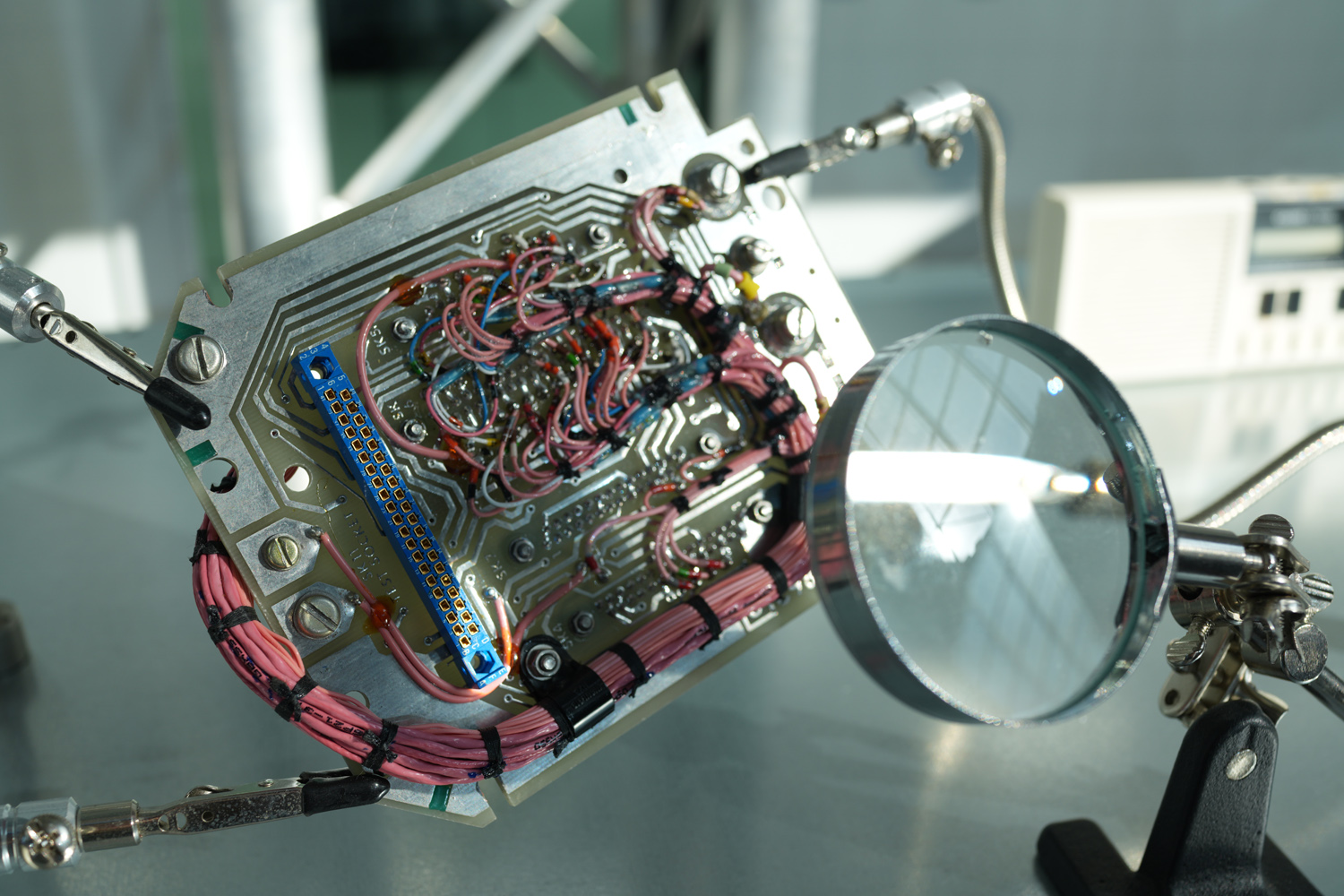
Detail is generally first-rate at full resolution and holds up very well when using the in-camera digital crop. Close-ups and macro snaps show bokeh blur that’s simply dreamy when shooting wide open at f/2.0.







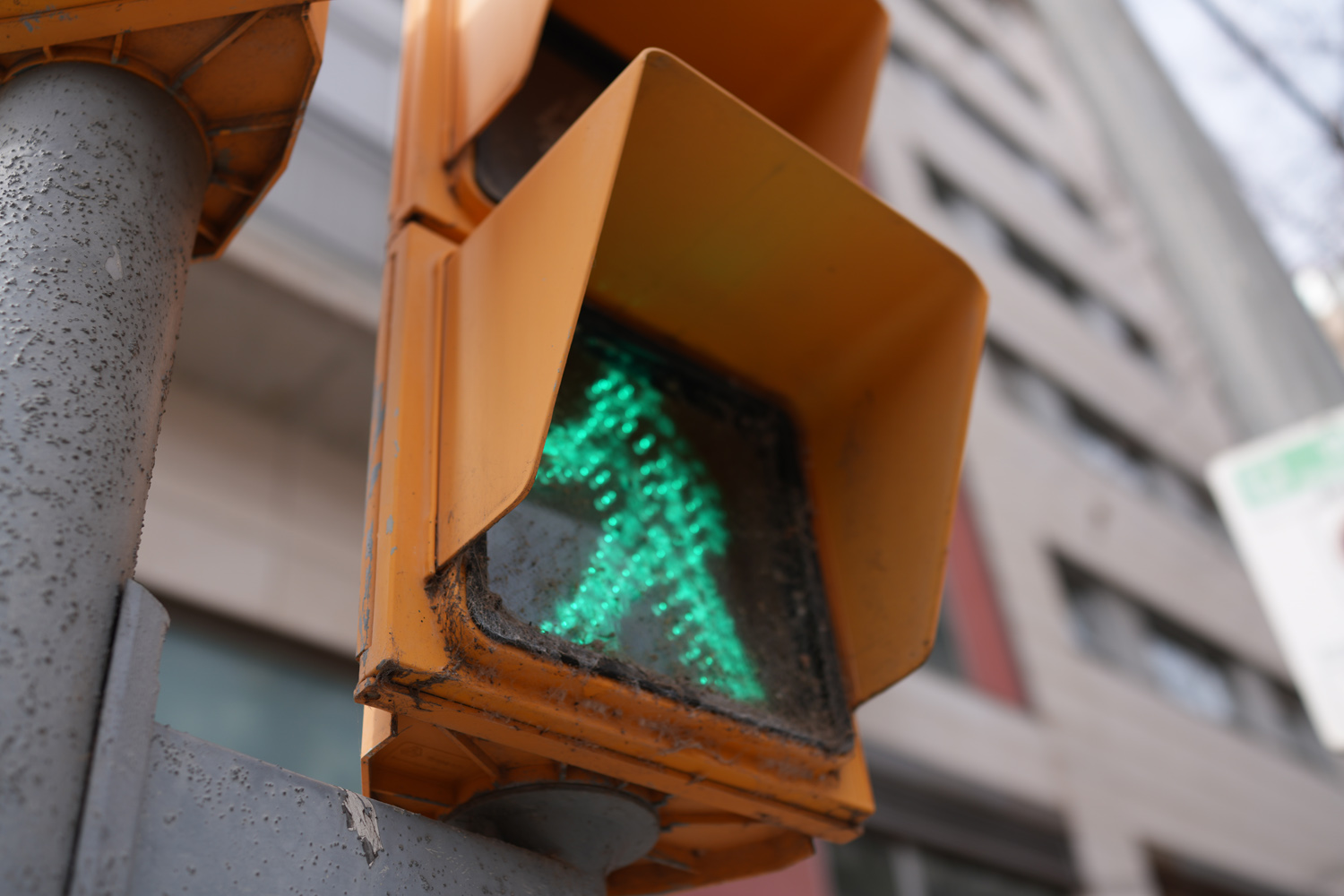
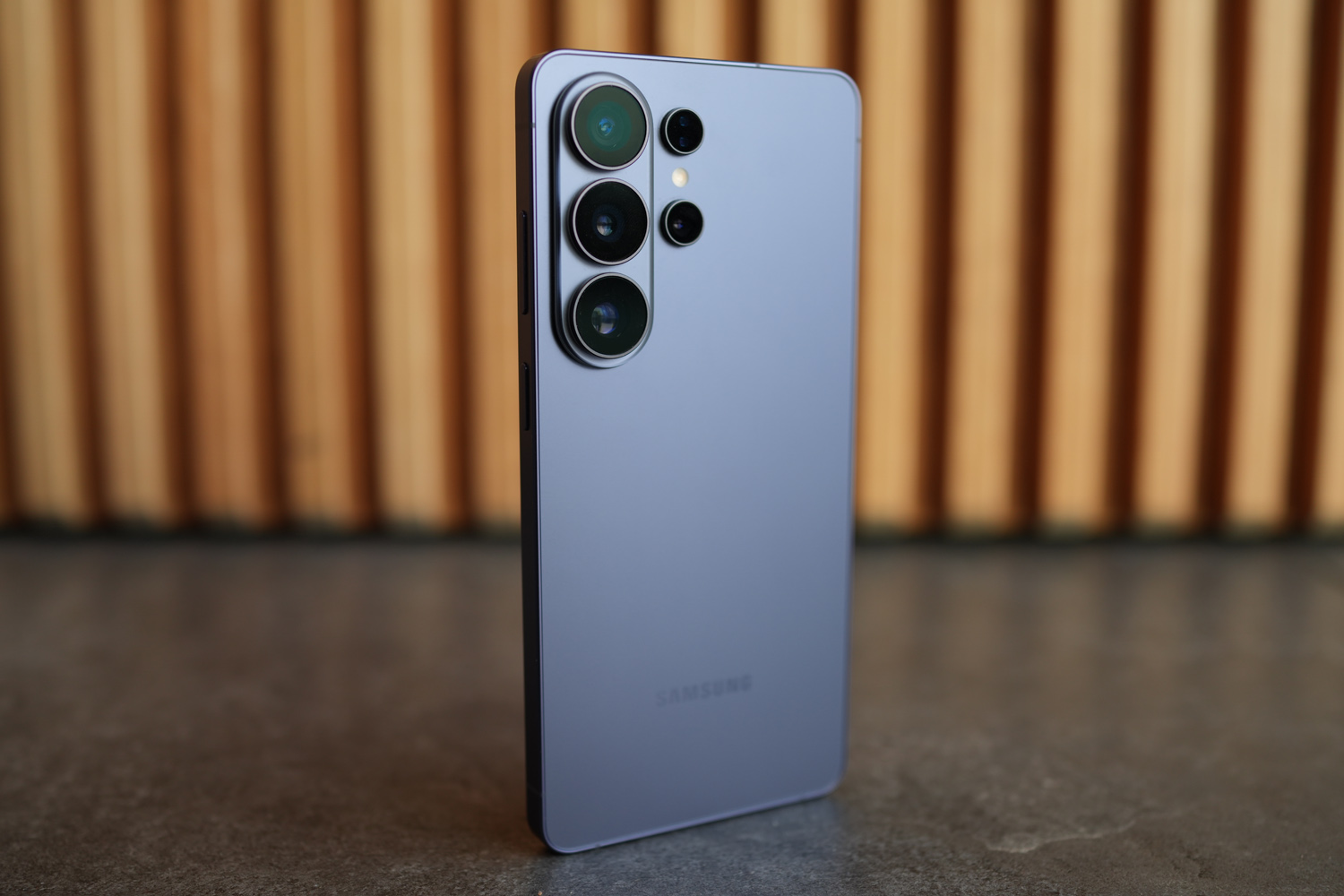
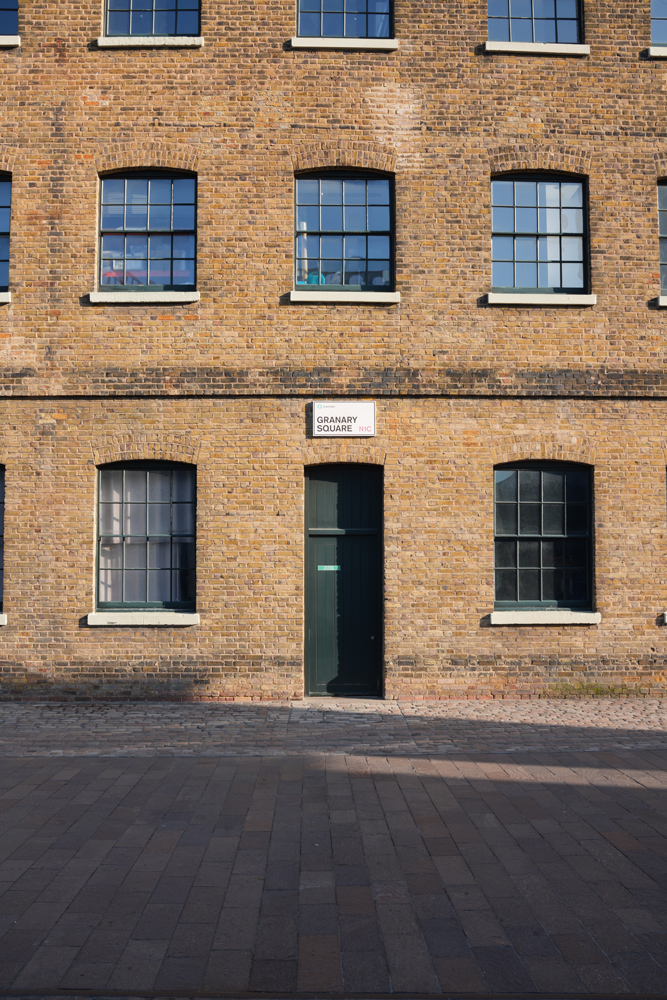







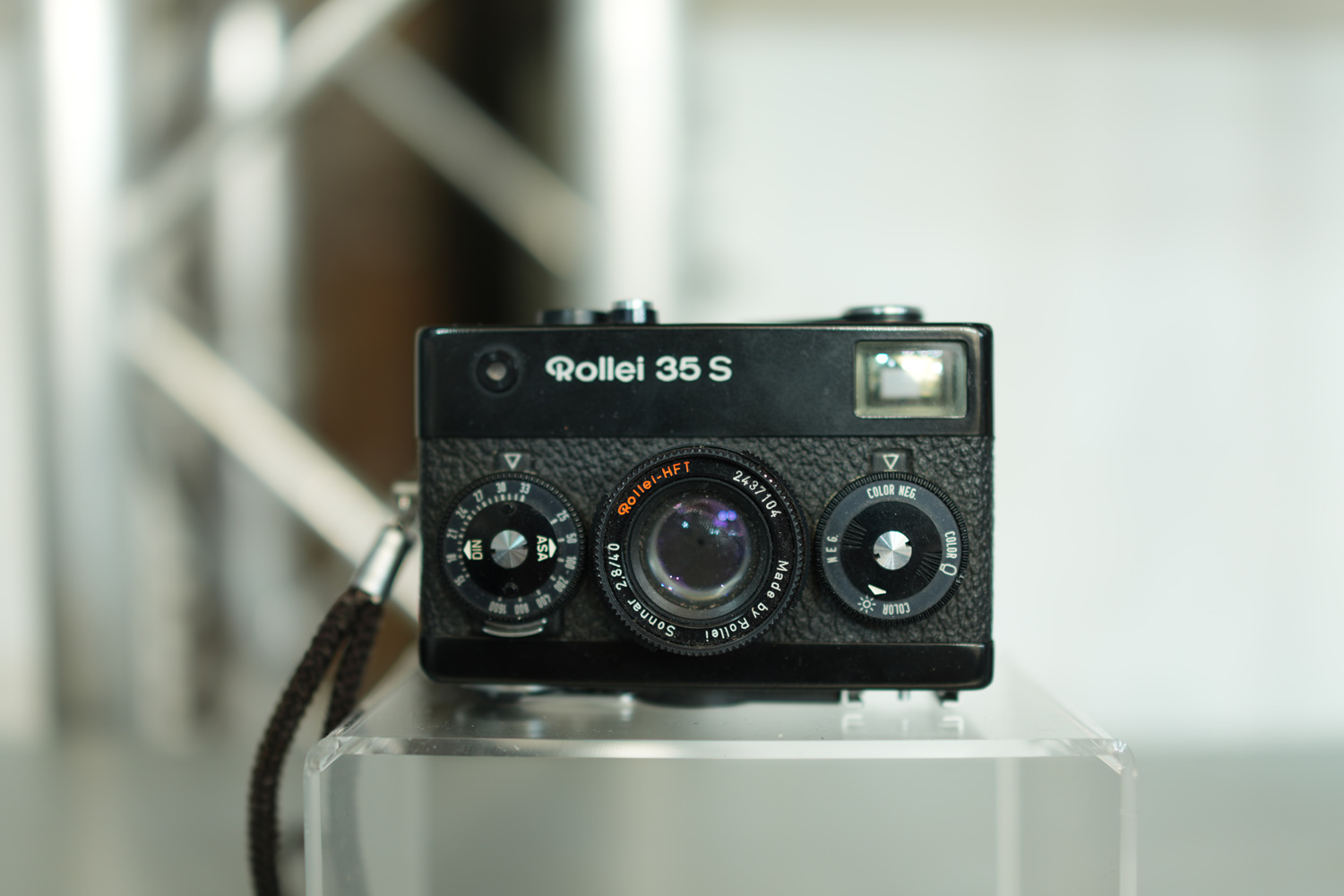


Sony’s automatic white balance was almost always on point, rarely getting caught out by artificial lights. Images could lean a little dark when not having to expose for significant highlights, so I found myself reaching for the EV dial a little more often than I otherwise might when shooting in automatic.
Dynamic range is incredibly wide, though, with loads of room for tweaking things in RAW after the fact.
I thought the Standard colour mode could be a little muted at times, lacking some of the vibrancy and punch I could see in reality. The Vivid profile adds a little extra punch, while some fiddling in the settings menus will boost contrast to more pleasing levels. There are a handful of ‘Film-Like’ profiles that add a little extra character, but few give analogue vibes like Fuji’s film simulations can.
Ultimately Fujifilm remains my preferred choice for camera colour science, but you can get some exceptional results if you’re willing to customise the RX1R III a bit.


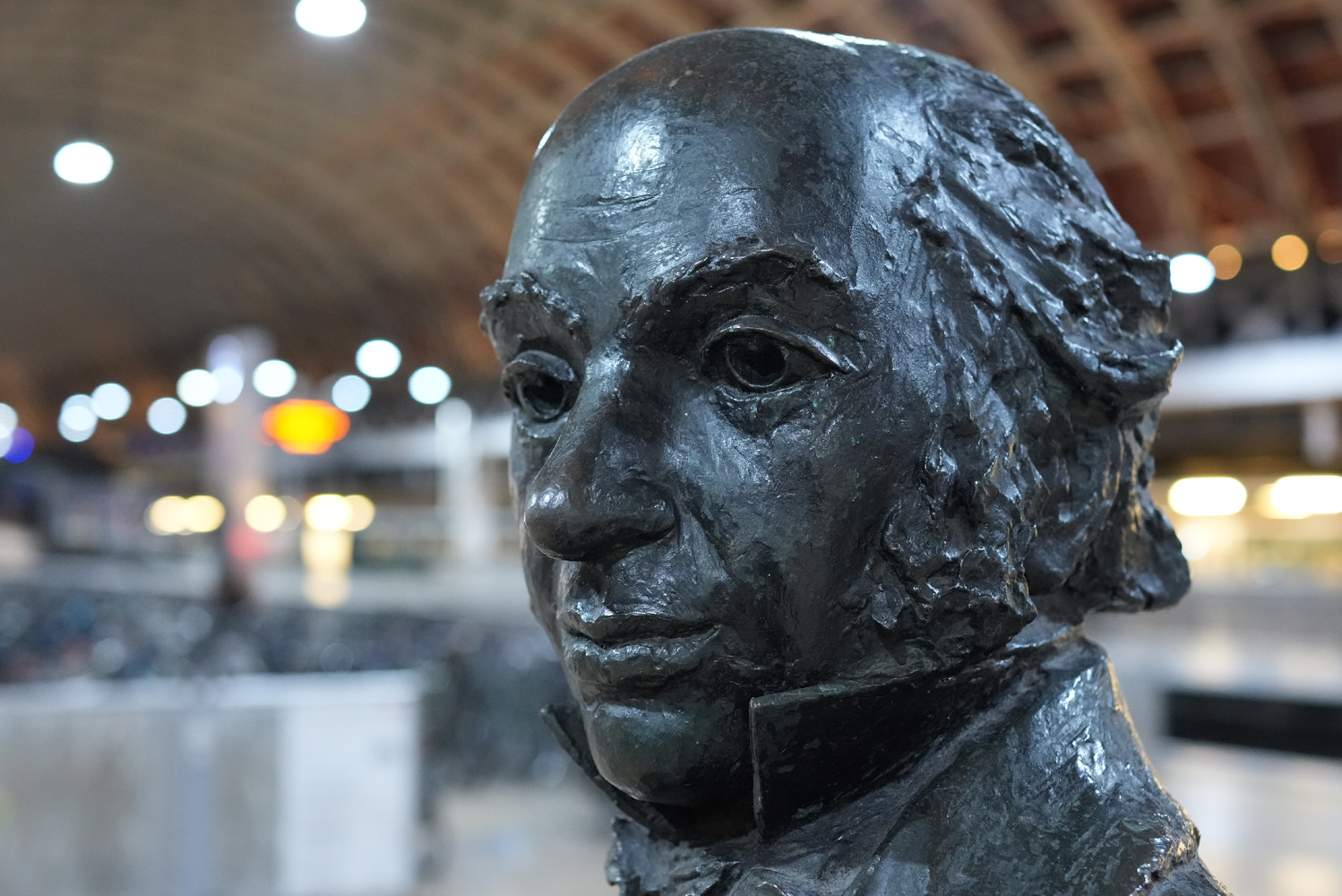

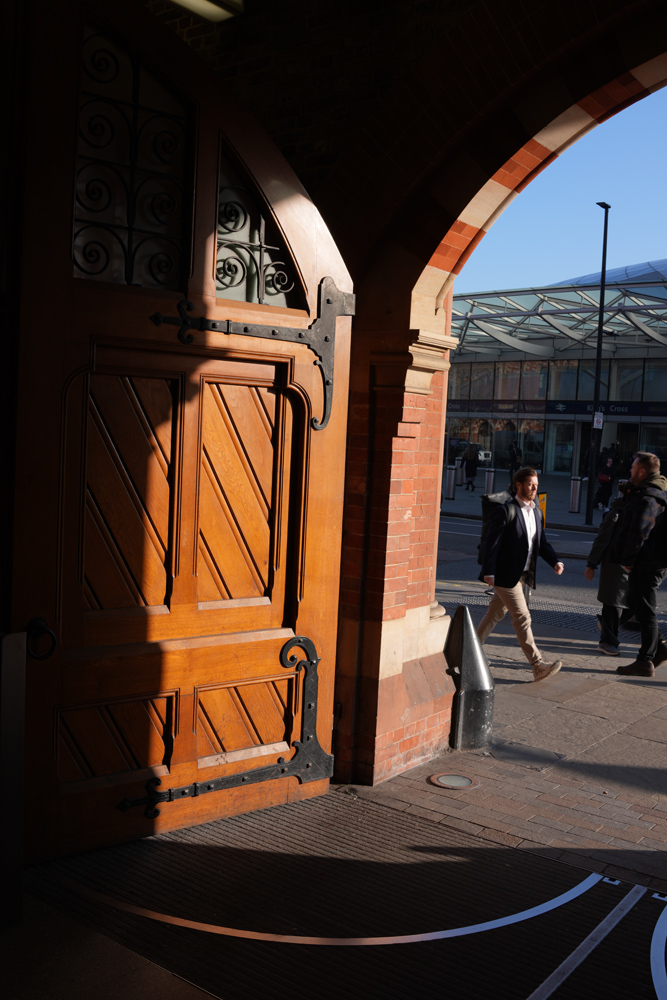


The benefits of a large sensor and wide lens are exceptional low light performance. There’s no visible noise up to ISO 1600 and I got usable shots as far as ISO 12,800. That makes up in part for the lack of image stabilisation, letting me snap at 1/125 shutter speeds in dimly lit locations without any noticeable camera shake or lack of sharpness.
Overall clarity is superb, though not such a leap it makes cheaper fixed-lens compacts look rubbish in comparison.
Sony RX1R III verdict
There’s no doubt the RX1R III delivers outstanding still image quality in a compact form factor. The higher resolution sensor’s in-camera cropping also brings added flexibility over the old model, while autofocus has massively improved and battery life has stepped up – albeit not by a huge margin.
Sony’s long-awaited sequel doesn’t improve on the ageing RX1R II in every aspect, though. The lack of articulating touchscreen is a real blow and ergonomics lag behind the competition. The much more affordable Fujifilm X100VI isn’t that far behind on clarity and its film simulations are much more fun to experiment with than Sony’s Film Looks.
If you insist on a full frame sensor in a compact body, Sony’s own more versatile A7R C simply makes more sense with its interchangeable lenses and flip-out touchscreen.
Stuff Says…
Sony’s latest luxury compact absolutely delivers on image quality, but the RX1R III is ruinously expensive and lacks features that make rivals so much more fun to use.
Pros
Image quality is sublime for its size
Fast, smart and accurate autofocus
Lens-based controls very intuitive
Cons
Fixed touchscreen can make composition tricky
Focus selection can be a struggle with no D-pad or joystick
No image stabilisation
Sony RX1R III technical specifications
| Sensor | 60.2MP full-frame BSI CMOS |
| Lens | 35mm f/2.0 |
| ISO range | 50-102,400 (expanded) |
| Continuous shooting | 5fps |
| Video recording | 4K30, 1080p120 |
| Screen | 3in, 2.36m-dot, fixed touchscreen |
| Viewfinder | 2.36m-dot EVF |
| Storage | SDXC (UHS-II) |
| Connectivity | micro-HDMI, 3.5mm microphone, USB-C, Wi-Fi, Bluetooth |
| Battery life | 270-300 shots (stated) |
| Dimensions | 113x68x88mm, 498g |


 Tom Morgan-Freelander
Deputy Editor
Tom Morgan-Freelander
Deputy Editor