Ex-Tesla engineers just built a Whoop rival for serious weightlifters. Is the hype justified?
Screenless wearable Fort tracks reps, effort, and more. All in the name of gains

Many of the best fitness trackers still treat strength training like an afterthought. You lift, it logs “strength training”, and that’s often where the story ends.
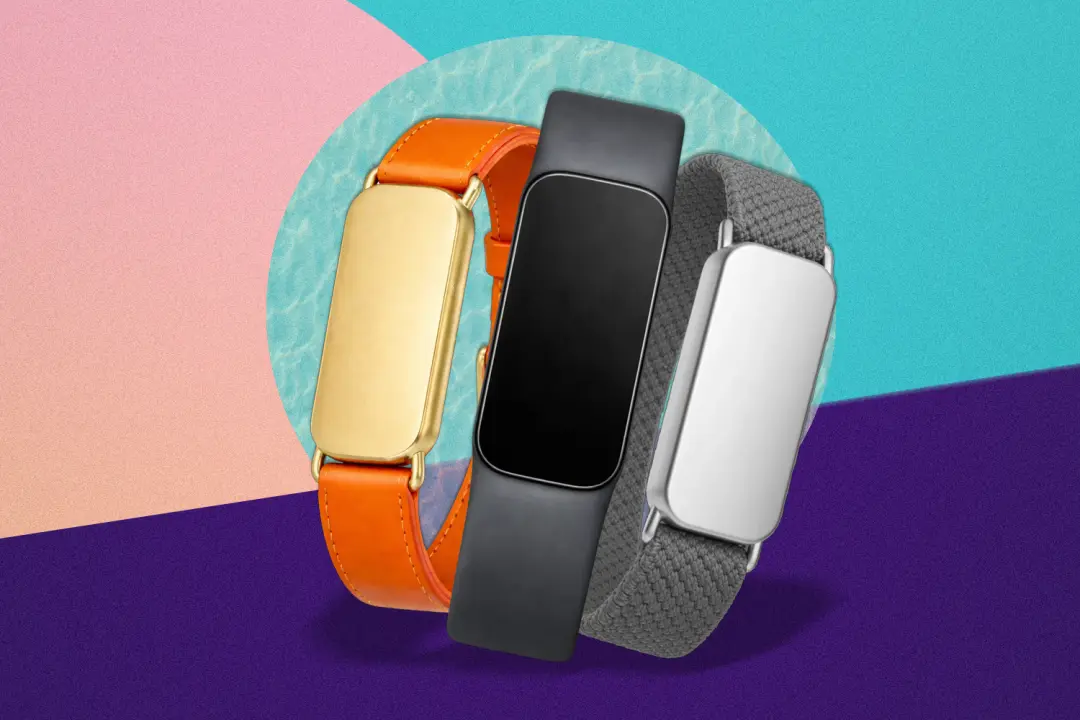
Enter the Fort strap – a new wearable that wants to make your lifting sessions the main event. Built by a team of former Tesla engineers and backed by Y Combinator, the screenless band is designed specifically for lifters – and it claims to track far more than just sets and reps.
Fort says it can automatically recognise over 50 exercises without you manually logging what you’re doing, including barbell lifts and cable movements. It then tracks rep velocity, range of motion, and effort across each rep, using movement kinematics along with heart rate to estimate muscular effort, and how close you were to failure on each set.
After a workout, the companion app serves up a “Session Score” that shows how intense and productive your training was. Fort says that the score is calculated using your – *deep breath* – exercises, sets, reps, velocity, rest times, heart rate, and training goals, rather than giving you a generic post-gym summary.
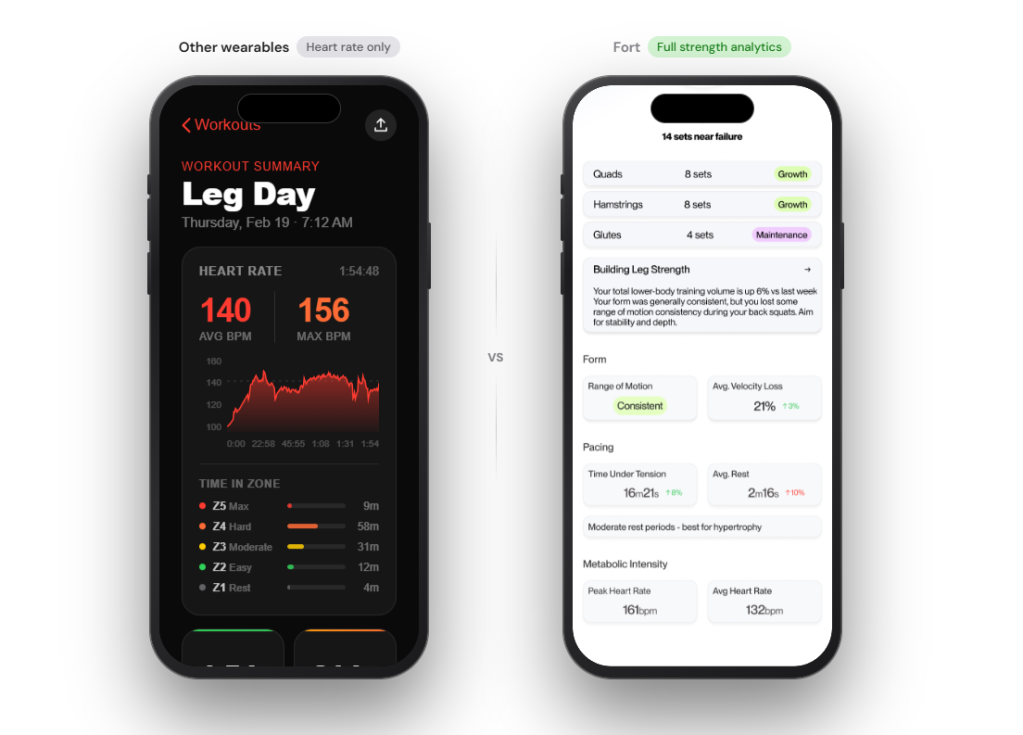
It also goes more granular with a per-muscle breakdown, showing whether each muscle group hit maintenance, growth, or overload during the session. Fort’s proximity-to-failure metric is meant to help here too, using tracked changes in velocity and movement pattern to estimate how hard you pushed each set.
From there, Fort claims it can highlight whether you’re building strength, maintaining, or plateauing, then deliver personalised insights based on the data, including recommended workouts aimed at specific muscle growth goals.
Despite the strength-first pitch, Fort is positioned as an all-day health tracker as well. Alongside its lifting metrics, it also tracks cardio, total steps and calories, continuous heart rate monitoring, sleep stages (deep, light, and REM), stress, and recovery trends using overnight HRV measurements.
The band itself is screenless (comparable to the Whoop strap) and weighs under 30 grams, with a rather attractive, pared-back design. Fort also claims up to seven days of battery life on a single charge – clearly aiming for something you can wear day and night, rather than only during workouts.
Believe the hype?
As an avid weightlifter, I’m reserving my judgement until we see how well the Fort strap performs in the real world. There’s no denying that everything sounds good on paper, but I do wonder if the 50 exercises are a bit limiting – though more will likely be added in future.
I’ve also come to realise, after many, many years of trial and error, that tech can sometimes just get in the way, offering more of a distraction.
Two of the most important things you need to track if you’re looking to increase your size or strength, are the weights you’re using, and the reps/sets. If you increase any of these, week after week, you’re going to improve, and a notepad and pen can get you there just fine (though I prefer using a tracker app). Naturally, other major factors like sleep, stress levels, and the all-important diet, also make a huge contribution to success.
Now, what a wearable like Fort could certainly do, is guide beginners in the right direction, especially by helping them understand how hard to push themselves. One of the most common mistakes people make is leaving a surprising number of reps in the tank, resulting in them spinning their wheels week after week, and making no progress.
That said, Fort’s strap is clearly aimed at established lifters, so I’d be very interested in trying it out to see what it could potentially bring to the table, as the learning and tweaking should never end. Maybe it’ll tell me I could try harder on some exercises, particularly the ones I have a love/hate relationship with (I’m looking at you, weighted sled).
If you’re interested in trying Fort out for yourself, it’s available for pre-order now at a “founding member” price of $289 / £222, with a later retail price of $349. Shipping is expected in Q3 2026.
Pre-orders include one year of Fort Premium analytics (which would normally set you back $80/year), beta testing and early feature access. You’ll also get lifetime firmware updates, and Fort says the pre-order is fully refundable at any time.
There are still plenty of unanswered questions, including how well automatic exercise recognition holds up in real-world sessions, and how much control you’ll have to review or correct logged workouts in the app. But if you’re a serious lifter who’s always wanted your wearable to understand what happens under a barbell, Fort could be worth a look.


 Esat Dedezade
Contributor
Esat Dedezade
Contributor