Simple but effective tweaks have turned the Toyota bZ4X into an EV I’d happily recommend
Better range tops the list of appealing improvements, but the package as a whole is way better than before

Stuff Verdict
The Toyota bZ4X is way better than it used to be with improved looks, better handling and, crucially, much better range from a bigger battery.
Pros
- The boosted range offers huge appeal
- Much better to drive than before
- Really comfortable seating setup
Cons
- Tech levels are still a bit hit and miss
- Some cheaper plastics here and there
- Looks better but still a tad generic
Introduction
Toyota has done the decent thing and refreshed its curiously monikered bZ4X electric car. The best part is the introduction of a bigger battery; the original incarnation lacked range but now it’s possible to get the front-wheel drive bZ4X with a 73.1kWh cell. That makes a huge difference to how far it’ll go – up to 352 miles in fact. There’s still a 57.7kWh battery option if you’re a low miles, short journeys type.
The bZ4X has also been given an array of other updates, with better performance thanks to a new battery cooling system. There’s faster charging, tweaked suspension and an all-wheel drive model for anyone who fancies their chances off-roading in an EV. I’ve driven one of the AWD models and it’s surprisingly capable on less-than-ideal terrain. However, the front-wheel drive Toyota bZ4X is the model that’s going to feature prominently on dealer forecourts.
Similarly, the new bZ4X has been tweaked in the looks department and, while the evolution of the design is subtle, I think it’s greatly helped with the aesthetic appeal of the SUV. The ‘hammerhead’ front-end looks better with its cosmetic update, while inside, the 14in multimedia screen feels much more premium. Combined with the quieter cabin and deliciously comfortable seats, I occasionally thought I was driving a Lexus. Always a good thing.
The styling


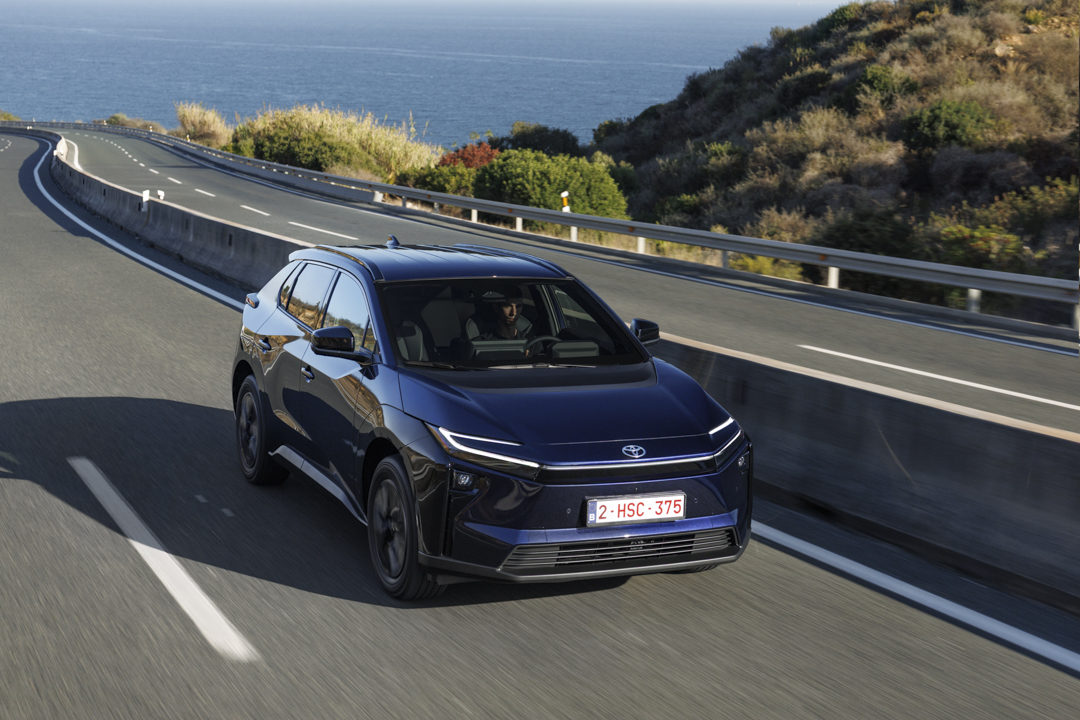
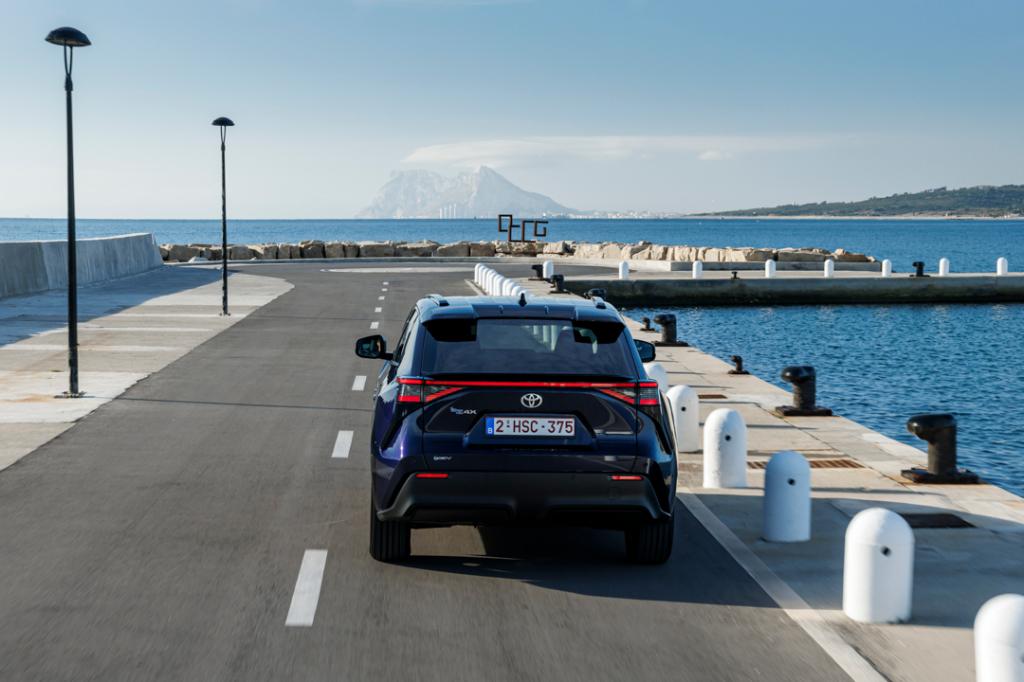
Toyota’s designers gave it their best shot with the original bZ4X, but it wasn’t exactly a stunner. The revised edition looks better and the improvements are subtle, but effective. This is most evident at the front, where the ‘hammerhead’ nose looks more refined and, dare I say it, stylish. The lean headlights work to great effect and get the benefit of being linked by a central light bar. I was really quite keen on what’s been done. The same goes for the rear end, which is more sorted. The piano black arches aren’t quite as impressive, but I could live with them. They frame either 18 or 20in alloys too, which are also new and improved.
Inside, the cabin is a great place to be. I always felt the bZ4X looked like the dashboard had been designed in order to facilitate a yoke steering wheel, with an almost fighter pilot-type binnacle on the original car. Now that the yoke seems to have fallen by the wayside, the dashboard has been revised and that feeling has dissipated somewhat. It’s still a little unusual with a driver instrument panel that sits high up on the top of the dash, which might not appeal to everyone.
Elsewhere, the seats are really good with a chunky, cosseting feel that evoked memories of something that should have come from the Lexus stable. There’s lots of room too, both front and rear. Better still, the glass roof is now panoramic, which really helps to open up the cockpit even with the dark colour trim doing its best to do otherwise. There is still quite a lot of lower quality plastic in evidence, but the good bits manage to save the bZ4X from feeling all rental car-like.
The drive


One of the most noticeable improvements to this car is the way it drives. I remember trundling along in the original trying to get to Gatwick airport while eking out the battery with the A/C off and the windows down to stop it steaming up, such was the poor range. I got behind the wheel of the new, bigger battery bZ4X with a lot more optimism. Not only does the range figure at 100% instil faith, it lives up the promise as well. I did one very long run and still got back with 40%.
So, with range anxiety dissipated, the bZ4X was much more fun to drive. It felt like a better car too. I got time behind the wheel of the all-wheel drive car and that was very impressive, especially when I took it on an off-road route where the X-Mode made the SUV surprisingly adept at getting up steep gravelly hills and down slippery, rutted paths with more than a little confidence. Back in the two-wheel drive car, the bZ4X was great on all kinds of road. Toyota has tuned the suspension, which was also notably better when the car was being pushed on B-roads.
Motorways are much better suited to the new model than the old one, with lots of comfort on tap, quiet and fuss-free performance plus more than enough power for everyday driving scenarios. Getting to drive modes is still annoying, so there was the tendency to put up with what I had, rather than faff around with the central touchscreen. There’s a quick access ‘Snow’ button down on the central console though, where the four-wheel control buttons are in the AWD model.
The technology


While much current Japanese output tends to feel like it’s been a bit superseded by the sort of kit found in Korean cars these days, I thought the tech levels inside the bZ4X were very acceptable. The best bit of the setup was a 14in touchscreen, that reminded me of the infotainment found in Lexus models. Not really surprising I suppose, and the overall effect adds a neat premium touch.
Underneath, the twin wireless phone chargers will likely be welcomed by most users. The 9-speaker JBL audio system is an option for the Excel model and felt a bit meat and potatoes, but got the job done. Picking through the menu systems, I thought the addition of a battery state-of-health feature seemed like quite a good idea in much the same way as the one found on smartphones. Adding some additional bling is the ambient lighting, which really did lift the interior of the car after dark.
Toyota bZ4X verdict
Toyota is offering the bZ4x in three different trim options, with the range-topping Excel model I drove feeling like a very complete package. Icon, starting at a keenly priced £39,995, and Design trims come with less bells and whistles, but there’ll still be the same levels of improvement, unless the smaller 57.7kWh battery Icon model is chosen.
I’d stick with the bigger battery model ideally, which can also be had on the middle tier Design car; yours from £45,795. Either way, the bZ4x feels like a much-improved package and left a far more positive impression on me than the original car.
Stuff Says…
The Toyota bZ4X is way better than it used to be with improved looks, better handling and, crucially, much better range from a bigger battery. The Excel trim gets the best levels of kit, but the base-level Icon model isn’t to be sniffed at either.
Pros
The boosted range offers huge appeal
Much better to drive than before
Really comfortable seating setup
Cons
Tech levels are still a bit hit and miss
Some cheaper plastics here and there
Looks better but still a tad generic
Toyota bZ4X technical specifications
| Powertrain | Permanent magnet synchronous electric motor |
| Battery | 73.1kW |
| Power | 221bhp |
| Torque | 198lb ft |
| 0-60mph | 7.4 sec |
| Top speed | 99mph |
| Range | 352miles |
| Charge rate | 150kW |
| Cargo volume | 452 litres |


 Rob Clymo