10 of the most asked questions about watches, answered
Everything you've always wanted to know about watches – but didn't know who to ask

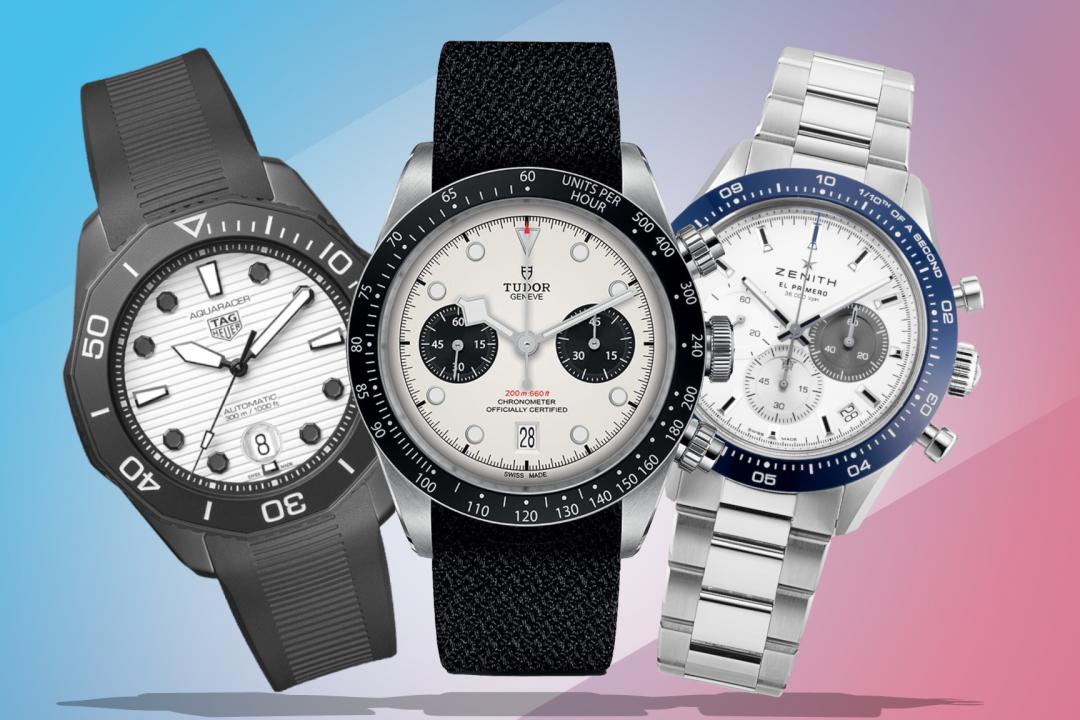
Watches are strange things. They’re one of the few objects people wear every single day without giving much thought to how they actually work. Most of us know there’s something ticking away inside – but beyond that, it gets murky fast.
Start to think about them for a minute and the questions start piling up. What’s the difference between quartz and mechanical? Does water resistant actually mean waterproof? And why does a small piece of metal on a leather strap sometimes cost more than a car?
The world of watches has its own language, its own rules, and its own rabbit holes. Once you fall in, it’s hard to climb back out. This piece won’t turn you into a watch expert. But it will answer the questions that most people are quietly Googling and don’t know who to ask.
Quartz watches run on a battery. Mechanical watches run on a coiled spring, wound either by hand or by the movement of your wrist. Quartz is more accurate. Mechanical is more interesting. Most serious collectors prefer mechanical – not because it makes logical sense, but because there’s something deeply satisfying about a machine that doesn’t need a battery to work.
A well-made mechanical watch might gain or lose a few seconds a day. Quartz drifts by around 15 seconds a month. For most people, that’s fine. Your phone is there if you need the exact time. Accuracy matters far less than watch brands would like you to believe.
It doesn’t mean what you think, actually. A 30-metre rating means splash protection at best – don’t wear it in the shower. You need at least 100 metres for swimming, and 200 metres or more for diving. Water resistance also degrades over time, so the seals should be tested every couple of years.
The movement is the engine inside the watch. It’s what makes everything work. Some brands build their own movements – these are called manufacture calibres (or in-house) and are generally more prestigious. Others use movements from specialist suppliers like ETA or Sellita, which is nothing to be ashamed of. Many brilliant watches run on third-party movements. What matters is reliability and the quality of finishing.
For a hand-wound watch, turn the crown clockwise until you feel gentle resistance. Don’t force it. Automatics wind themselves through wrist movement but benefit from a manual top-up if you haven’t worn them in a few days. A watch winder is useful if you rotate between several pieces – though it’s a luxury, not a necessity.
Labour costs in Switzerland are high. Many movements are assembled by hand. Materials are carefully chosen. Quality control is rigorous. Brand heritage takes decades to build. All of that costs money. That said, not every Swiss watch is expensive. Tissot, Hamilton, and Longines all make excellent pieces at sensible prices.
Often, yes. Pre-owned is where the real value sits. You avoid the depreciation hit that comes with buying new, and you can access discontinued models that simply aren’t available otherwise. Buy from a reputable dealer, ask for documentation, and have anything significant checked by an independent watchmaker before you hand over money. For more information read our guide on how to buy a pre-owned watch.
Any function beyond telling the time. A date display is a complication. So is a chronograph, a moon phase, or a second time zone (GMT watch). The more complications, the more engineering involved – and the higher the price. Tourbillons and minute repeaters sit at the very top. They are extraordinary pieces of craft. They are also, arguably, completely unnecessary.
Mechanical watches generally need a full service every five to eight years. This involves stripping the movement down, cleaning it, lubricating every component, and testing accuracy. Skip this for too long and you’ll face serious wear. Quartz watches need far less – mainly battery changes, with the occasional seal check.
Set a realistic budget and stick to it. Think about how you’ll actually wear it – dress watch or sports watch, slim or chunky, leather or steel bracelet. Research the movement inside. Check the brand’s service network. Read Stuff’s excellent watch coverage. And then trust your gut. The right watch is the one you want to put on every morning. That instinct is usually more reliable than any spec sheet.
Got any more burning watch questions? Get in touch and maybe we’ll do a follow up.
Liked this? Still running with an Apple Watch? Ditch it for one of these sporty traditional watches instead


 Spencer Hart
Buying Guide Editor
Spencer Hart
Buying Guide Editor