I found the Philips OneUp 5000 was a brilliant – and cheaper – alternative to Shark and Dyson
Can the affordable Philips OneUp 5000 inject new life into your cleaning habits?


Stuff Verdict
The Philips OneUp5000 is quick, quiet, and will leave your floors squeaky clean
Pros
- Cleans like a dream
- Incredibly quiet
- Floors dry quickly
Cons
- Slightly tricky to charge
- More expensive than a normal mop
One thing nobody tells you about getting older is that you’ll start to get excited about new cleaning products. I don’t mean that you’ll look forward to restocking your cupboards with bottles of bleach (although the day you discover Bar Keepers Friend is a momentous one), rather that you’ll take almost as much joy from unboxing a new cleaning gadget as you would from getting a new phone.
That explains the small buzz I felt when I first saw the Philips OneUp 5000. I’d always thought that the concept of mopping was pretty flawed – am I not just pushing the same dirty water around the floor? – so this electric version that removes the need for a bucket seemed like the ideal solution. Can it make my floors so sparkling clean that I can get rid of all my mirrors?
How we test kitchen and cleaning tech
Every vacuum cleaner, coffee machine and kitchen/cleaning gadget reviewed on Stuff is put through a battery of tests before we give our final verdict and star rating. We use our own years of experience to judge general performance, battery life, ease of use and value for money. Manufacturers have no visibility on reviews before they appear online, and we never accept payment to feature products.
Find out more about how we test and rate products.
Design & build: two tanks are better than one
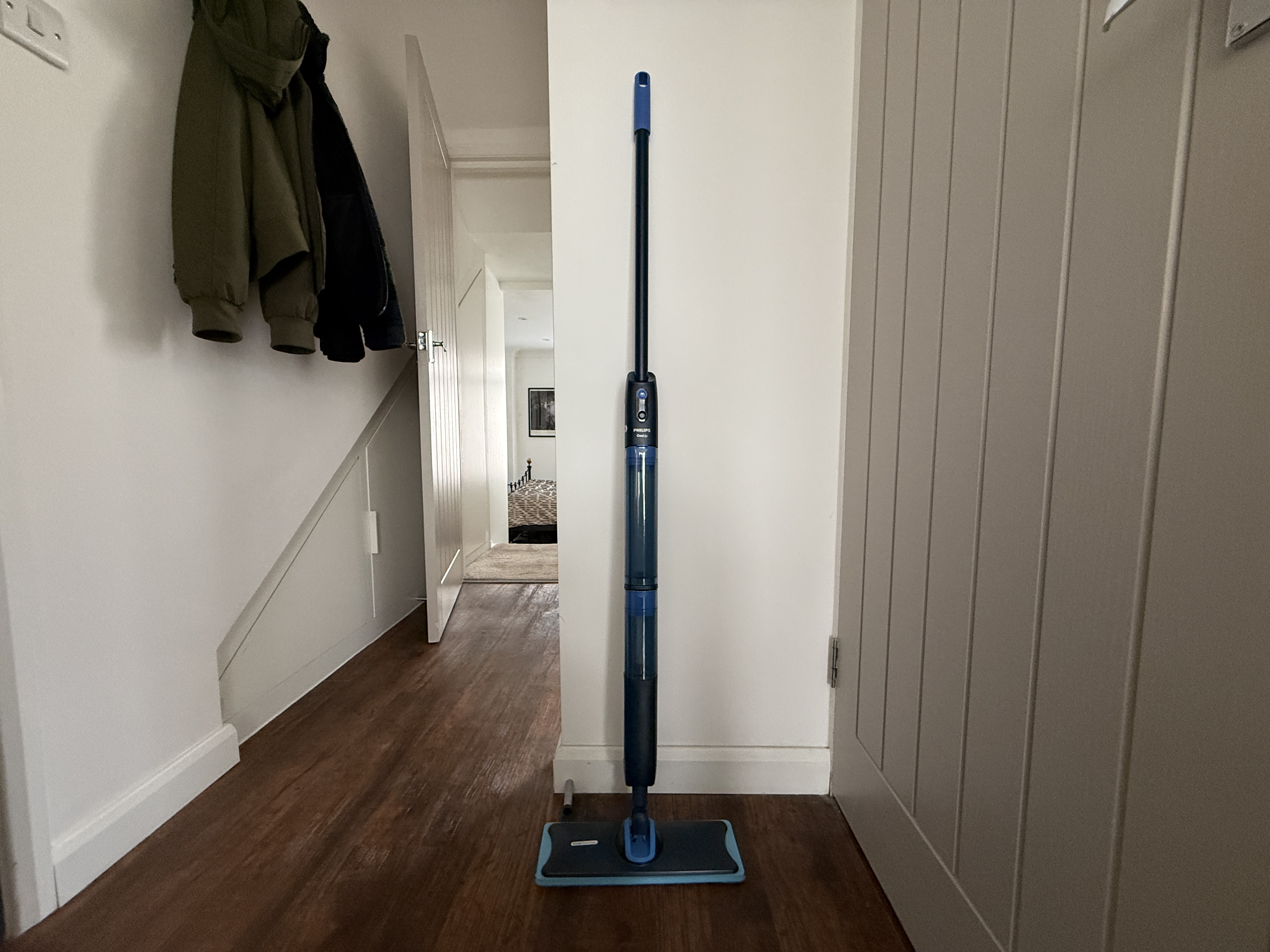
The Philips OneUp 5000 is an all-in-one job, which gives it obvious advantages from the get-go.
From a storage point of view, it takes up far less space than a mop and bucket. I live in a one-bedroom flat, so storing a big lump of plastic that’s almost always empty feels like a waste of space when storage is at a premium; the OneUp 5000 is compact enough to live almost completely inconspicuously behind the kitchen door when it’s not in use.
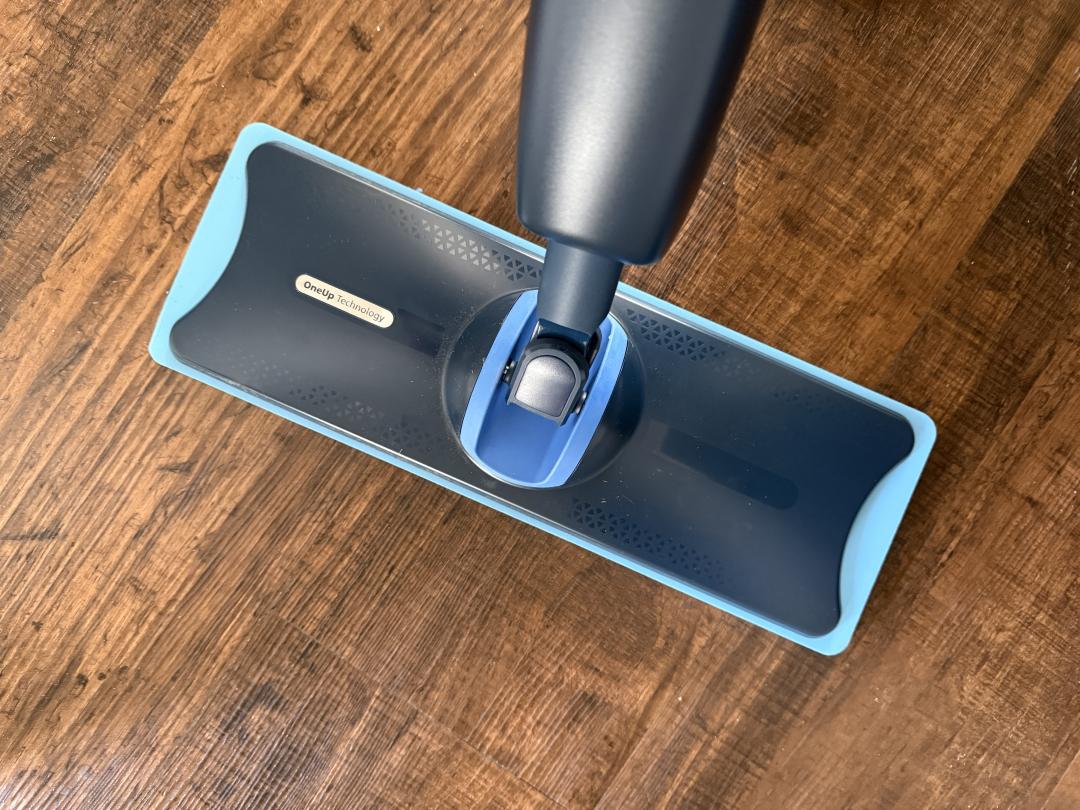
You’ll need a screwdriver to put it together but it’s just a case of connecting the two halves of the handle (if you’re really low on space you could even unscrew it between uses to stash it away in a cupboard). Once that’s done it looks like a supercharged version of any other flat mop, with a much chunkier lower half in order to accommodate the two water tanks: one for clean water and a slightly smaller one below it for collecting the dirty stuff.
You have to remove and replace various parts both before and after using the Philips OneUp 5000 but none of them are particularly fiddly or feel like they’re likely to come loose mid-mop. They’re all really easy to clean too.
Features: no bucket required
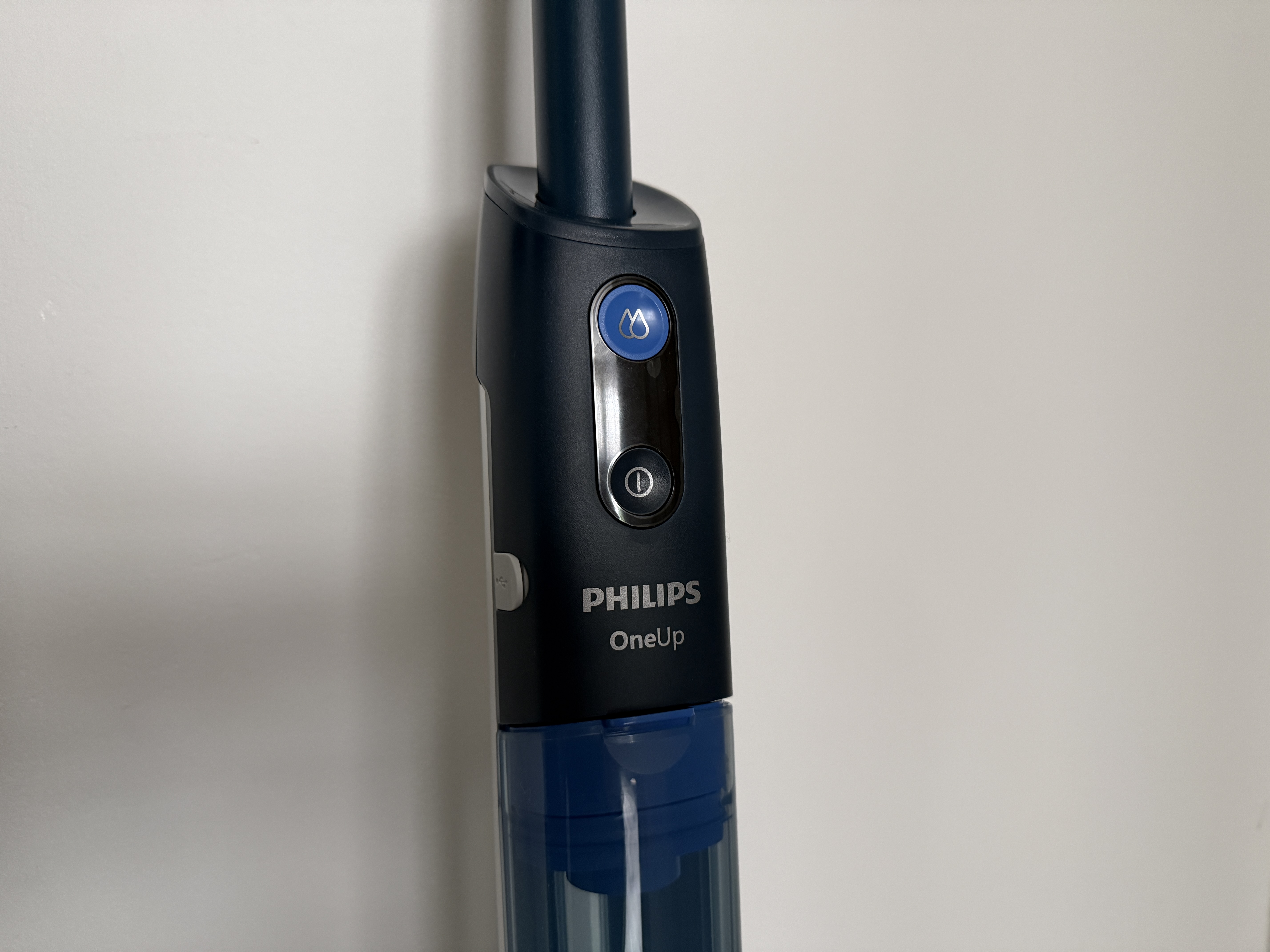
It should probably come as no surprise that the Philips OneUp 5000 is pretty light on features. There’s no Wi-Fi, no app, and no built-in Bluetooth speaker for soundtracking your spring cleaning sessions. But what did you expect? It’s a mop.
So how does it differ from an old-fashioned one? The OneUp 5000 is electric, so it pumps clean water onto the floor and sucks the dirty water up into a separate tank – no bucket required (to paraphrase Phil Collins).
There are two wetness settings, which dictate how much water it deploys, but unless you’re dealing with some major filth using the default setting should help to cut down on drying time. A small display tells you which one is active and shows how much charge is left in the battery. If you think you can cope with just one mode there’s also a cheaper OneUp 3000 model available, but its battery doesn’t last quite as long.
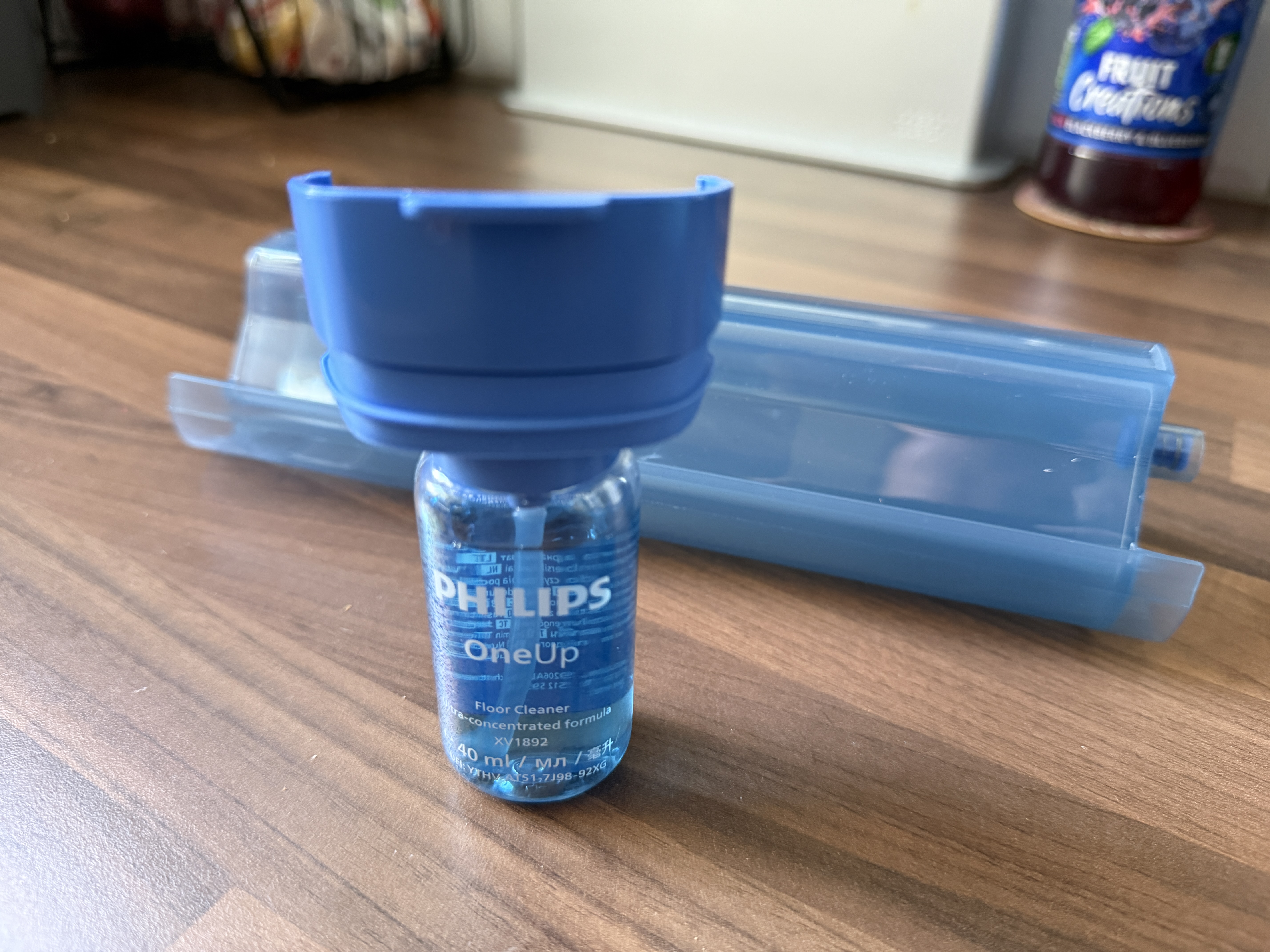
There are more running costs involved than an old-fashioned mop. Philips has a monopoly on the cleaning fluid that the OneUp 5000 uses, which comes in packs of two for £17, but you should get about 40 cleans out of each bottle (there’s one included in the box). And while the mop pad is washable you’re supposed to replace it every six months. A new one will set you back £20.
Performance: spick and span
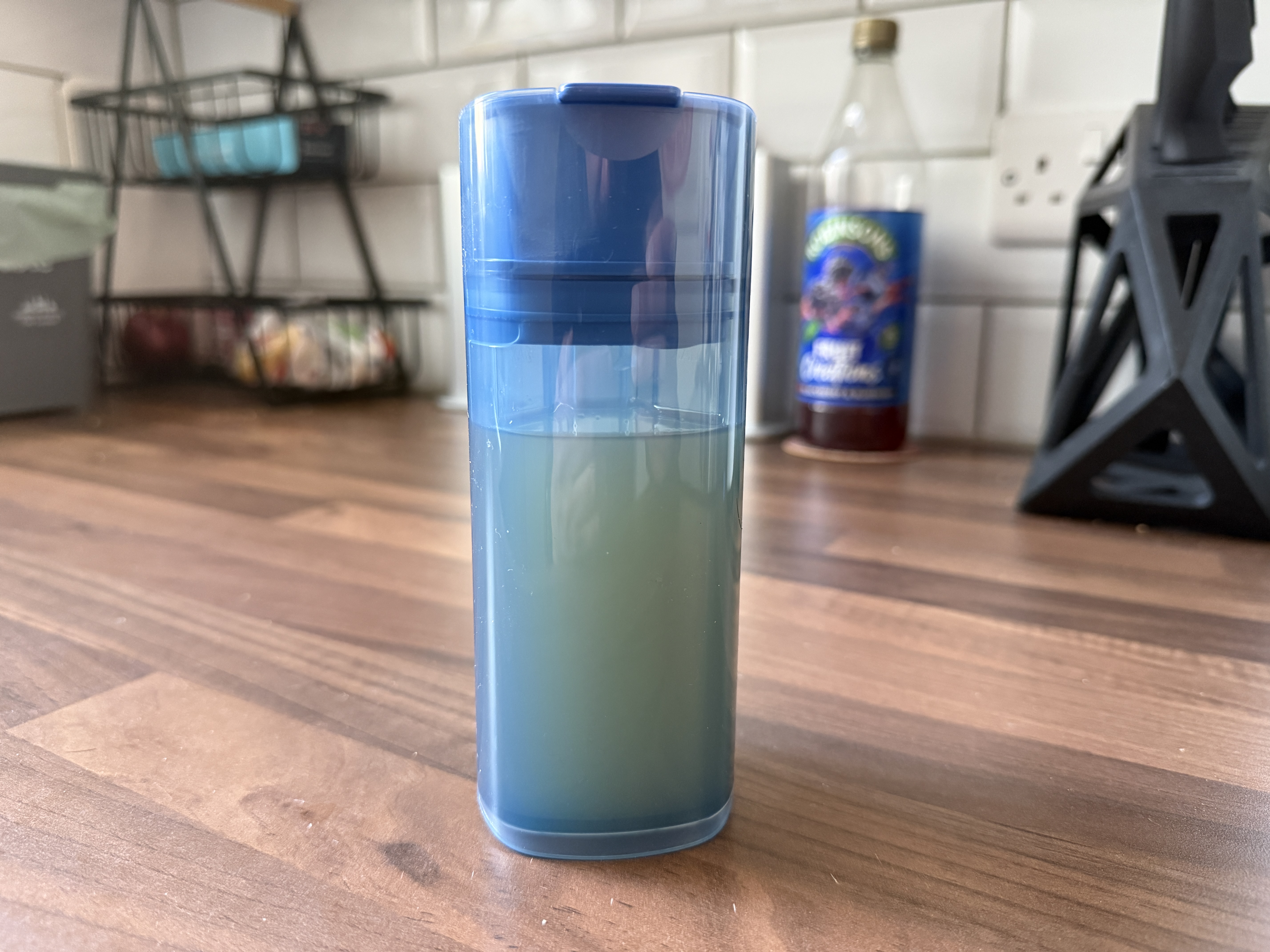
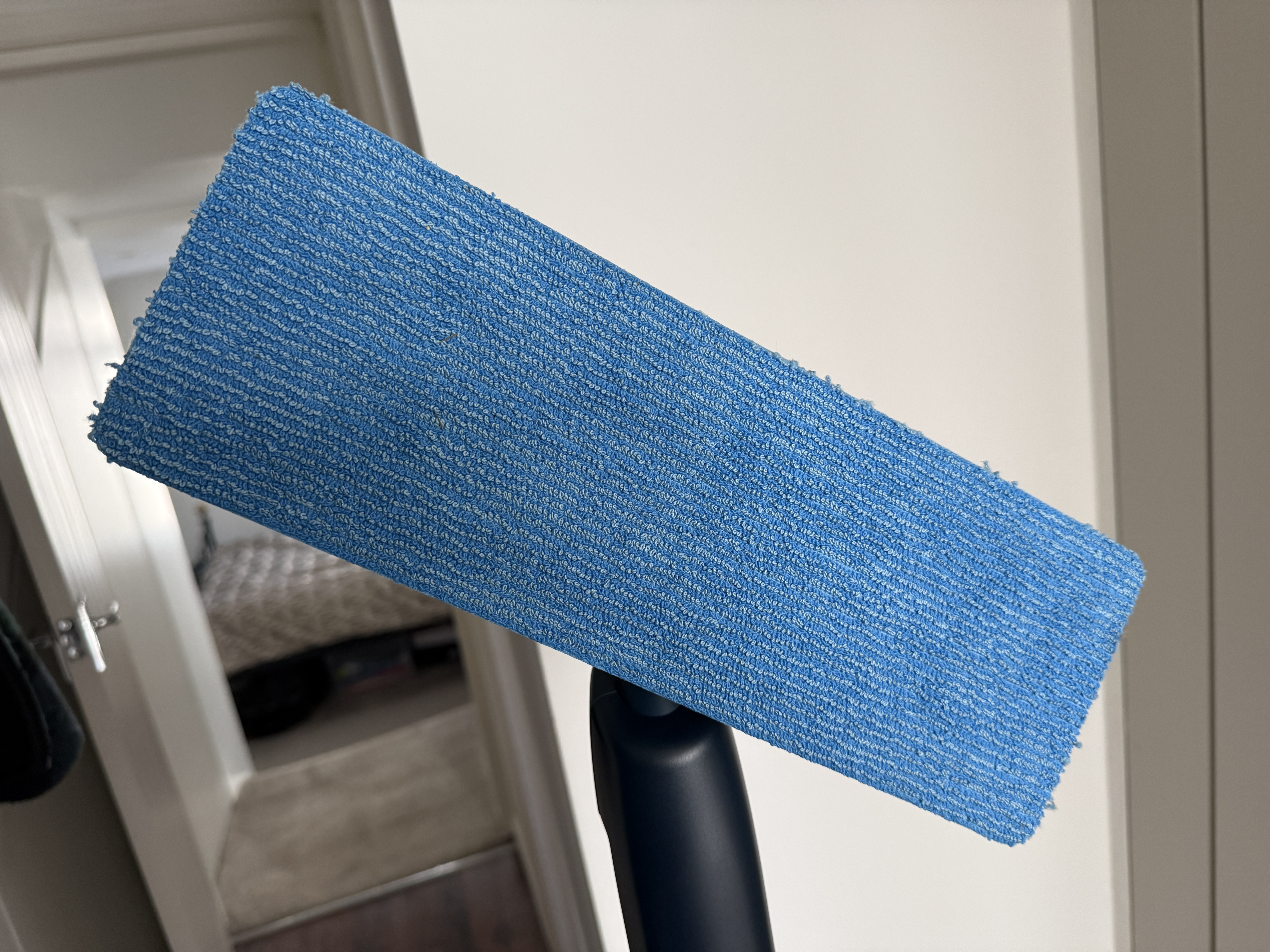
The Philips OneUp 5000 is a very simple bit of kit. You need to screw the bottle of cleaning fluid into the lid of the clean water tank before you start, but once that’s done you just pump a dose of it in using the button on top, briefly run the pad under the tap before attaching it, and you’re ready to get mopping.
Chances are you’ll be tempted to press the power button twice to make sure it’s actually on, because this thing is so stealthy you could go to work on your filthy floors at three o’clock in the morning and not wake anybody up.
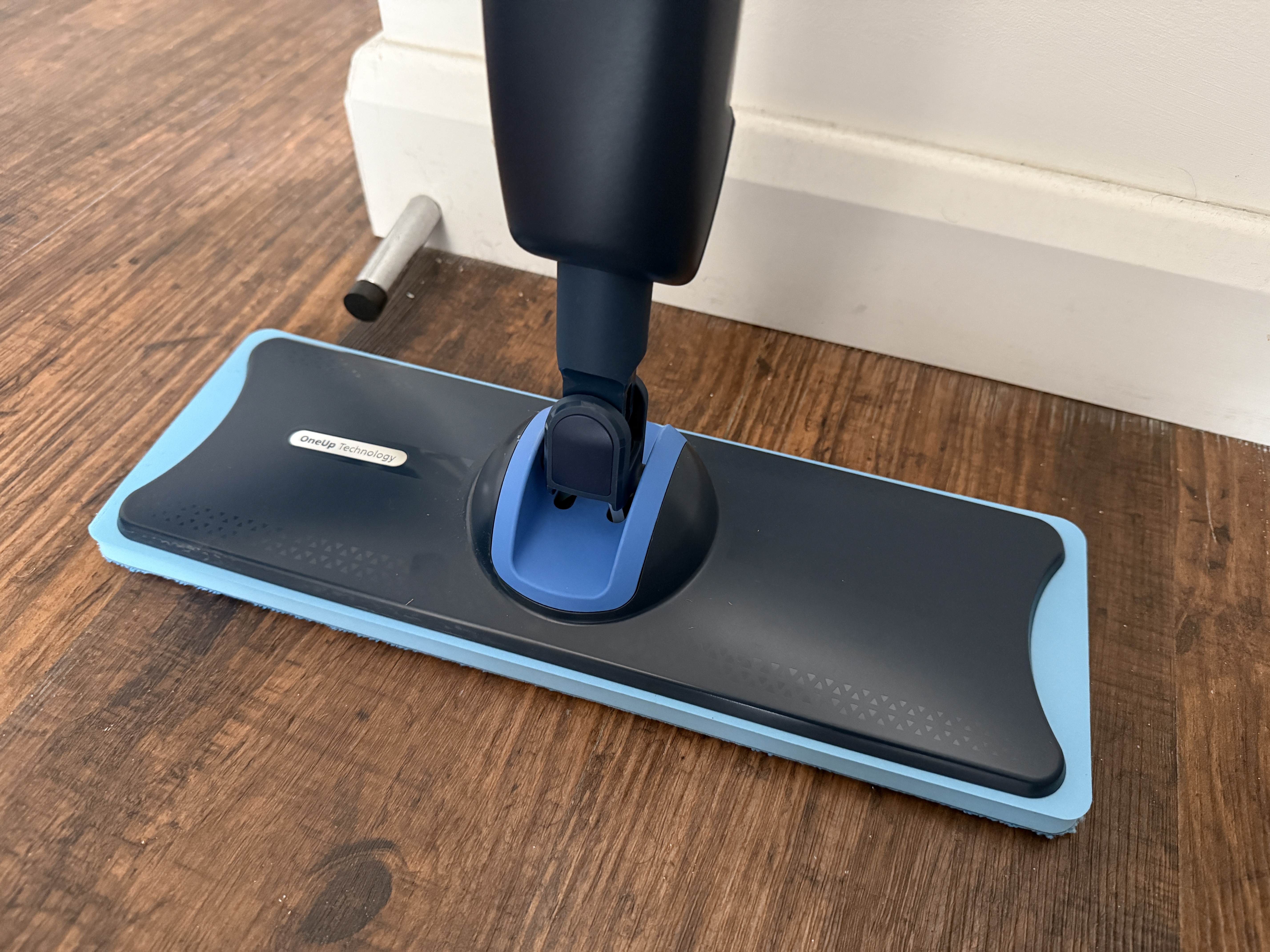
The head articulates in all directions, so with some judicious twisting of the handle you can easily manoeuvre it into corners, reach deep underneath tables and TV units, and circumnavigate sofas. The OneUp 5000 also controls the amount of water left behind brilliantly, so your floors aren’t left sopping wet for ages and are dry enough to walk on within about 10 minutes (or slightly longer if you opt for the higher wetness setting).
Unless your floors are spotted with visible stains you might not immediately be hugely impressed by the OneUp 5000’s performance. Mine are mainly dark wood, which hides dirt rather well, but the damp trail being left by the mop was a good sign that it was doing its job – a bit like a massive, clean snail had been to visit. It was clear to see my floors were cleaner than before. I probably still wouldn’t eat my dinner off them but they looked shinier and the tiles in the bathroom felt smoother.
What really convinced me that the OneUp 5000 had done a good job, though, was when I had finished mopping and went to empty the dirty water tank. What came out looked like it had come from a puddle on the pavement outside, or a murky old pond. It’s genuinely disgusting.
Depending on how big your gaff is you might find you need to empty/refill the tanks before all your floors are clean but that only takes a few seconds.
You certainly shouldn’t get stopped prematurely by the battery, which lasts about 70 minutes between charges. That’s more than enough for even the biggest gaff (unless you live in an actual mansion, in which case you’re almost certainly not doing your own mopping anyway).
When it does come time to charge the OneUp 5000 you’ll need to grab the USB-C cable from the box (there’s no plug adapter included though). It’s 1.5m long, which gives you a decent amount of flexibility when it comes to where you charge it, but the high positioning of the charging port can make plugging it in a little unwieldy.
Philips OneUp 5000 verdict
For many people the humble mop is one of those inventions that doesn’t need improving, but not me. Sure, the Philips OneUp 5000 costs more upfront and has higher running costs than the old-fashioned type, but it’s easier to store, uses far less water, and is generally just less hassle. It’s also quicker and does an excellent job of removing even hard-to-see grime from your hard floors.
It’s undoubtedly something of a luxury purchase (if you can ever call something that’s used for cleaning a luxury) but it’s half the price of Dyson’s equivalent and makes a boring, messy, time-consuming job signficantly easier. And if you ask me, that’s an improvement worth paying for.
Stuff Says…
The Philips OneUp5000 is quick, quiet, and will leave your floors squeaky clean
Pros
Cleans like a dream
Incredibly quiet
Floors dry quickly
Cons
Slightly tricky to charge
More expensive than a normal mop
Philips OneUp 5000 technical specifications
| Specifications | Philips OneUp 5000 |
|---|---|
| Cleaning modes | 2 |
| Battery life | 70 minutes |
| Charging | USB-C |
| Weight | 1.9kg |


 Tom Wiggins
Contributor
Tom Wiggins
Contributor