I’ve worn an Apple Watch for 10 years – here’s what its sleep tracking gets right (and wrong)
Apple Watch sleep tracking keeps getting better – delivering easy-to-read data, handy health insights, and scores that'll have you bouncing out of bed, but it’s not perfect

I was thrilled when sleep tracking was finally introduced on Apple Watch because, despite wearing one since its release in 2015, I had to wear a Fitbit alongside it for years just for the sleep data.
Apple Watch sleep tracking still falls short in some areas (I’ll get to those), but while I sleep wearing an Oura Ring 4 and on an EightSleep mattress topper, I continue to wear my Apple Watch Series 11 to bed every night, so it’s doing something right.
What Apple Watch sleep tracking nails:
1. Well-presented data
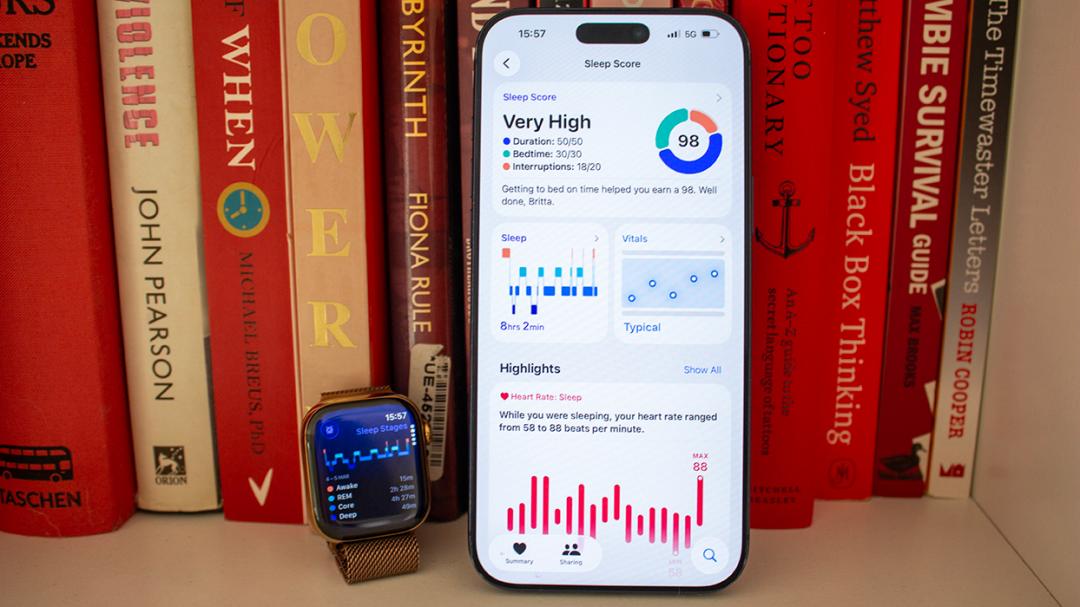
Unlike some sleep trackers, Apple Watch makes the data it gathers as you snooze easy to interpret. The information is colourful, digestible, and quick to access, which is handy when reviewing how you slept before your morning caffeine.
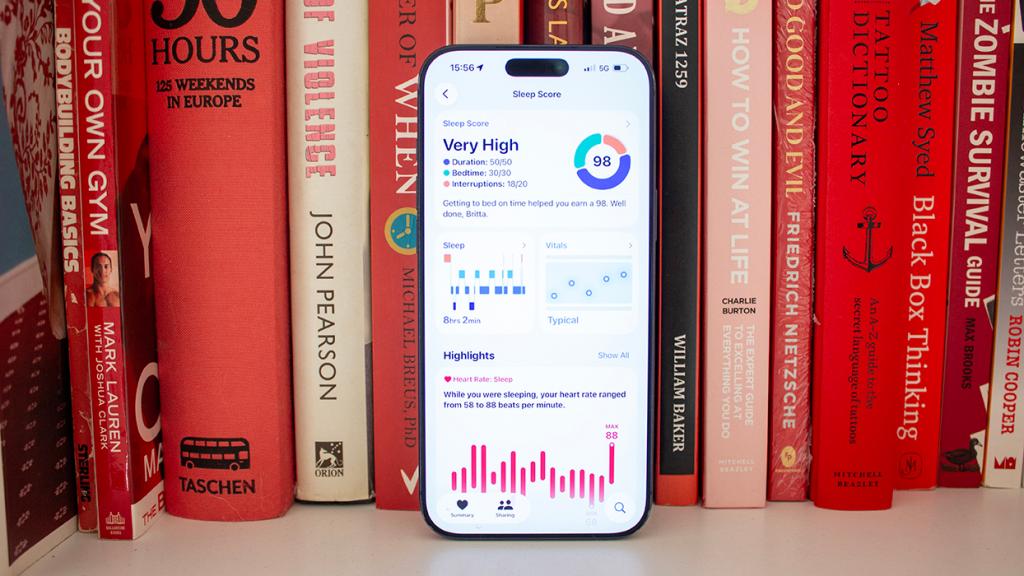
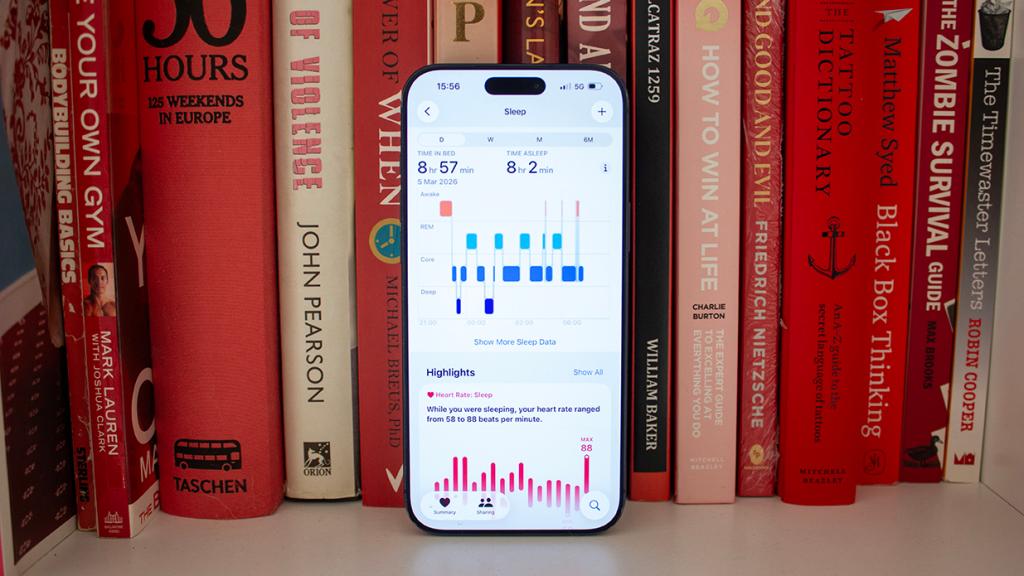
You get a Sleep Score out of 100, and you can scroll on the watch itself to view the time spent in each sleep stage (Awake, Light, REM, Deep), your total sleep time, whether your sleep has been consistent over the past few weeks (any big nights out mess with this), and your sleep schedule.
2. A glass half full
The data is positive too, especially for the Sleep Score. I usually score around 85 out of 100 on both Oura and EightSleep, but I often reach the mid-90s on Apple Watch, and I have two young children. I know, no one likes a bragger, but you have to celebrate the wins where you can.
I’ve criticised Apple Watch for the higher scores in reviews, but over the past couple of months, I’ve begun to realise that its enthusiasm is more uplifting each morning than being told I slept OK but not brilliantly. Tell me I slept great, and there’s a chance I might actually believe it.
3. Snapshot into your health
The Vitals app, which launched in 2024, offers a quick overall snapshot of your health based on five metrics collected while you sleep: heart rate, breathing rate, blood oxygen, wrist temperature, and sleep duration.
It’s not as clear-cut as Oura, where metrics that deviate from your baseline result in a symptom warning, but Apple Watch will flag what it calls ‘outliers’ if any of the five are out of your typical range. I’ve found the outliers to be a good indicator of how I feel, while the Sleep Apnea detection feature has accurately identified the condition in my mum, who wears the Series 10 every night.
4. Gentle wake up
I don’t know how the iPhone can have 28 standard alarm sounds and all of them be horrendous to wake up to, though in its defence, it has some specific wake-up ones that are calmer. The gentle buzz of the Apple Watch alarm is still a kinder way to start the day, though, and even in the deepest of slumbers, it has successfully woken me up for the last decade.
It also got a decent update in 2025 that allows alarms to break through silent mode, so if you want, a sound will play even if your watch is muted (mine always is).
Where Apple Watch sleep tracking fails:
1. Deep sleep is underestimated
It’s difficult to know how accurate any sleep tracker is without being hooked up to medical equipment, but having compared Apple Watch sleep-tracking data to EightSleep, Oura, Ultrahuman, and others, it is not generous with its deep sleep calculations.
Still, it is at least consistently mean, so if you only use an Apple Watch for sleep tracking, you’ll be able to gauge from your baseline whether you had more deep sleep on any particular night.
2. Alarms could be smarter
I mentioned the alarm on Apple Watch, which you can set separately or as part of your sleep schedule, but it could be smarter. Smart alarms that wake you up when you’re in a lighter stage of sleep have been around for years and are common on rival smartwatches now, so wanting the same from Apple Watch seems reasonable.
3. A daily readiness score
We got Sleep Score last year, but Apple Watch still doesn’t have anything like Garmin’s Body Battery, Fitbit’s Daily Readiness Score, or Samsung’s Energy Score.
This is my biggest bugbear – Apple Watch collects much of the same data as these other devices, but it doesn’t turn that data into a daily score that considers how you slept, your vitals and your activity from the previous day, and that’s one of the big reasons I still use other sleep trackers.
4. Sleep focus could be more intuitive
I love that I don’t get notifications on my Apple Watch when I hit my sleep schedule and it goes into the sleep focus, but there are times when that focus is most unhelpful. The times when I might still be out and about, and all notifications stop, kind of times.
Apple Watch will ask me if I want to turn my alarm off if I get up before it goes off, so I’d like it to be able to acknowledge when I am out living my best life and perhaps ask me if I want to delay sleep focus for a few hours.
Otherwise, it’s a great entry into sleep tracking while offering plenty of other functions.
Liked this? Running with an Apple Watch? These are the settings I change first


 Britta O'Boyle