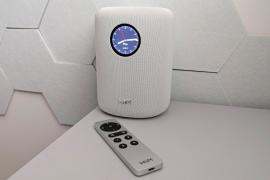
iFi iDSD Phantom review: astonishing sound, astonishing price
A lavish, precision-engineered monument to personal listening


Stuff Verdict
An incredibly precise-sounding all-in-one streamer and headphone amp with granular control to please the most discerning of audiophiles – but you pay dearly for the privilege.
Pros
- Sound delivered with surgical-grade precision and clarity
- Expansive range of physical inputs
- Opulent construction and distinctive design
Cons
- Wallet-ruiningly expensive
- Sheer number of settings can be overwhelming
- On-device UI and companion app not the most fluent
Introduction
If the the FiiO R9 is the media streaming equivalent of a Hyundai (high-tech and affordable) and the Cambridge Audio Evo One is a Mercedes (premium but attainable), there’s no prize for guessing what car the iDSD Phantom is modelled after. British Brand iFi has gone full Rolls-Royce with its new hero model.
Equal parts DAC, music streamer and headphone amp, it replaces the Pro iDSD at the top of iFi’s personal listening tree and is the first consumer-grade system with DSD 2048 remastering.
‘Consumer’ doesn’t mean ‘mainstream’, of course. This is a $4499/£4499/€4695 system – but one that can effectively replace a full Hi-Fi setup. With an abundance of sound-specific settings and modes, however, could even well-off music lovers might struggle to get the most out of it?
How we test Hi-Fi products
Every speaker, amp and Hi-Fi separate reviewed on Stuff is used for a minimum of a week’s worth of daily listening. We use a playlist of test tracks made up of multiple genres to assess sound, and use our years of experience to compare to other models. Manufacturers have no visibility on reviews before they appear online, and we never accept payment to feature products.
Find out more about how we test and rate products.
Design & features: start your engines
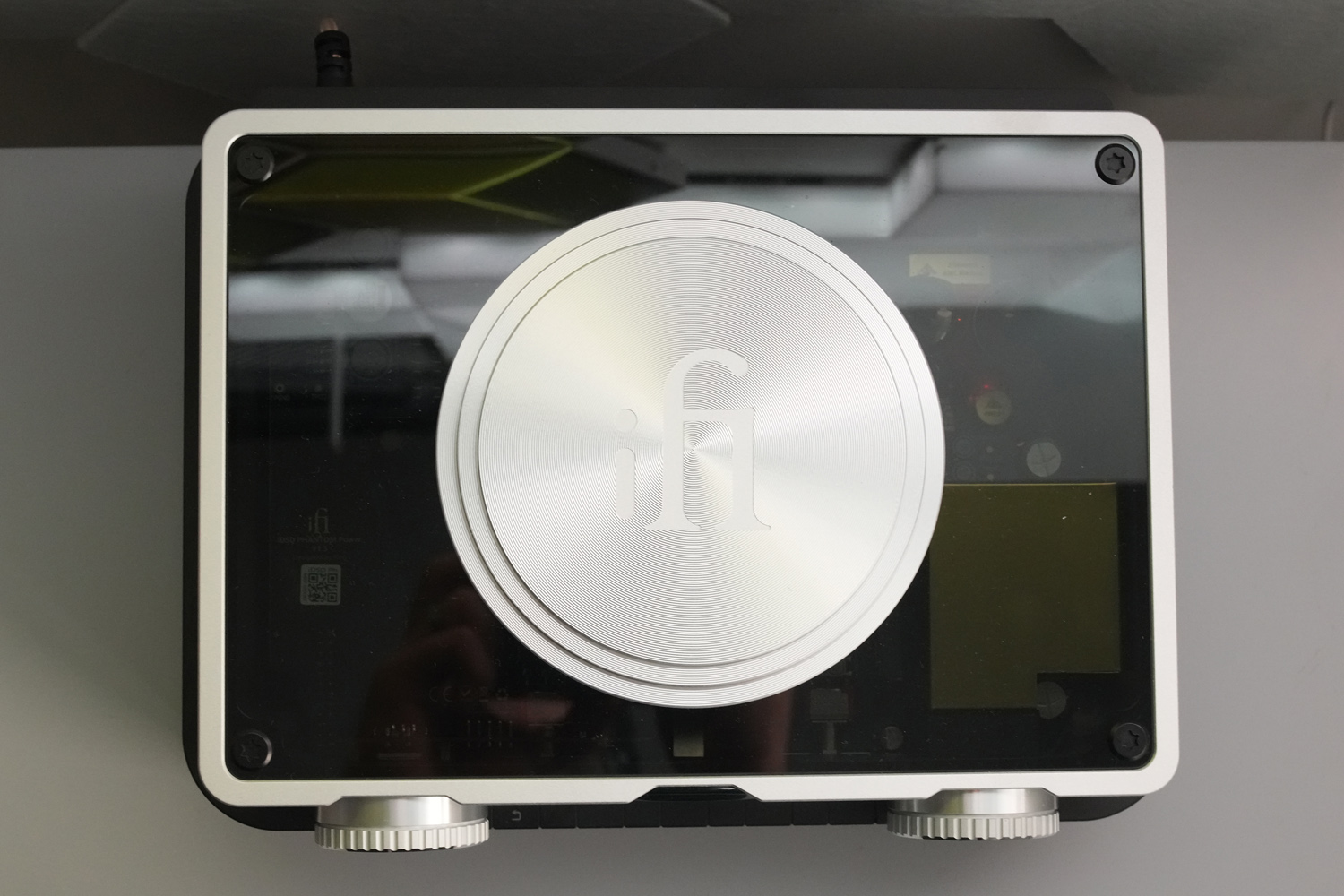

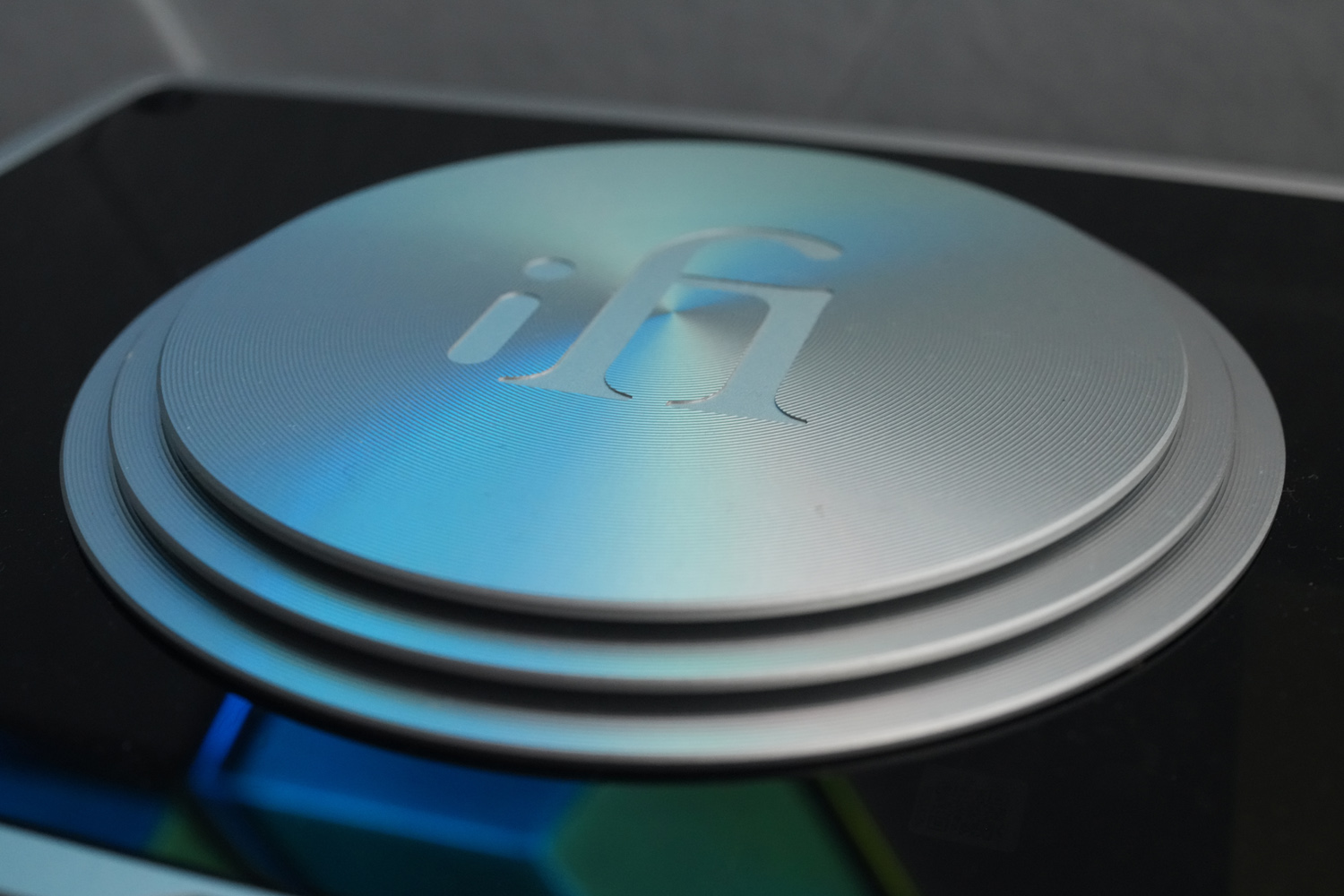
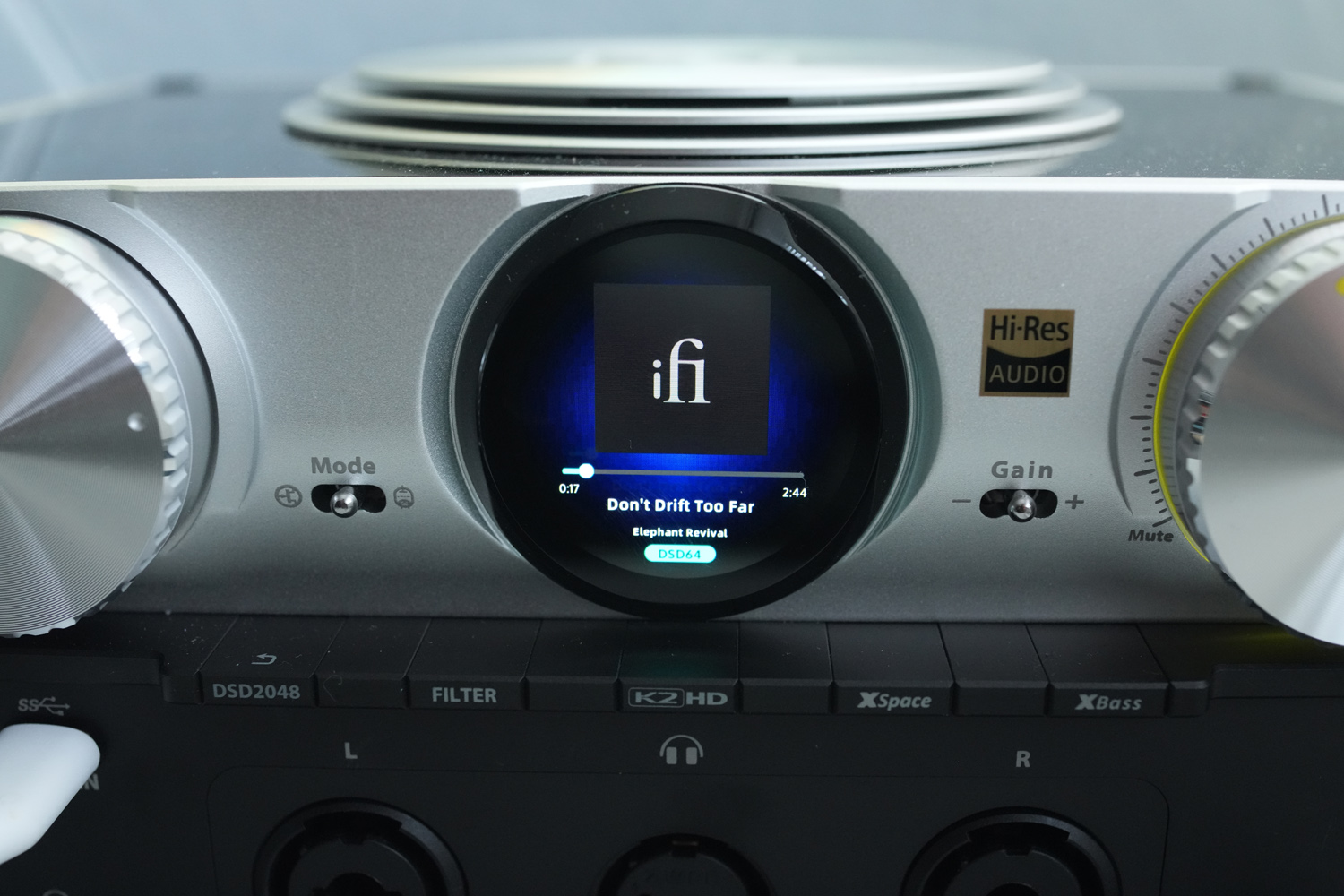
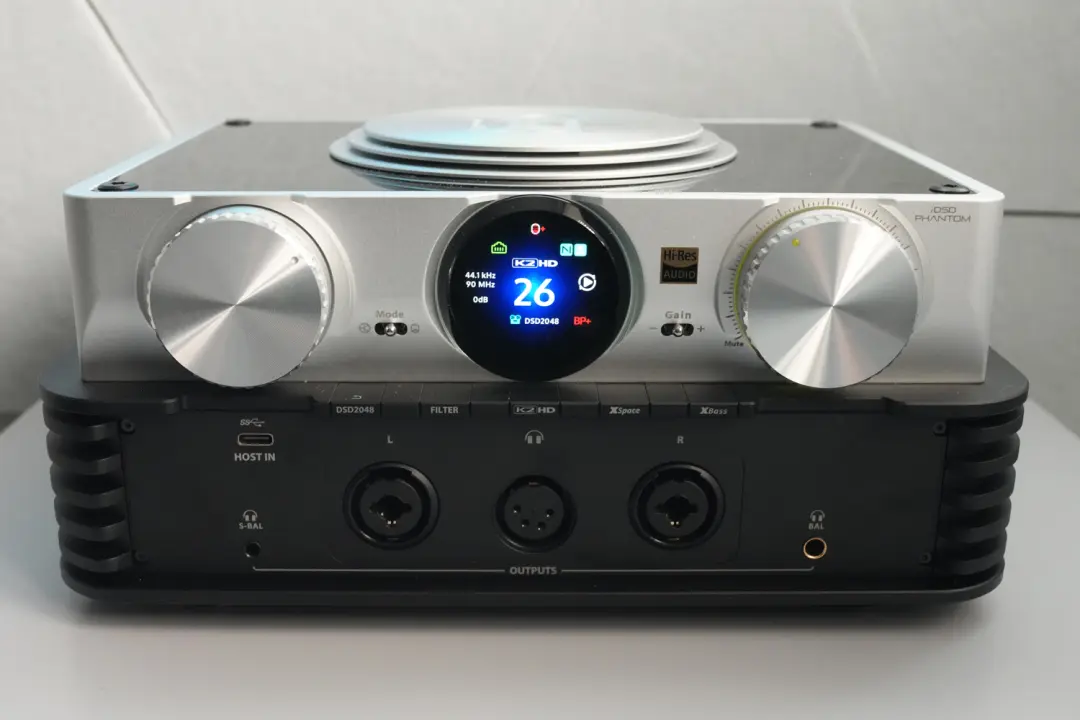
Does iFi’s magnum opus have more in common with Rolls-Royce than just the name? The Phantom’s two-tier design almost looks like an engine block to me. The top section looks resplendent in polished silver, and sits atop a more workmanlike bottom half containing every kind of headphone input you could want. A translucent top plate then hints at the tech lurking inside. The bespoke power supply meant to strip out unwanted electrical noise is almost as over-engineered.
The stacked setup also helps minimise the system’s footprint; it takes up less space on a desk than many one-box streamers and headphone amplifiers.
I love luxury touches like the volume dial turning by itself to the level it was last at before powering off, or when you adjust levels using the remote control. The second dial acts as a power button and lets you scroll through the circular onscreen menus, which have been sculpted to fit the inset OLED information display.
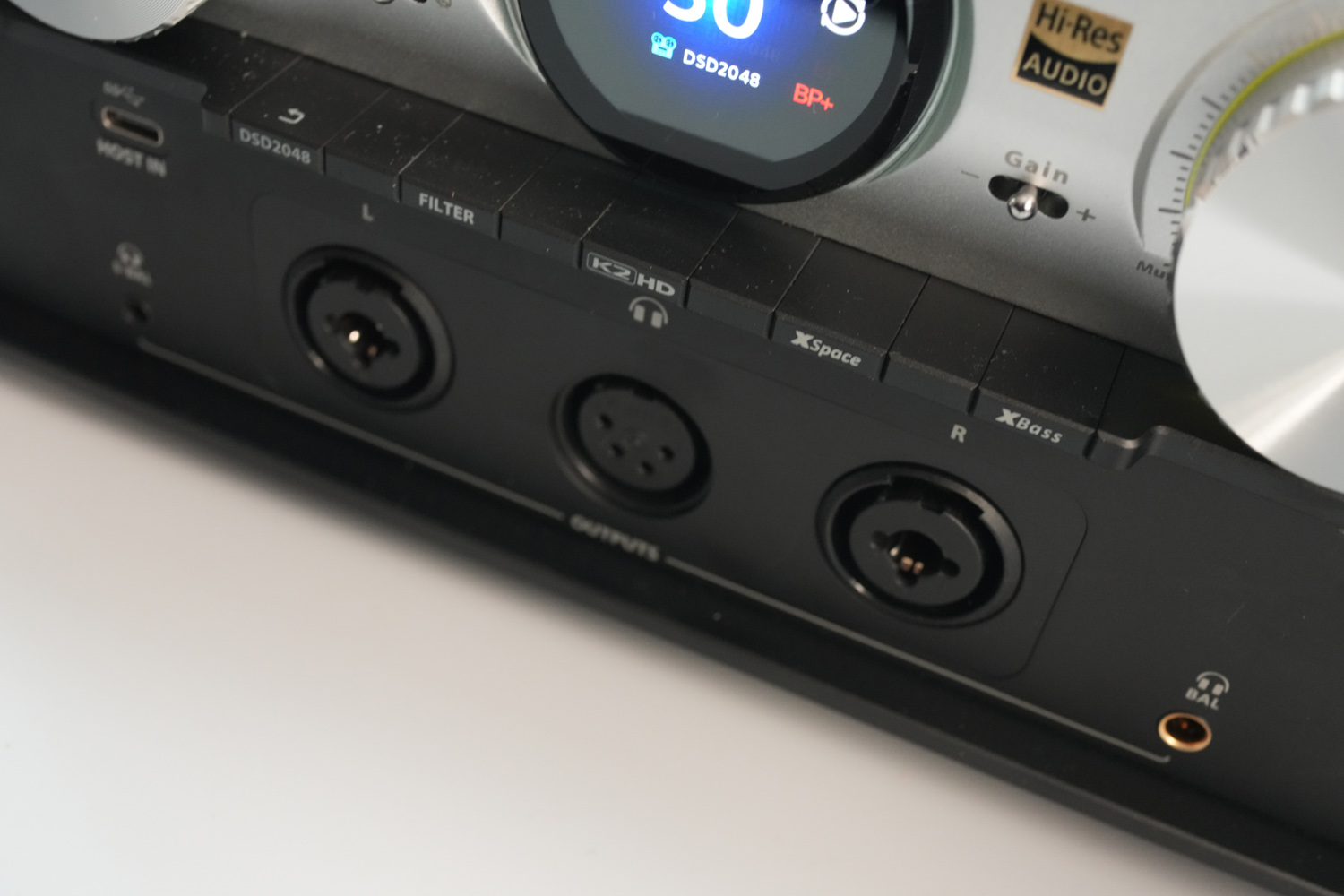
Two further switches on the chassis let you adjust headphone volume gain and swap between three different amplification modes: a super-clean solid state mode, a valve mode that uses hand-matched GE5670 tubes, and a Tube+ setting that sits somewhere in the middle. There are also a handful of subtle push switches that activate some of iFi’s familiar party tricks like XBass Pro (extra low-end for open-back headphones that can lack it), XSpace Pro (for giving the soundstage a more speaker-like feel) and K2HD upscaling (secret sauce developed by JVC Kenwood to restore harmonics lost through digital mastering).
The final push switch controls the Phantom’s ace in the hole, DSD2048 remastering. This ups the sampling rate to a whopping 90 million per second, with no digital filters to dilute the signal. It’s studio-grade tech, with infinitesimally small distortion promised.
It might be small, but the Phantom hasn’t skimped on connections. Given it’s primarily meant for personal listening, you’ll find most of the headphone inputs conveniently placed at the front: an S-balanced 3.5mm and balanced 4.4mm, a 4-pin XLR, and two 6.3mm ports (one in positive phase and the other inverted). If you don’t know what half of those are, this probably isn’t the streamer for you.
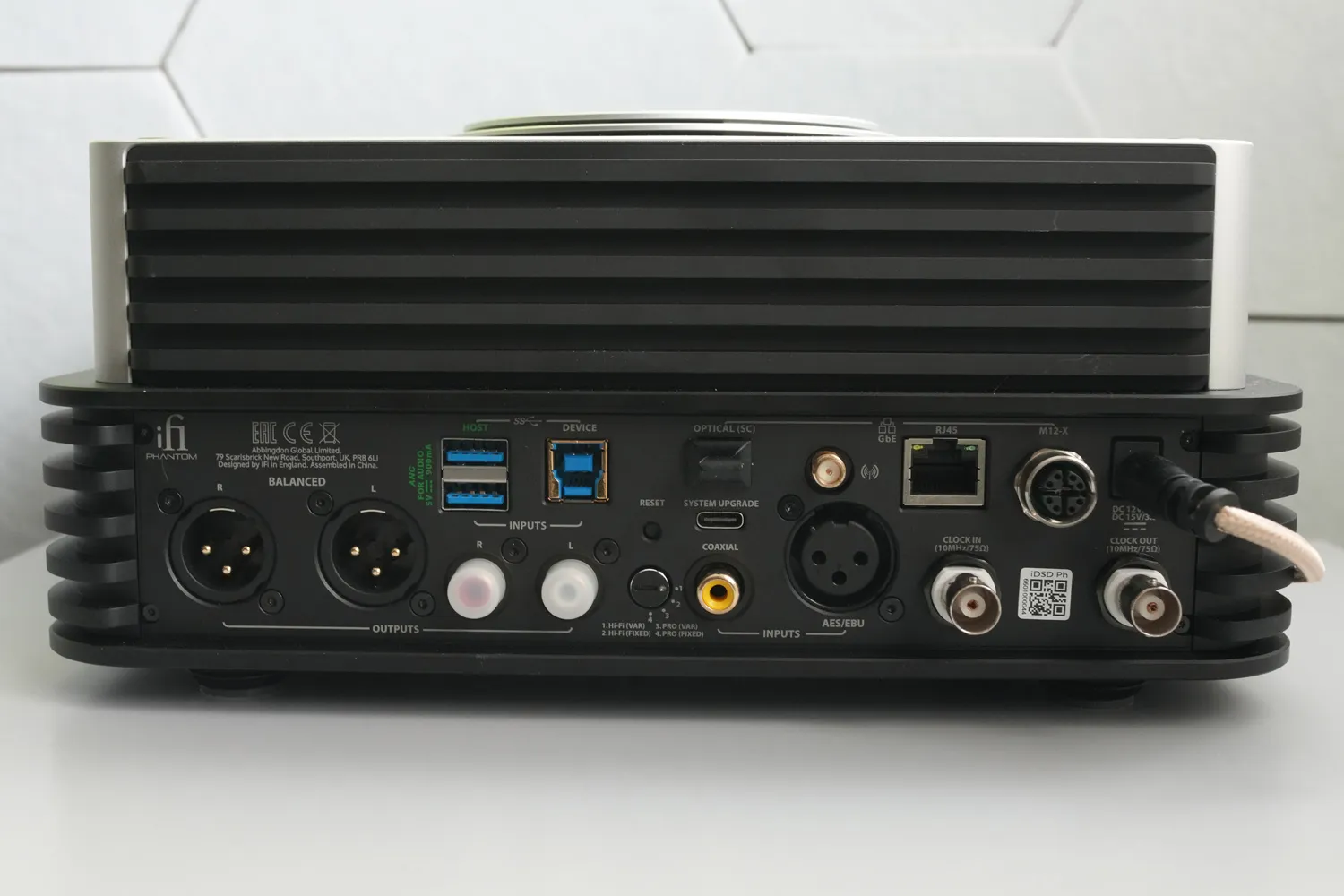
The single USB-C port at the front is handy for hooking up an external hard disk or flash drive full of hi-res music files, but the bulk of the ports are at the rear. There’s Ethernet for a wired connection if your Wi-Fi can’t cut it, optical, S/PDIF and XLR inputs for adding to a wider Hi-Fi setup, a USB-B 3.0 and two USB-As for more external playback, and both RCA and balanced XLR outputs to supply sound to a pair of active speakers. As standalone systems go, it doesn’t leave you wanting for anything.
Wireless streaming is just as extensive, with Qobuz Connect, Tidal and Spotify Connect all on board. It’s Roon-ready, plays nicely with AirPlay 2 and can pick up any UPnP media servers on your local network. Everything worked seamlessly in my testing, detecting my portable SSD full of files and not struggling with the various file formats.
Interface: round we go again
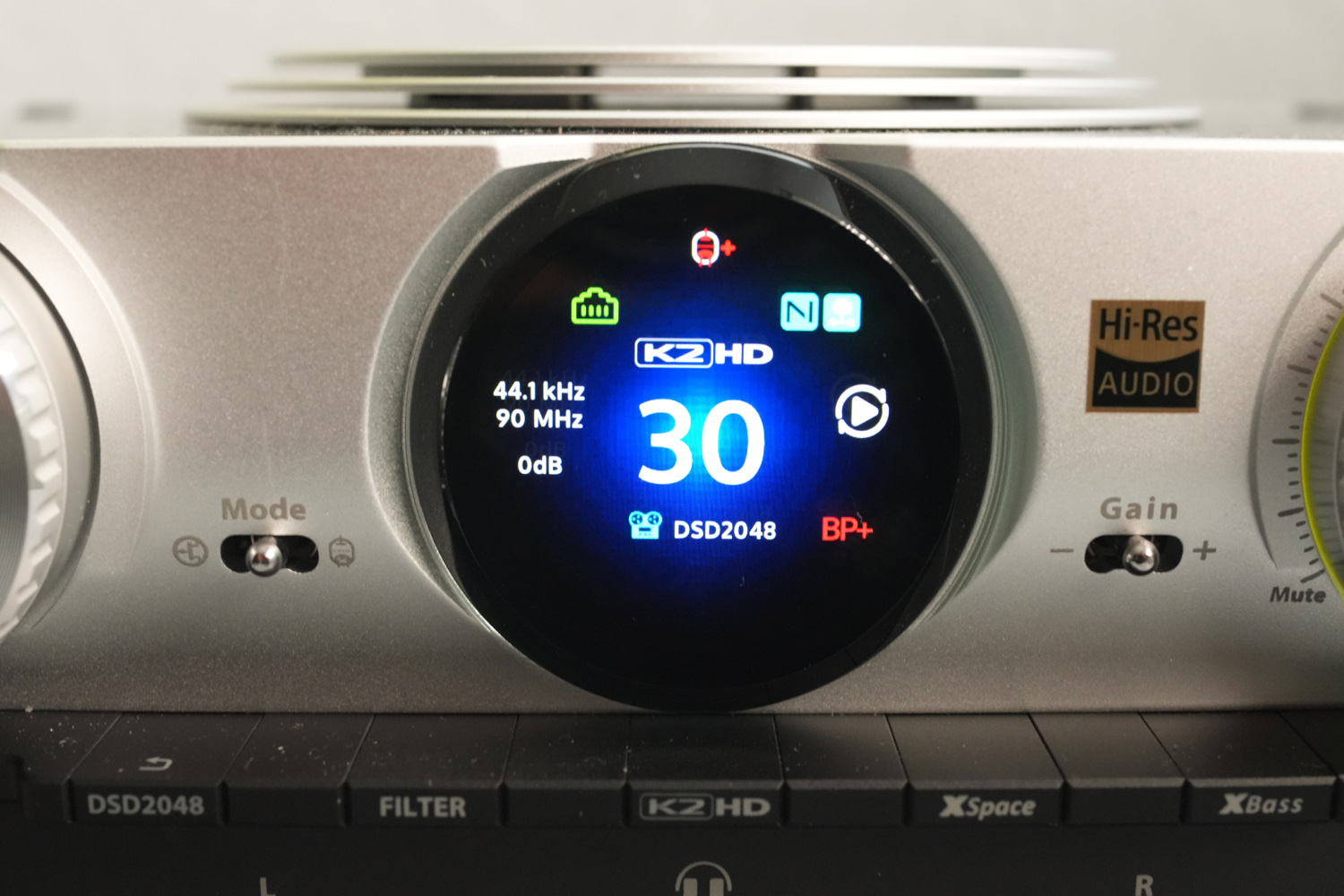
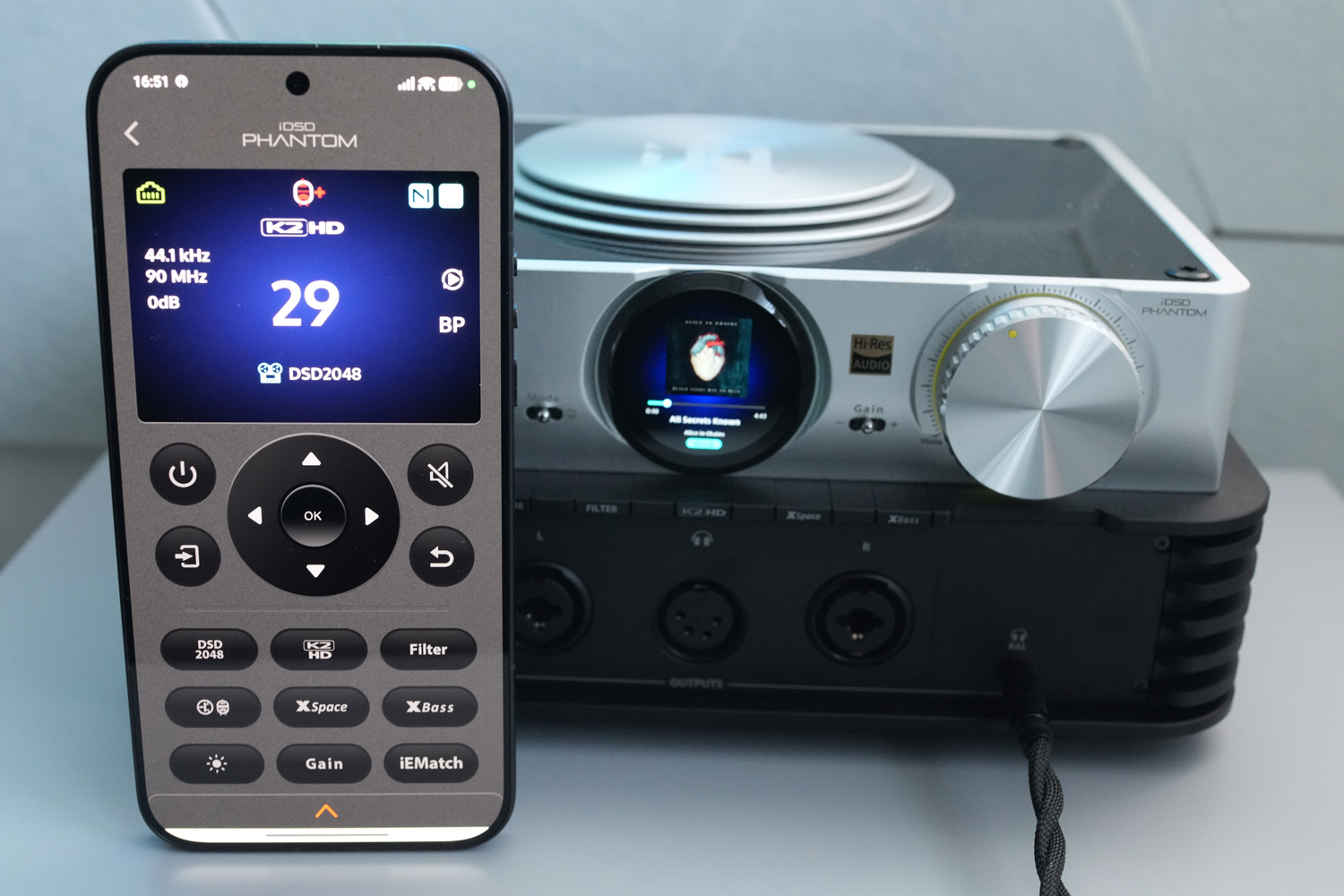
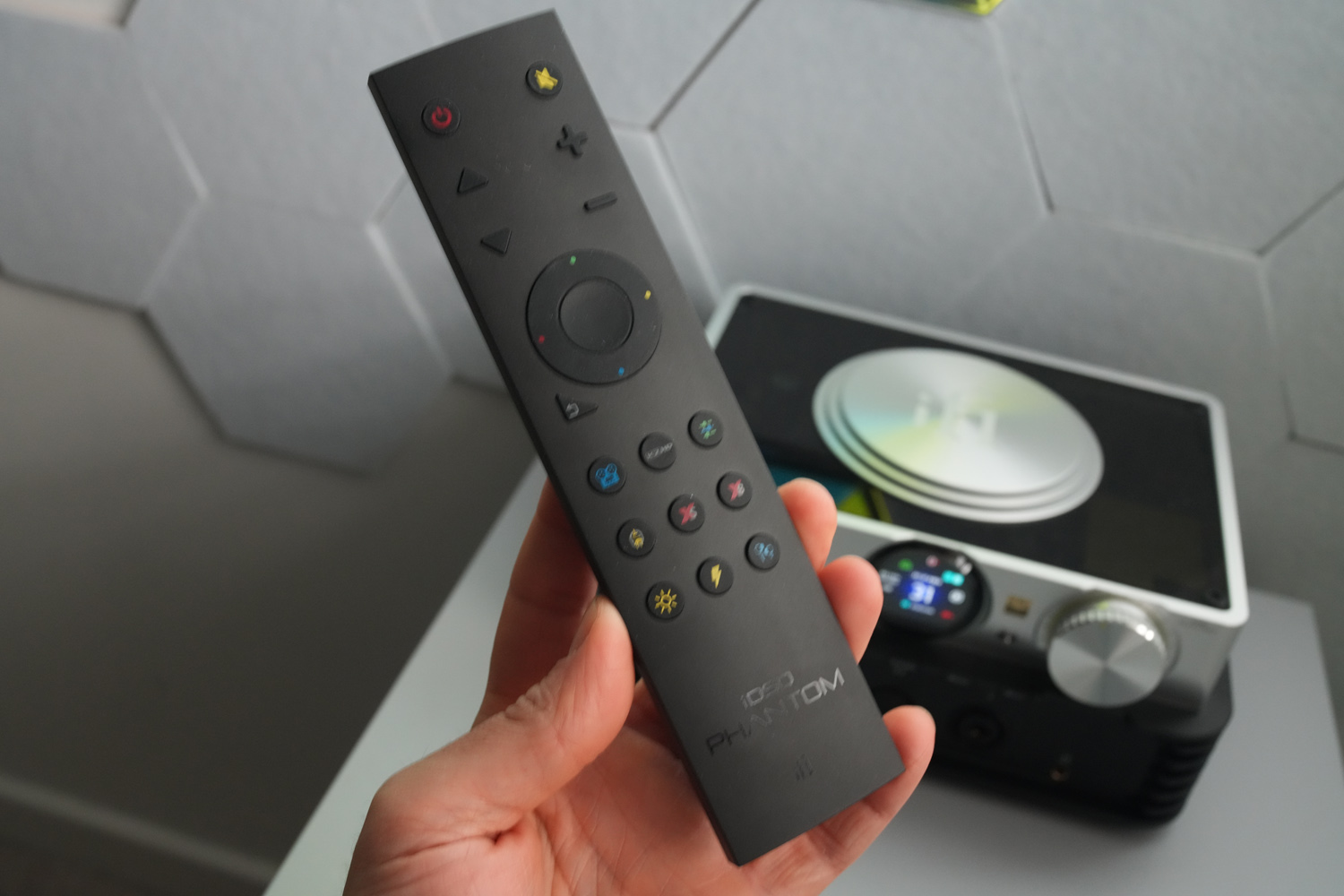
The Phantom’s porthole-like OLED display sits front and centre, blinking brightly into life as you power up the unit. It’s not a touchscreen; all interaction is handled through the satisfyingly weighty aluminium remote control, or your smart device using the companion app.
Even the way the coin cell battery compartment pops out of the bottom of the remote with a button press feels premium, though I wish iFi had included backlit keys for the full luxury experience. A jog wheel to match the onscreen interface – which has been custom built to suit the circular screen – might also have felt more natural than the directional buttons for navigation.
While the screen has enough resolution to make everything look crisp, the multi-coloured icons look fussy against the monotone chassis. They do at least make the different audio modes – of which there are many – stand out from each other, but the nested menus can still be a chore to navigate.
You can have album art appear during playback, but it won’t fill the entire display; I preferred to use the throwback digital VU meters, which make better use of the available space and bounce along satisfyingly to your tunes.
Wi-Fi pairing makes setup a breeze. The companion app is as overloaded with settings as the unit itself, but I found the more expansive UI made it easier to find what I was looking for. It can completely replace the bundled remote control if you like, as well as letting you browse any connected media libraries. Navigation could be a little slicker, with backward swipes returning to the homescreen rather than jumping between individual albums and your main library. It at least reacts instantly to inputs, intelligently pulls album art from the web, and never balked at an expansive song list.
Sound quality: voice of an angel
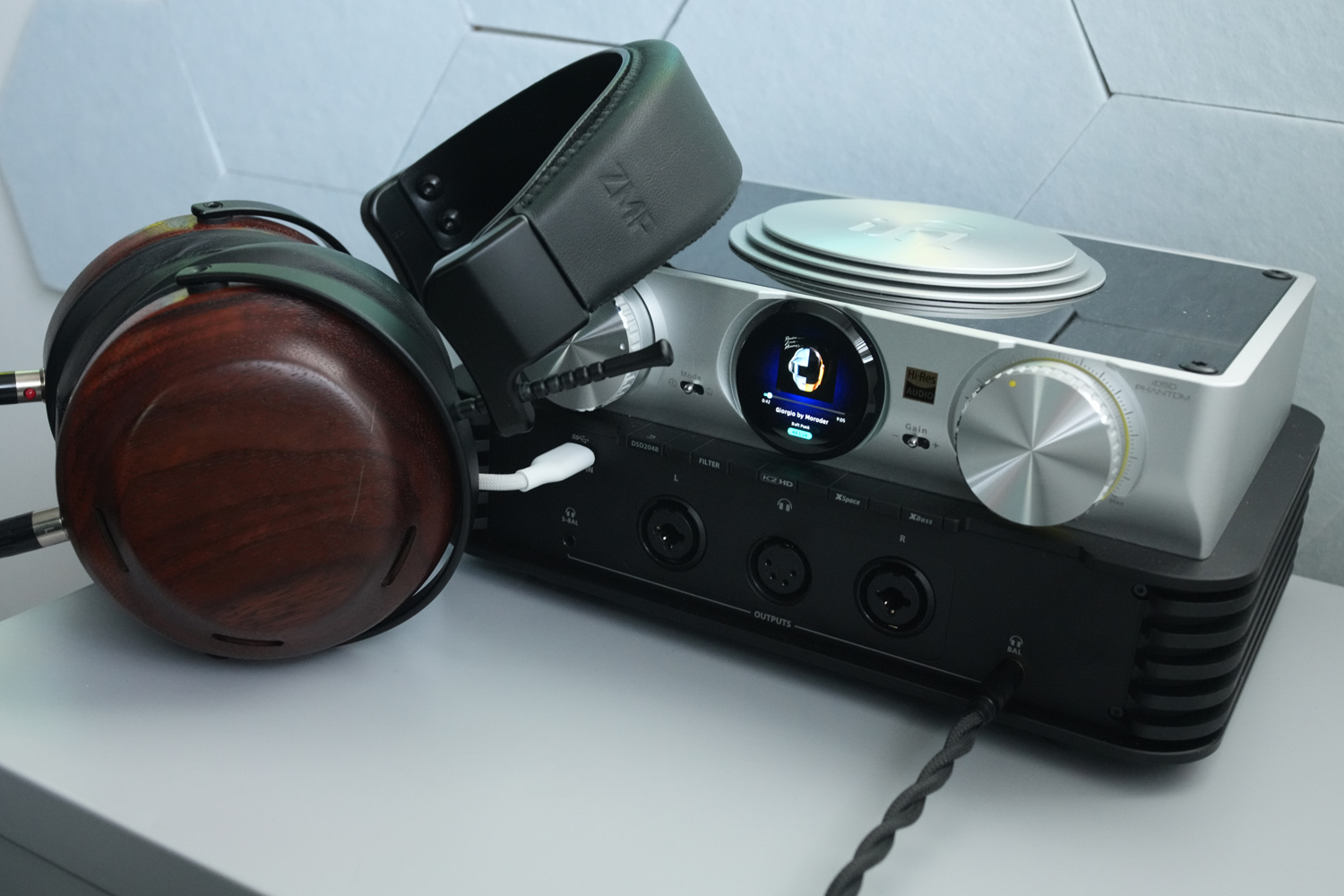
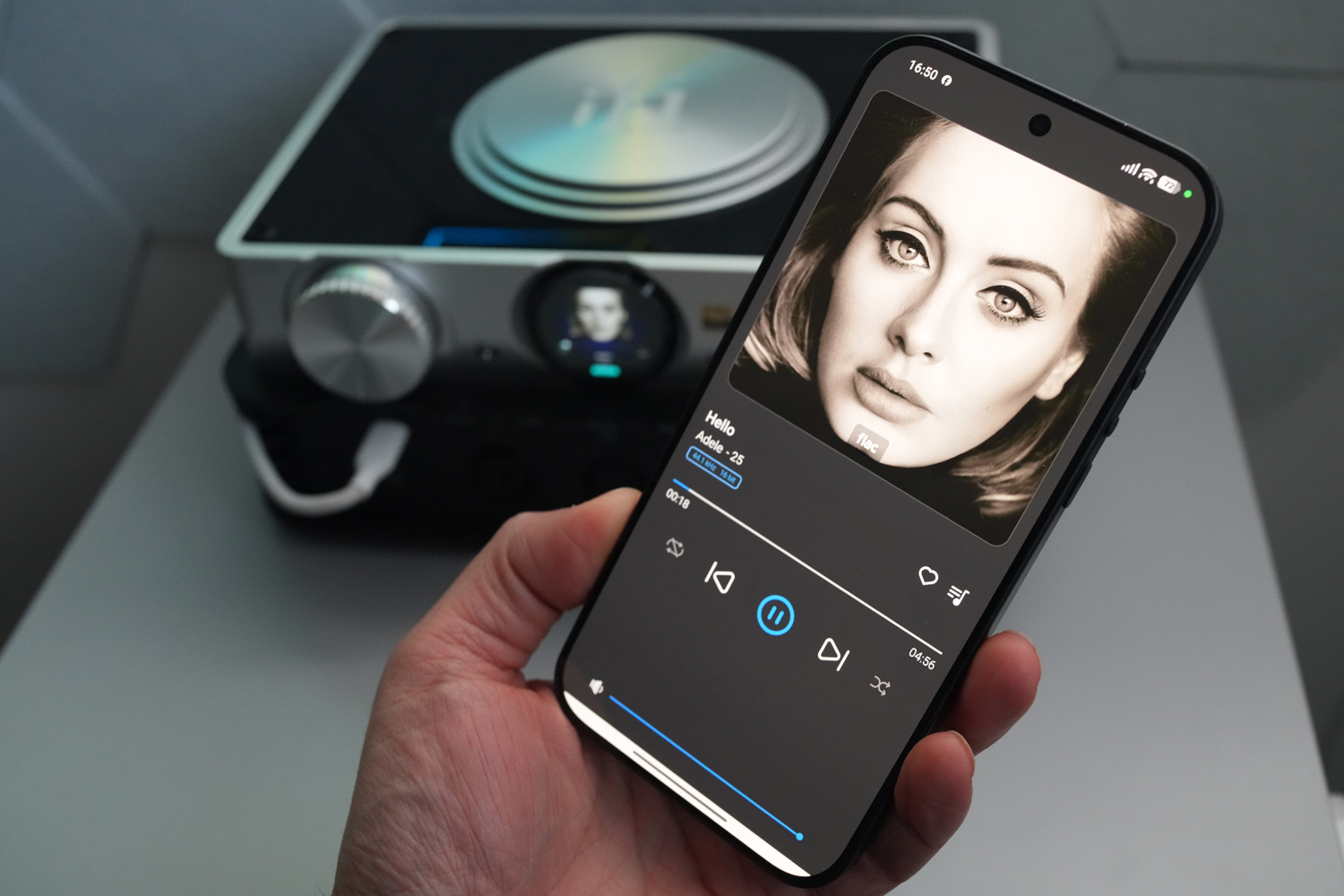
The iDSD Phantom’s four Burr-Brown DSD1793 DACs have been paired with a massive 7,747mW of Class A amplification, so have no trouble driving pairs of headphones as costly as the system itself. iFi supplied a pair of $2200 ZMF Ori 3.0 planar magnetic headphones for testing; I also used the £999 FiiO FA19 in-ear monitors for my mix of native DSD and FLAC files, lossless music streaming and more basic Spotify playback, along with a few pairs of (much cheaper) over-ears.
If you have the cash to splash on one of these, you don’t want to be pairing it with a set of budget headphones. While the £179 Sivga SV021 Pro put in a very strong performance, it was once I’d stepped up a tier that the Phantom really came alive. There’s texture and detail on tap at levels I’ve rarely heard before, with absolutely zero distortion and textbook control.
The synthesisers on High Contrast’s The Road Goes On Forever had bite I’ve never really picked up on when listening on other devices, and that was at a very modest volume setting. The Phantom makes driving demanding headphones feel effortless. It also copes just as well with delicate tracks as it does bombastic, multi-layered ones, ensuring nothing is lost at any point in the process.
With the amplifiers set to solid state and the K2HD processing enabled, songs have near-surgical levels of precision, yet that never comes across as abrasive or unpleasant. The electronic drum stabs on Health’s Ordinary Loss hit even harder than usual. If you’re not chasing the most analytical presentation possible, swapping to the tube setting warms things up – without losing any sense of clarity.
The soundstage is broad enough at the stock settings, well before you bring XSpace Pro into the mix. It can create an even wider sensation of room far more convincingly than any virtual upmixing I’ve tried, without introducing any unwanted dampening of any part of the frequency range.
With so many modes and settings, you really can dial in every aspect of the Phantom’s sonic character. That will be too in-depth for some, but audiophiles will feel right at home.
iFi iDSD Phantom verdict
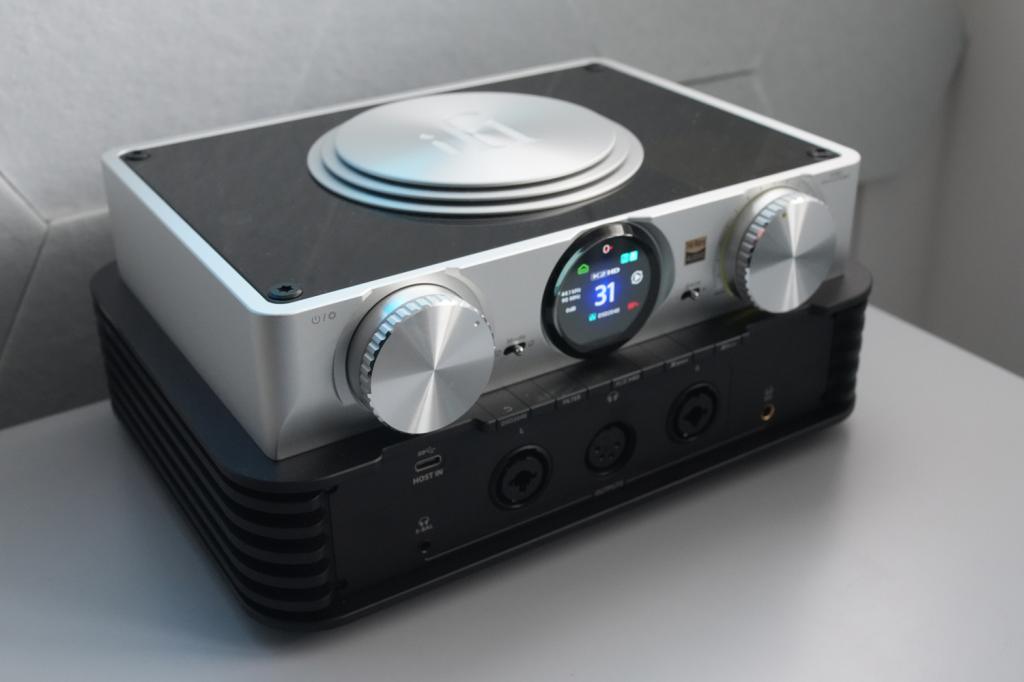
The iDSD Phantom sits somewhere between Hi-Fi centrepiece and art installation, being almost as easy on the eyes as it is on the ears. It has all the streaming smarts you’d expect, is overloaded with connectivity options, and there can be no denying its sonic credentials.
There are a few rough edges though. The interface isn’t nearly as polished as the shiny silver casing, and the sheer amount of options to tweak every aspect of the listening experience will be lost on all but the most dedicated of audiophiles. This is decidedly not a set-it-and-forget-it system, and costs so much it makes the £2300 Naim Uniti Atom Headphone Edition look relatively affordable.
That makes this a money no object music streamer for the detail-obsessed – a small niche, but one it fills very well indeed.
Stuff Says…
An incredibly precise-sounding all-in-one streamer and headphone amp with granular control to please the most discerning of audiophiles – but you pay dearly for the privilege.
Pros
Sound delivered with surgical-grade precision and clarity
Expansive range of physical inputs
Opulent construction and distinctive design
Cons
Wallet-ruiningly expensive
Sheer number of settings can be overwhelming
On-device UI and companion app not the most fluent
iFi iDSD Phantom technical specifications
| Specifications | iFi iDSD Phantom |
|---|---|
| Amplification | 7000W |
| Streaming support | Spotify Connect, Tidal Connect, Qobuz Connect, AirPlay 2 |
| Audio inputs | 3.5mm, balanced 4.4mm, 3-pin/4-pin XLR, 2x 6.3mm |
| Connectivity | USB-B 3.0, 2x USB-A; USB-C; S/PDIF, AES3, RJ45; M12, Optical, BNC |
| Dimensions | 256x185x120mm, 3.6kg |


 Tom Morgan-Freelander
Deputy Editor
Tom Morgan-Freelander
Deputy Editor