Your Android phone could soon feel much faster, thanks to this Google upgrade
A behind-the-scenes optimisation to Android’s core could mean snappier apps, smoother switching, and even better battery life


The best Android phones are already pretty quick these days, but a new Google upgrade in the form of a software tweak could make them feel even faster – without you needing to buy a new device.
The change targets the Android kernel, which is essentially the operating system’s central control hub that manages how apps talk to your phone’s processor, memory, and hardware. According to Google (via Android Authority), the kernel accounts for around 40 per cent of CPU time on Android devices, so even small improvements here can ripple through the whole system.
The new optimisation is called Automatic Feedback-Directed Optimisation, or AutoFDO. If your eyes are glazing over, don’t worry – the idea behind it is actually quite simple.
Normally, when Android is built, a compiler – the software that prepares code so your phone can run it – has to make educated guesses about which parts of the system will be used most often. Those guesses help decide how the code is arranged and prioritised so it runs efficiently.
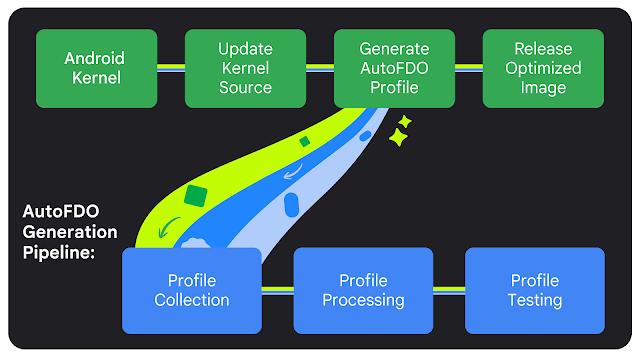
AutoFDO changes that approach. Instead of guessing, Google simulates real-world phone usage in testing. In lab tests, it ran the 100 most popular Android apps, tracking which parts of the kernel were used most frequently.
The system then identifies which pieces of code are “hot” – meaning they’re used constantly – and reorganises the kernel so those parts run as efficiently as possible. It’s a little like reorganising a kitchen so the utensils you use every day are within easy reach, while the rarely used gadgets stay in the back of the cupboard. Except, you know, with ones and zeroes.
The end result should be improvements that are easy to notice in day-to-day use. Google says the optimisation can lead to snappier interface performance, faster app launches, quicker app switching, and potentially better battery life – if the processor can complete tasks more quickly and with less wasted work, it doesn’t need to stay active for as long, which can result in lower power usage.
The change is already being rolled out to kernel versions used by Android 15 and Android 16, with support planned for future versions as well. To be clear, this isn’t a flashy new feature you’ll toggle in settings. Rather, it’s a deeper improvement that should gradually make Android phones feel smoother over time.
And because it targets the very foundation of the operating system, the benefits of this Google upgrade could eventually reach a huge number of devices. Even if the change sounds obscure on paper, it could be one of the most quietly important Android performance upgrades in years.


 Esat Dedezade
Contributor
Esat Dedezade
Contributor