The next generation of VR headsets will be more immersive than ever thanks to this new tech
Snapdragon Reality Elite brings power and efficiency boosts

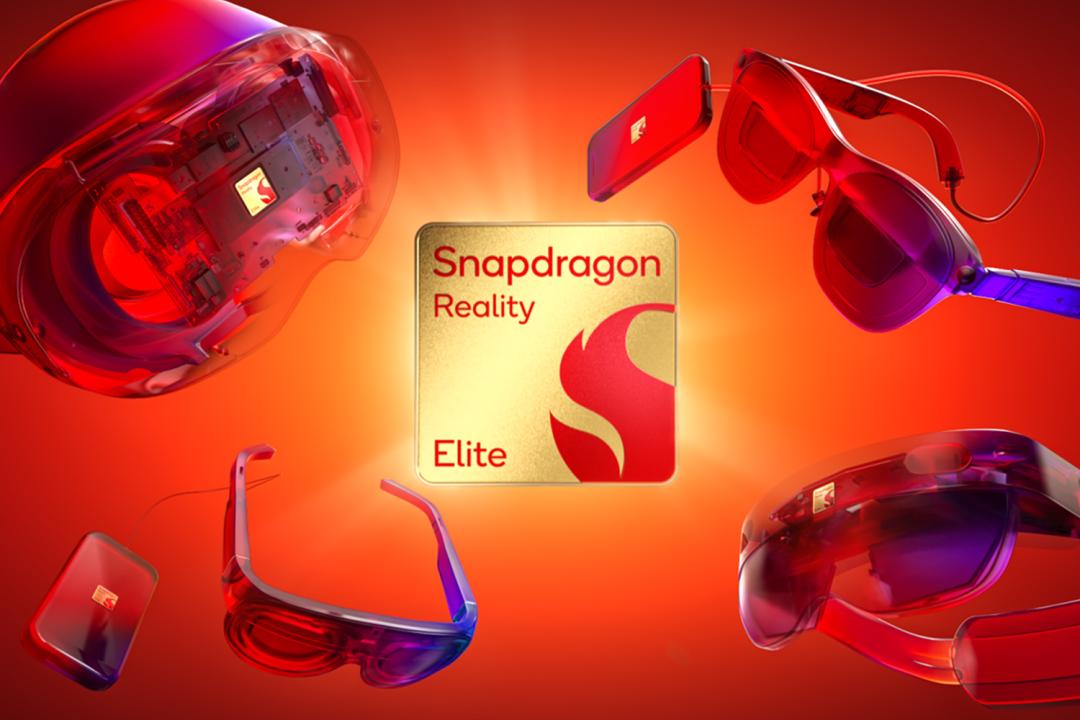
It doesn’t matter if you call ’em VR headsets, mixed reality wearables or spatial computing devices; crack one open and there’s a good chance you’ll find Qualcomm silicon at its heart. But after XR1 and XR2, the chip-maker has decided to mix things up for the new generation. Snapdragon Reality Elite is also bringing healthy performance and efficiency gains, which should mean your next headset creates more convincing virtual worlds and lasts longer per charge.
Announced at the Augmented World Expo (AWE), Snapdragon Reality Elite is aimed at both all-in-one headsets and and tethered companion devices, like those currently doing the rounds from Xreal. It succeeds the XR2+ Gen 2 platform, which will soon be found inside the Samsung Galaxy XR.
The numbers are impressive: Qualcomm reckons the new silicon can deliver up to 30% faster performance than the last gen chip at the same power draw, or use 45% less energy to deliver the same amount of number-crunching grunt. The Adreno GPU goes even harder with a 60% uplift at the same power draw as before, or as much as 64% lower power consumption for matching performance.
Improvements here will also have a positive effect on image quality, with lower latency passthrough, foveated processing (only rendering what your eyes are focused on in the highest detail) and spatial denoising when using a headset’s onboard cameras.
That should translate to up to 20% longer battery life than the current crop of VR headsets, but also significantly lower temperatures that could mean smaller, lighter devices than we have today.
On-board generative AI is very much a goal for the new headset generation, with the NPU promising 160% gains from the previous generation. That equates to 45 tokens per second, and the ability to run 3 billion-parameter models with a 2K context window.
Xreal will be the first to launch with a Snapdragon Reality Elite device.

Qualcomm also used its AWE 2026 keynote to show off a second-generation smart ring controller and the Scalable Turnkey AI-ready Turnkit (START) program, an initiative aimed at speeding up the development of smart glasses.
The smart ring adds Bluetooth LE, 3DOF sensors, a microphone and support for hand gestures, letting it control a paired headset without having to rely on traditional controllers or hand-tracking cameras. It won’t be sold to consumers, but could help mixed reality developers base their upcoming devices around the tech.
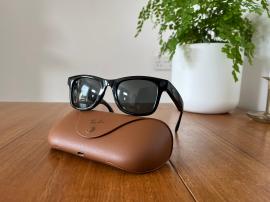
The START program covers more bases, with three flavours of smart glasses based on the AR1+ Gen 1 platform – which Qualcomm reckons is more compact than any rival. There’ll be an Audio & Camera form factor (like Meta’s Ray Ban specs), a monocular lens with full colour (which will compete with the Meta Ray Ban Display) and a binocular uLED pair with full colour, which would contend with smart glasses from Viture.
Qualcomm has tapped up partners ready for when brands want to begin production. Barbour, CAT, Superdry and O’Neill eyewear license holder Inspecs is first in line.


 Tom Morgan-Freelander
Deputy Editor
Tom Morgan-Freelander
Deputy Editor