The biggest trends from Watches and Wonders 2026 and the themes that will define watchmaking this year
From subtle upgrades to a surge in indie energy, these are the six trends that defined Watches and Wonders 2026


As the most important show on the horological calendar, Watches & Wonders sets the pace for the year to come. Yes, when it comes to numbers of brands it’s a relatively small slice of the watchmaking pie, but when it comes to numbers of watches and visibility, there’s no better time or place to do a bit of trend spotting.
These are the six biggest trends that stood out to me most at Watches & Wonders this year.

1. Evolution over revolution
This honestly is the message for the fair this year. From accessible, entry-level brands to the grand maisons of old, this is a year of refining and revamping popular models.
At one end, Frederique Constant has perfected their accessible Worldtimer and Nomos has made their Tangente Update more wearable than ever; at the other, Vacheron Constantin has dragged their beautiful Historiques Americaine 1921 kicking and screaming into the 21th century.
It’s a theme that’s especially true of Hublot who are still building on the Big Bang’s 20th anniversary last year with the Reloaded edition, as well as reintroducing the aesthetically shattered Big Bang Impact, 10 this year.

2. Monochrome cool
Colour’s been getting more and more common in watches beyond your classic white, black and blue dials. This year though rich purples and reds, icy blues and summer-ready mint greens have been replaced with a sleek palette of grey, white and black.
Oris’ supremely handsome Star reissue is a mix of grey and silver; IWC’s perpetual calendar equipped Ingenieur does the same as does Laurent Ferrier’s jet-setting racing-inspired Sport Traveller.
Even Moser & Cie who last year had the last word in colourful dials with the Endeavour Small Seconds Concept Pop is going monotone. The Streamliner Pump – inspired by the soon-to-be-relaunched Reebok icon – is available in either all-black or all-white, save of course for the bright orange winding pump.

3. Thins and springs
The next generation of Sellita movement is on the way and with it a flood of high-spec watches leveraging the new and improved third-party movement. And so, the big watchmakers have been responding with improved movements almost across the board, emphasising two different things: slimness and power reserves.
At the higher end there are some headliners in both regards. Jaeger-LeCoultre’s ultra-thin minute Master Hybris Artistica minute repeater measures just 8.25mm thick and Panerai’s insane 31-day power reserve Luminor immediately come to mind. But even Frederique Constant and Alpina are falling in line with an upped, 72-hour power reserve Worldtimer and slimmer Startimer Pilot respectively.

4. Skeletons in the closet
There are few more intensely mechanical aesthetics than the not-so-humble skeleton watch, which live to show off the wheels and springs of the movement underneath the dial. There are always a few brands specialising in the finish, but this year it seems more popular than ever.
The new Hermes H08 Skeleton does it very well in a couple of colour variations, as does the TAG Heuer Monoco Evergraph, a much more modern take on the Steve McQueen classic. Then of course there are the high complications – Panerai’s 31-day power reserve, Jaeger-LeCoultre’s Gyrotourbillon and the ghostly Lange 1 Lumen – that you’d expect.
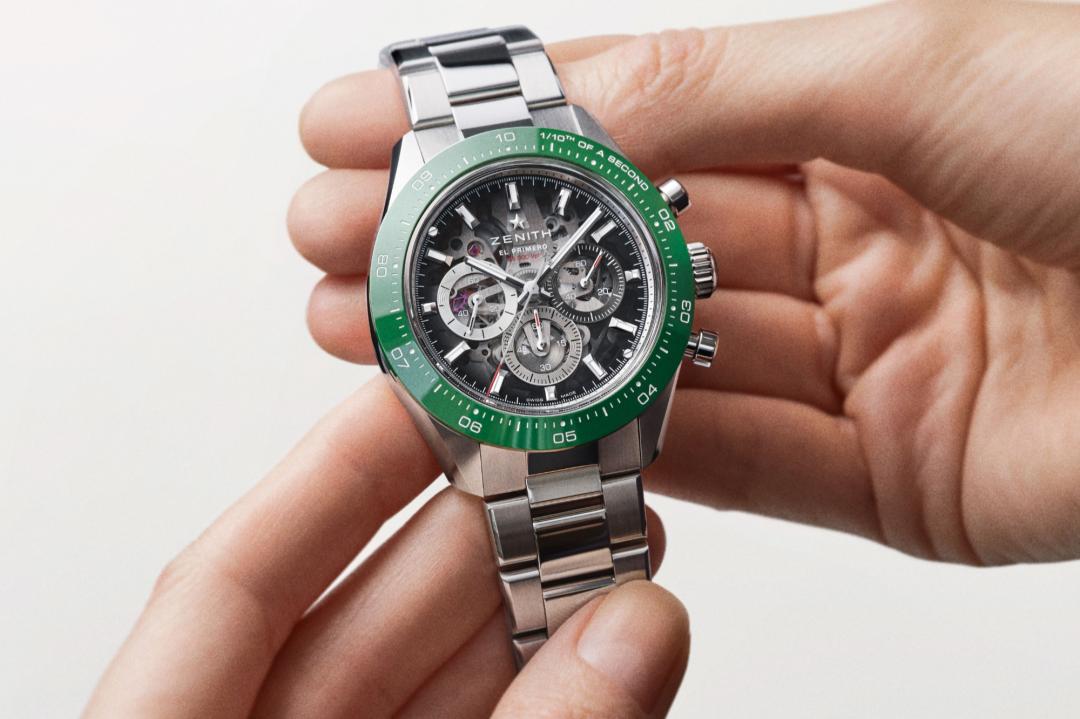
None though have done it quite as confidently as Zenith who admittedly have a lot to show off under the hood of the Chronomaster Sport. The 10th of a second chronograph function is all the more impressive when you can see the furiously whirring El Primero movement – particularly when framed with a bright green bezel.
5. Independents on the up
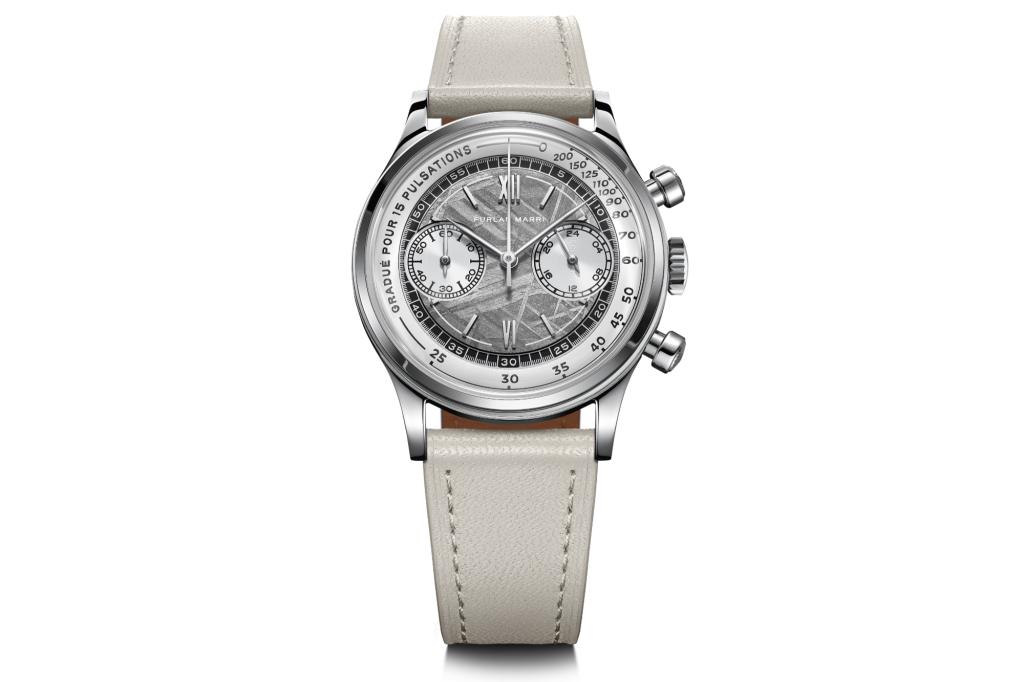
This is a bit of a hot take, but Watches & Wonders might not actually be the most exciting reason to be in Geneva for, well, Watches & Wonders. The period now dubbed Geneva Watch Week is also dotted with smaller shows, from the painfully named Time to Watches at Villa Sarasin just next door to the debut Chronopolis show dead centre of city. While the big brands gravitate to the oversized booths of the Palexpo, these shows house smaller, independent watchmakers.
A few years back these kinds of exhibitors were derided as ‘pirates’, glomming on to the prestige of Watches & Wonders, but these days there’s a thriving, vibrant network of niche watchmaking shows that seem to be growing exponentially. There’s more of a collector culture at these shows and it doesn’t matter whether the watch is $1000 – a la Studio Underd0g – or $100,000, they’re equally easy to try on your wrist.
I’m not saying that these shows sound the death knell for Watches & Wonders; far from it. The headliner will always be just that, but it does show just how eclectic and far-reaching the watch world is.

6. To Infinity and Beyond
One of my [Stuff editor, Spencer Hart] standout watch trends this year is space watches. Omega may always have the Moon Watch, but plenty of others are entering into the 2026 space race – likely helped along by the rise of commercial spaceflight and the Artemis II mission.
Just before the show, Breitling kicked things off with its Navitimer B02 Cosmonaute Artemis II, built to mark said mission. At the show itself, IWC brought something even more out there: the Pilot’s Venturer Vertical Drive. It’s the first tool watch specifically designed and certified for human spaceflight, with a bezel and rocker switch that can be operated while wearing a spacesuit. The watch will be part of Vast’s mission to launch a commercial space station.
And that’s not all. Bremont is getting in on it too with the Supernova Chronograph, which is set to make history later this year as the first British watch brand to head to the Moon. The 41mm integrated bracelet watch will be permanently mounted to Astrolab’s FLIP rover, bound for the lunar south pole.
Liked this? The best emerging microbrand watchmakers to keep an eye on in 2026 and beyond


 Sam Kessler
With contributions from