I was properly surprised by just how zesty the electric Toyota C-HR+ was to drive
A dedicated electric platform reinvents Toyota's compact crossover

Stuff Verdict
Feels way better than either hybrid model and the space quota is improved too. Decent levels of kit and a fizzy drive factor help raise the Toyota C-HR+’s excitement levels
Pros
- Interior space is a lot better
- Deceptively good fun to drive
- Impressive infotainment and audio
Cons
- It’s still a bit closed in at the rear
- Boot space isn’t bad but it’s not huge
- Quite a hard ride on less good roads
Introduction
The Toyota C-HR+ is the first fully electric version of this very popular compact SUV that has, amazingly, been around in one form or another since 2016. It sits on the eTNGA dedicated electric vehicle platform, which also forms the basis for the Toyota BZ4X and there are certainly similarities in the looks department. However, this also feels like an all-new car compared to the standard issue hybrid or plug-in editions of the C-HR. Thanks to the low-slung battery, there is more space, which is welcome as the hybrid did have a tendency to feel a little too cosy inside.
Toyota has also beefed up performance thanks to a respectably-sized 77kWh battery, although there is a smaller 57.7kWh option too. This means the Toyota C-HR+ offers zestier performance and there is also decent handling to go with it. The bigger battery route leads to a range of up to 376 miles and offers plenty of satisfying oomph in the performance department.
While I’ve been fond of both the hybrid and plug-in versions of the Toyota C-HR, I think this car is an altogether more pleasing option and comes with Icon, Design and Excel trims to choose from. It feels more dynamic and interesting to drive, and the extra boost in its dimensions means there’s more space to play with than the cars that don’t come built on the eTNGA platform. That means there’s more potential for it with fans of small family SUVs in the vein of, say, the Skoda Elroq or Renault Scenic.
The styling


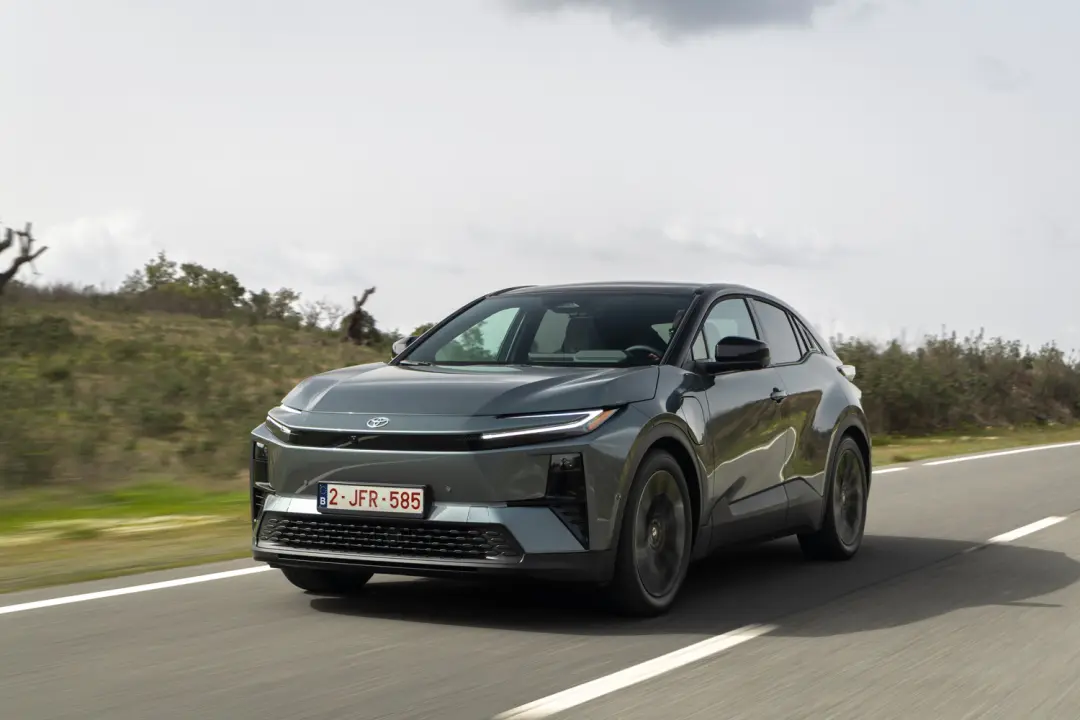
Toyota has done a great job with the styling of the C-HR+, even though the exterior does unsurprisingly look a little like the BZ4X. It could also pass for a Lexus, especially in one of the dazzling new colours Toyota is offering including a fab metallic brown-ish shade called Metal Oxide. As someone who loved the original C-HR, I think the evolution is a good one, with some neat touches going on with the design.
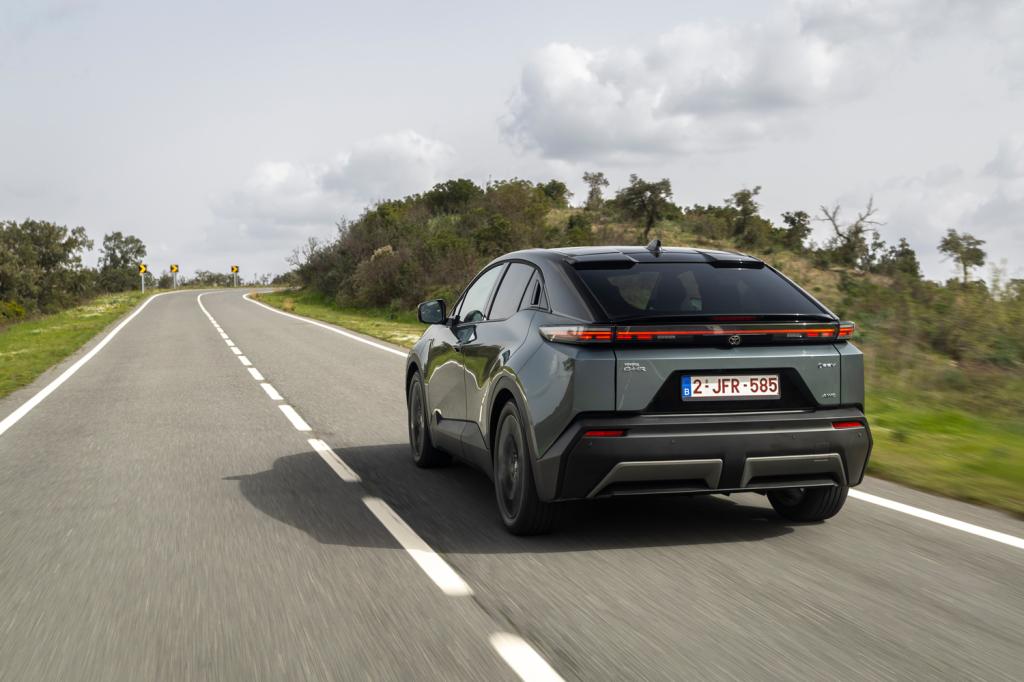
My test car was fitted with 18in alloys (20s are available), which looked quite understated in their dark gloss finish, but contrasted nicely with the paint. I thought the front end was a success story, with a good use of angular design flourishes, especially around those smart-looking lights. The same goes for the rear end, where the protruding taillight bar adds a flurry of interest. Of course, there is still a coupe-style design vibe going on with the roofline, plus lots of little goodies like the door handles recessed into the rear pillar and wheel arch trim that also added contrast against the exterior paintwork.
I’ve never been a huge fan of the interior of the BZ4X, so I was a little deflated to see that the C-HR+ carries much of the same setup for the cockpit area. Dominating proceedings is the area in front of the steering wheel, which has the same binnacle-type arrangement that I’m not keen on. To me, the instruments seem a long way away from the driver and, while the layout works well enough, I’m still not convinced. I can’t help thinking of a yoke steering wheel setup when I see this layout, even though there’s a plain old steering wheel there instead.
Still, the interior delivers a largely decent experience, with seats that look the part and feel comfortable on a run. Toyota has spiced up the trim areas with some interesting materials, which I thought gave it a definite lift over the regular C-HR. Even the headroom is helped by the floorplan setup, although an adult in the back seats for longer periods might beg to differ about just how beneficial this is in practice. It felt a bit gloomy back there too.
The drive


As I mentioned earlier, the Toyota C-HR+ is being offered with two powertrain variants, with the front-wheel drive car being aimed at UK buyers. The Toyota C-HR+ all-wheel drive model is a possible draw, but I think it’s a little unnecessary – plus the range is less. So, the FWD model armed with the larger 77kWh battery feels just about right and I was impressed at just how much fun this car was to drive. The steering did feel quite heavy, but familiarisation with the car made this less of an issue the more I drove it.
Toyota execs explained that the suspension features optimised tuning and, along with the underfloor battery, makes for an engaging drive. I couldn’t disagree as I found it terrific on winding backroads. It’s not super-fast, but there are enough dollops of grabby torque coming from the front end to pull you through twist and turns in very vigorous fashion. Even on the motorway, where EVs can feel at their dullest, the C-HR+ gets down the road enthusiastically and offers good levels of sound dampening into the bargain.
There was actually the option of regenerative braking, activated by paddle shifters in front of the steering wheel. However, I found this less capable than I would have liked with only marginal differences between the settings. Nevertheless, there was plenty of fun to be had from the Toyota C-HR+ across the spectrum of road surfaces. This model is actually 110mm longer than the standard C-HR and, while that’s noticeable with the interior feel, the car itself feels nicely setup and easy to control, especially around town, sitting on its 2.75-metre wheelbase.
The technology


I do tend to find modern Japanese cars are lacking a bit when it comes to interior tech. Korean cars feel much more sorted, but in the case of the Toyota C-HR+, the look and feel is decidedly upmarket. In fact, the 14in infotainment screen almost seems a little too premium alongside some of the scratchy plastics used in the cabin. Things are saved by some synthetic leather and suede-like coverings elsewhere, aided by a 64-colour ambient lighting setup.
However, it’s the infotainment screen that is home to most of the good stuff. Sure, it might have been plundered from the BZ4X, but the screen is big on clarity, and the buttons and icons are all well presented. In fact, being larger than the screen found in the non-electric C-HR, I appreciated the extra screen real estate during daily use. It was an easy-to-use design in the main too, plus there was a solid smattering of steering wheel buttons for added interaction whilst driving.
I made good use of the in-car sat-nav system, which did a respectable job getting me around my chosen routes albeit being a bit slow on the uptake with instructions on occasion. The inclusion of Apple CarPlay and Android Auto was welcome, as were dedicated USB-C ports in the back. I thought the audio options for the C-HR+ were pretty good – there’s a standard six-speaker setup but the JBL Premium Audio option ups that to nine speakers and benefits from an 800-watt amplifier and 9in subwoofer.
Toyota C-HR+ verdict
I think the Toyota C-HR+ is best in Design trim, thanks to a decent level of specification and 18in wheels. It sits in a sweeter spot than the £40K-plus top-of-the-range Icon model and has more goodies than the more basic Excel, with its smaller battery.
Granted, there are drawbacks, with the design making the view out of the back minimalistic and the boot space could always be better. However, having a battery pack sitting in the floorplan frees up a lot more space, so while the interior isn’t huge, it is markedly better than the hybrid C-HR. That low-slung battery pack and tweaked suspension make for a fun drive too.
Combined with the fresh new exterior and impressive colour palette options, I’d say this is the best C-HR yet.
Stuff Says…
Feels way better than either hybrid model and the space quota is improved too. Decent levels of kit and a fizzy drive factor help raise the excitement levels
Pros
Interior space is a lot better
Deceptively good fun to drive
Impressive infotainment and audio
Cons
It’s still a bit closed in at the rear
Boot space isn’t bad but it’s not huge
Quite a hard ride on less good roads
Toyota C-HR+ technical specifications
| Specifications | MGS6 EV |
|---|---|
| Powertrain | Permanent magnet synchronous motor |
| Battery | 77kW |
| Power | 218bhp |
| Torque | 198lb-ft |
| 0-60mph | 7.3sec |
| Top speed | 99mph |
| Range | 376 miles |
| Charge rate | 150KW |
| Cargo volume | 416 litres |


 Rob Clymo