Meet the humanoid robots that could build your next BMW
Humanoid robots already taking the strain out of mundane production line tasks

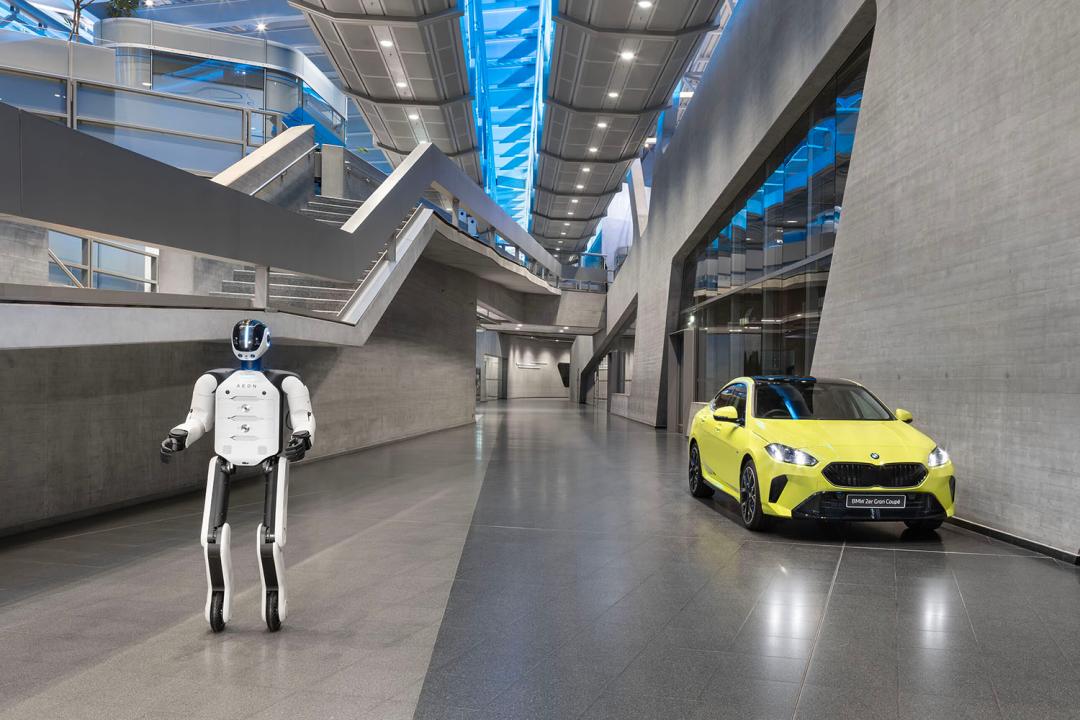
There are plenty of robots that can perform forward rolls and other entertaining moves at trade shows like CES or IFA. However, the arrival of Zurich-based Hexagon Robotics’ humanoid robot, AEON, revealed that these creations are going to be genuinely useful in the production environment. BMW has commissioned the firm with the aim of assembling, at least partially, its new electric cars in the near future – potentially including the upcoming BMW i3 EV saloon.
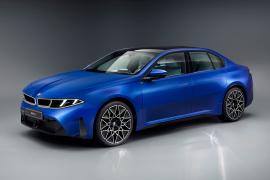
The second model in BMW’s Neue Klasse is currently undergoing rigorous winter testing in Sweden and set to have its design premiere later this month. Production should kick off in the second half of 2026, following hot on the heels of the widely praised BMW iX3.
It’ll feature BMW’s sixth-gen eDrive powertrain, using 800-volt technology and promising charging speeds of up to 400kW. Provisional figures for the power of the BMW i3 50 xDrive are 469 horsepower and 645Nm of torque.
Prime mover


I took a closer look at one of the humanoid robots recently and it’s an impressive bit of kit. The variant I saw showing off its skills was on wheels, which is better suited to a factory environment. Aside from that, all other features are designed to emulate real people on a production line.
Results at BMW’s huge manufacturing facility in Spartanburg, USA, have already delivered some fascinating stats on how useful humanoid robots could be for streamlining the production process. There, in collaboration with tech company Figure AI, the Figure 02 robot carried out chores supporting production of 30,000 BMW X3s during ten-hour shifts from Monday to Friday.
The great thing about robots is just how good they are for repetitive yet precise tasks, with Figure 02 being involved in the painstaking removal and positioning of sheet metal ready for welding. The stats revealed that Figure 02 is no slouch in the workflow department, having moved 90,000 components and covered in the region of 1.2 million steps over a period of around 1,250 hours. Where a human would probably have got bored, not to mention become completely exhausted, Figure 02 would always be ready for more. It’s easy to see the appeal for any company involved in manufacturing.
Meanwhile, back at the BMW showcase in Munich, the other great thing about AEON was that, once its battery levels were suitably depleted, the robot could head straight back to its charging station and manually switch its own batteries. I saw this happen and, well, it was a pretty slick operation. No tea break needed. Unsurprisingly, then, real world testing has already commenced at the BMW Group Plant in Leipzig.
During my visit to BMWs Munich event, journalists were naturally keen to enquire on the implications humanoid robots could pose for real jobs. BMW thinks the addition of robots will supplement rather than replace its workforce. Indeed, production line personnel could be redeployed to do other, more interesting things, as part of the production process.
I can see that and, judging by progress at BMW HQ, it’s going to happen sooner rather than later.


 Rob Clymo