I drove 845 miles in this hybrid without charging or filling up – here’s how
BYD's new hybrid promises up to 935 miles – something I just had to test. The gap between claim and reality is far smaller than expected.

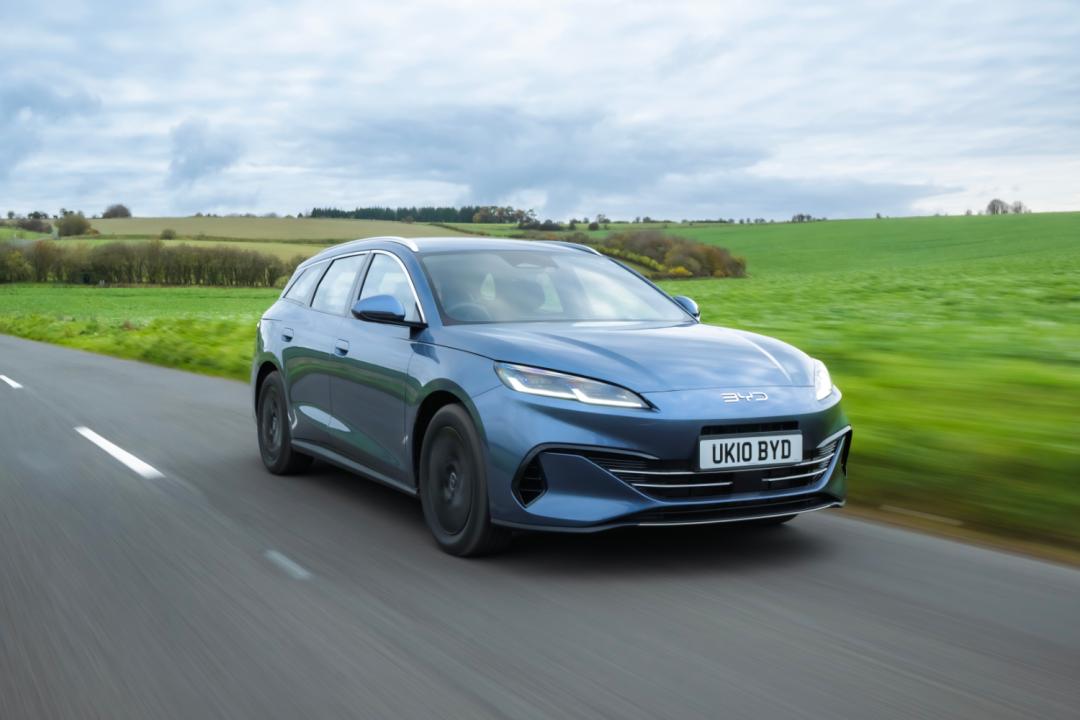
When BYD unveiled the Seal 6 DM-i Touring at its London HQ, one number dominated the conversation: 935 miles of combined WLTP range. For a plug-in hybrid at this price point, that claim sounds almost too good to be true — so I knew there was one thing I had to do: test it for myself.
The concept of driving the better part of 1000 miles was exciting but also seemed rather dull. So I decided to give my journey some purpose, driving down from the North East down to Shepherds Bush, London for an event and back again. That wouldn’t quite be the full distance, so I’d need to do some extra driving around town to get over 900 miles.
While switching off the heating and sticking to 60mph does make your drive more economical, nobody does that in the real world. I left with a full tank of petrol, an 80% battery, the climate control set to 22 degrees, music playing, and Eco mode engaged. Cruise control was used where it made sense, traffic was traffic, and London was, predictably, London.

The Seal 6 Touring feels like a normal car, which is the entire point. While the cabin could do better in the noise department, it is fairly comfortable and designed for distance, if a little on the cheap and scratchy side. The seats stay agreeable after hours behind the wheel, the infotainment is happy enough to let CarPlay take over, and the driving position never feels like you are compromising for the sake of efficiency.
By the time I reached Shepherds Bush, the numbers looked respectable rather than miraculous. I had around 555 miles and 30% battery left, with a lot of motorway already behind me. It was 8 degrees outside, there had been traffic, and I had made a stop for food. In other words, exactly the sort of conditions real people drive in. On the return leg I carried on in the same vein, mixing motorway, A-roads, and the last few hundred miles of town driving without changing my approach.
Eventually the range estimate hit zero, which is where things got interesting. The Seal 6 kept going. For about 45 miles, in fact. Power was gradually limited to around 25mph once the petrol tank was properly empty, but the car never panicked. It simply shifted into a reduced output mode and carried on until it finally shut down with around 3% battery showing.

My final tally was 845.7 miles.
That figure came from 13.8 gallons of fuel and the equivalent of 12.3 kWh of battery capacity – all from the initial charge and regeneration rather than plugging in. Average consumption across the whole journey sat at 57.5 mpg and 2.7 kWh per 100 miles. Total driving time was 15.4 hours, with an average speed of 49mph, according to the trip computer.
How BYD’s DM-i system actually works
BYD’s DM-i system is built around the idea that electric drive should do the heavy lifting most of the time, with the petrol engine acting as a highly efficient helper rather than the star of the show.

The system pairs a high-efficiency 1.5-litre cycle petrol engine with a relatively large battery and a powerful electric motor. In most scenarios, the motor is doing the driving. The engine either assists directly at higher speeds or runs at its most efficient operating point to generate electricity when needed. According to BYD, that engine can reach thermal efficiency of up to 43%, which is exceptionally high for a mass-produced petrol unit.
Crucially, DM-i does not treat EV mode and hybrid mode as separate personalities that you have to micromanage. Left alone, the system constantly decides whether it is more efficient to drive electrically, blend power sources, or briefly fire the engine purely to generate charge. That is why locking it into EV mode would actually have made this test worse. Letting the car do its thing is how you get numbers like this.
It also explains why the Seal 6 feels so relaxed on long runs. The engine rarely sounds strained, because it is not being asked to do jobs it is bad at. When it does wake up, it tends to hum along quietly in the background while the motor handles the actual driving.
The official combined WLTP range for the Seal 6 DM-i Touring varies by specification, topping out at 935 miles under ideal conditions. My 845 mile result does not beat that headline number, but it gets pretty darn close to say I wasn’t playing it safe. Winter temperatures, real traffic, a less than full starting charge, and a refusal to drive at 60mph all take their toll. The gap between claim and reality is far smaller than most people would expect.
For buyers who are not ready to go fully electric but want the everyday benefits of electric driving without the charging anxiety, this is where BYD’s approach makes sense. You get proper electric assistance in town, strong efficiency on longer journeys, and the ability to just keep driving when plans change.
The BYD Seal 6 DM-i Touring is due to go on sale in the UK priced from £34,990, with the higher-spec Comfort versions rising above that depending on battery size and equipment.


 Connor Jewiss