The Xgimi projector I use every day has seen its price slashed for Black Friday
The Xgimi MoGo 4 is perfectly portable - and temptingly priced

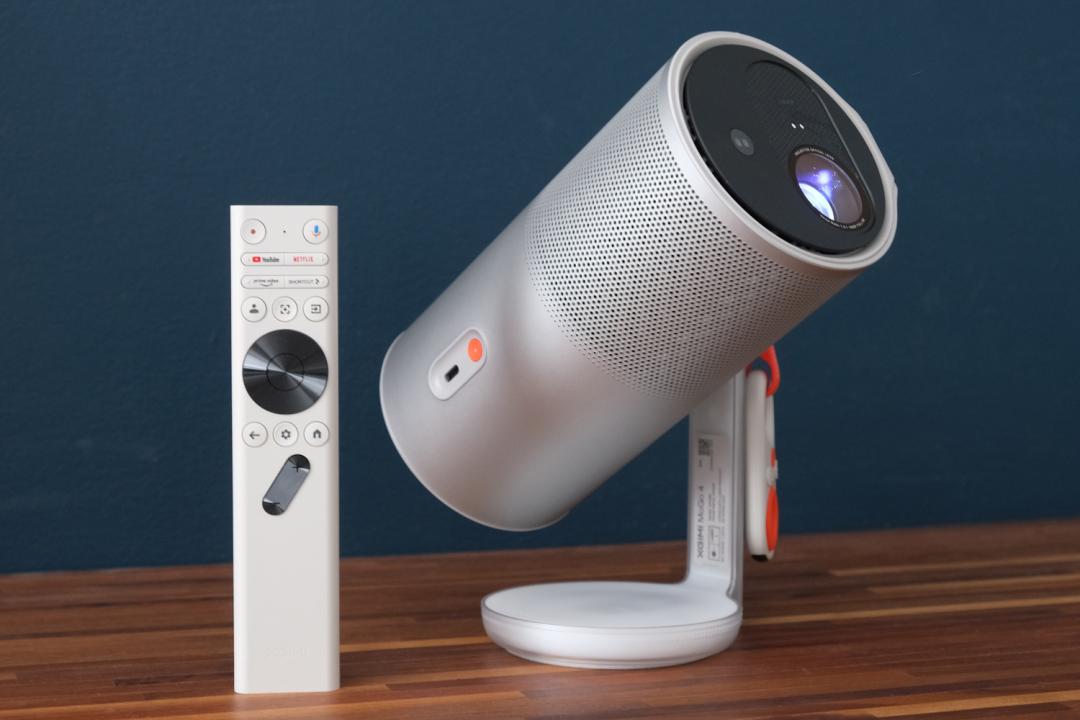

There’s been a rapid influx of portable projectors this year, but none of the newcomers have been able to match category king Xgimi’s latest effort. The MoGo 4 was fantastically capable for the money when it launched back in June – and now that it’s even cheaper for Black Friday, there’s no excuse for not picking one up.
Originally retailing for $499/£509, it’s currently just $399 in the US and £399 in the UK. That’s at least a 20% saving on a projector that earned a Highly Commended nod in the best projector category in Stuff’s 2025 Awards.
Black Friday Week is here, and you can find all the best offers over on Amazon US and Amazon UK.
I use the Xgimi Mogo 4 daily, beaming my Zwift indoor rides onto the wall in front of my static bicycle, so can vouch for its impressively bright image and clear stereo speakers. The two and a half hour battery life is more than enough to see me through a tough workout. During the summer months, I then break out the outdoor screen and use the built-in Google TV software to stream movies and TV shows al fresco. You’ll need to wait for the sun to go down to get the best picture, but being able to beam a 120in image from something so compact is impressive.
It’s no larger than a Starbucks Venti cup, so is easy to carry around, and the 360-degree stand makes setup a breeze. I love being able to leave the larger of the two remotes at home and just take the keyring-sized remote when travelling, and being able to double as a Bluetooth speaker when you’re not watching anything is a bonus. Magnetic filters also clip onto the lens to turn the projector into an ambient mood light.
The Xgimi MoGo 4 usually retails for £509 in the UK, but right now there’s a healthy 22% discount on Amazon UK, bringing the price to just £399. It’s a similar deal on Amazon US, where the one-time $499 projector has plummeted to $399 – a 20% saving. Rivals may cost less, but none are as well-rounded – and many use custom software with more restrictive streaming support.


 Tom Morgan-Freelander
Deputy Editor
Tom Morgan-Freelander
Deputy Editor