Metroid Prime 4: Beyond made me appreciate Switch 2’s mouse controls but its dull open world left me hollow
Point of Viewros

Stuff Verdict
Good use of mouse controls isn’t enough to raise the bar on a series that feels past its prime
Pros
- Looks and sounds atmospheric
- Best and most comfortable use of mouse controls yet
- Super smooth 120 FPS available on Switch 2 docked or handheld
Cons
- Dull open world
- Retreading familiar elements
- Tedious backtracking and endgame quest
Metroid may not have Mario’s near-universal appeal, but the influence Nintendo’s long-running sci-fi series has on the wider gaming world runs deep. There’s a reason we call the genre as a whole “Metroidvania”, and why it was a huge deal when Metroid Prime 4 was announced with nothing more than a logo (and without a sub-title) during the original Nintendo Switch’s first year on sale.
Eight whole years later – and 18 since the last entry in the first-person Prime series – space bounty hunter Samus Aran’s latest adventure finally arrives as a cross-gen release for both the OG Switch and the Switch 2. The long development cycle was been down to work being restarted from scratch after Nintendo’s 2019 confirmation it was unhappy with the project’s progress. Retro Studios, developer of the original Prime Games, was brought on board, with the excellent 2D Metroid Dread and sumptuous Metroid Prime remaster helping alleviate the wait.
The first game revolutionised not just Metroid but also first-person games, which back then were mostly just occupied with shooting. Does Beyond succeed in justifying the long wait, or is it already past its prime?
Mouse house


Although I tested the Switch 2 edition of Metroid Prime 4: Beyond, the Switch 1 version has been confirmed by Nintendo to hit a smooth 60 FPS. That’s a better sign compared to other cross-gen releases such as Pokemon Legends: Z-A where you have to get the Switch 2 version just to get the game to run at a standard you would expect from a first-party release.
Of course, the Switch 2 edition also has other graphical benefits, including HDR and 4K resolution. However, you can also forgo 4K in favour of a performance mode that doubles the framerate to a super silky smooth 120 FPS, which is also natively supported by the console’s 120Hz display. This is the first Nintendo-published game to actually support this option, which has otherwise only been available in a handful of indie releases such as Hades 2 and Silksong.
More significant is the ability to play using the right Joy-Con’s mouse controls for precision aiming. Considering the thin, unergonomic controller made this uncomfortable to me for anything longer than a Mario Party minigame, it was a surprise that in the 20 hours I spent with Beyond, mouse controls became my default over aiming with an analogue stick or motion controls.
This is partly down to the smart design behind the first Metroid Prime, carried over in Beyond, where you can lock onto targets both mobile (enemies) and static (scannable objects). There are still moments when precision aiming it called for, like the weak points of certain bosses, but considerably fewer than a typical first-person shooter. This in turn meant mouse mode was a lot less taxing for my hand compared to a playthrough of Cyberpunk 2077, where my wrist would start aching after five minutes.
You can go back to holding the right Joy-Con normally when Beyond switches perspectives, such as when transforming into Samus’s Morph Ball form, or when she’s riding her new Vi-O-La motorcycle, which includes a cool way of shooting multiple targets with a Panzer Dragoon-style lock-on.
During the review period, I also received the LED Mouse Adaptor Duo from IMP Gaming (the company behind the Switch-compatible Mini Arcade Pro), which gives your Joy-Con the comfortable form factor of a proper mouse. As the name suggests, it also has fancy LED lighting, though this will require AA batteries – one for each mouse adaptor. As the Joy-Con simply drops into the adaptor slot, it meant I could still easily lift it out when I wanted to revert to another control method.
Psychic damage


Apart from a new control option, what else is actually new about Beyond – which don’t forget, arrives almost two decades after its predecessor? One of the new mechanics is psychic powers, which Samus inherits from the Lamorn – an alien race that once resided in Viewros, the new planet setting of the game.
Often, it feels like a tacked on prefix that basically mimics what previous games did. For instance, you have a Psychic Visor that works just like the scanning visor; the Psychic Beam is just your default power beam for blasting enemies and opening doors; and upgrades like the double jump-enabling Psychic Boots are just the Space Jump Boots of previous games.
The only meaningfully new mechanic is the Control Beam, which lets you change the trajectory of a beam while time also slows to an almost freezing crawl. This leads to more novel strategies, like countering enemies that move and teleport at lightning speed, a way to get behind an enemy shielding their front, or reach switches hidden out of your direct sightline.
Other subtle interactions include focusing on psychic energy to materialise floating platforms or new grapple points, though this is largely a cosmetic case of creating a new path except it’s purple. A more interesting aspect is that psychic energy can also appear as small purple spheres you can pull in towards you and launch at another target. This can even be used for bombs planted in Morph Ball mode, unlocking a ranged attack that’d otherwise be out of the Morph Balls’ reach.
Beyond the pale


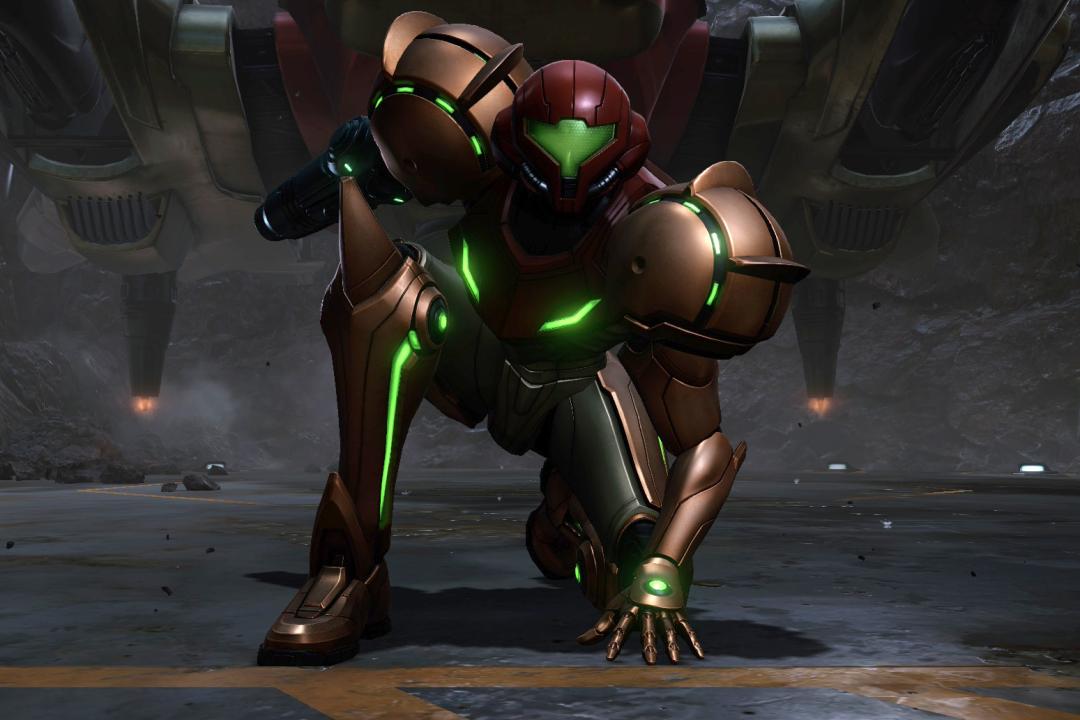
Fundamentally, Beyond‘s structure and gameplay will be very familiar to Metroid Prime fans. You scan flora, fauna and objects while regaining many familiar powers and abilities, from different elemental projectiles to being able to give the Morph Ball a speed boost or have it cling to magnetic tracks. There’s still a pleasure of unlocking these and then returning to locations you remember had a path or secret you couldn’t access before. Likewise, biomes have their generic themes like forest, ice, and fire, yet still have a lot of atmosphere thanks to a soundtrack stuffed with spacey electronica.
New additions to the formula are more divisive. Voice acting isn’t new to the series and while some purists will argue that the quintessential Metroid experience is about the isolation of exploring an unknown world, I don’t think fleshing out Samus’s relationships with the Galactic Federation is a bad thing per se.
Your mind will probably change once meting dorky engineer Myles Mackenzie, who seems set up to be an annoyingly comedic sidekick who doesn’t shut up. You’re fortunately not stuck with him for too long, and other NPCs are more well-rounded, but it’s not a great sign that the tips he offers almost always come across as hand-holdey or condescending. Personally, I found it more annoying that many of your arm cannon upgrades involve finding an item first, then an engineer to unlock their power.
Beyond‘s biggest downside is that the backtracking is made worse by shoehorning in one of the dullest open worlds in recent memory. Perhaps it no longer feels convincing to explore a whole planet made up of interconnected biomes with such different themes and climates as the first Prime game’s Tallon IV. But having them connected to an empty open world desert dotted with a paucity of collectibles feels like a terrible alternative.
Sure, you do get to ride a cool motorcycle that uses the Akira Slide as a boost attack, but it’s wasted on the tedious activities involved, especially during the game’s latter half. It’s ironic the MacGuffins you’re seeking are Teleporter Keys to help you and the other GF members find a way home, yet there’s no fast-travel option.
Metroid Prime 4: Beyond verdict

After a superb 2D entry and a handsome remaster of Samus’s first 3D outing, it’s hard not to see Metroid Prime 4: Beyond as a relative disappointment, especially considering the leaps Nintendo’s other beloved franchises have made lately.
The fundamental if familiar elements of exploring a new world and gaining new powers that allow access to further places is still intact, but the couple of the new abilities are novel rather than game-changing. Its essence has also been spoiled by an utterly uninspiring open world that makes for tedious activities and turns backtracking into even more of a chore. It’s not all terrible, but after eight years, I had higher expectations.
While there’s a belief that 3D games innovate more than their 2D counterparts, the continued popularity of Metroidvanias and what indie developers are able to do with the genre makes me wonder if it’s time to retire the Prime series and focus on Samus in the perspective she thrives the most in.
But at least this is a Switch 2 game that does make a decent case for mouse controls. Perhaps a Switch 2 edition of Metroid Prime Remastered is what’s needed.
Stuff Says…
Good use of mouse controls isn’t enough to raise the bar on a series that feels past its prime
Pros
Looks and sounds atmospheric
Best and most comfortable use of mouse controls yet
Super smooth 120 FPS available on Switch 2 docked or handheld
Cons
Dull open world
Retreading familiar elements
Tedious backtracking and endgame quest


 Alan Wen