I’d expected the Porsche Cayenne Turbo Electric to be good but it’s actually amazing
Don’t think about skimping with the standard model

Stuff Verdict
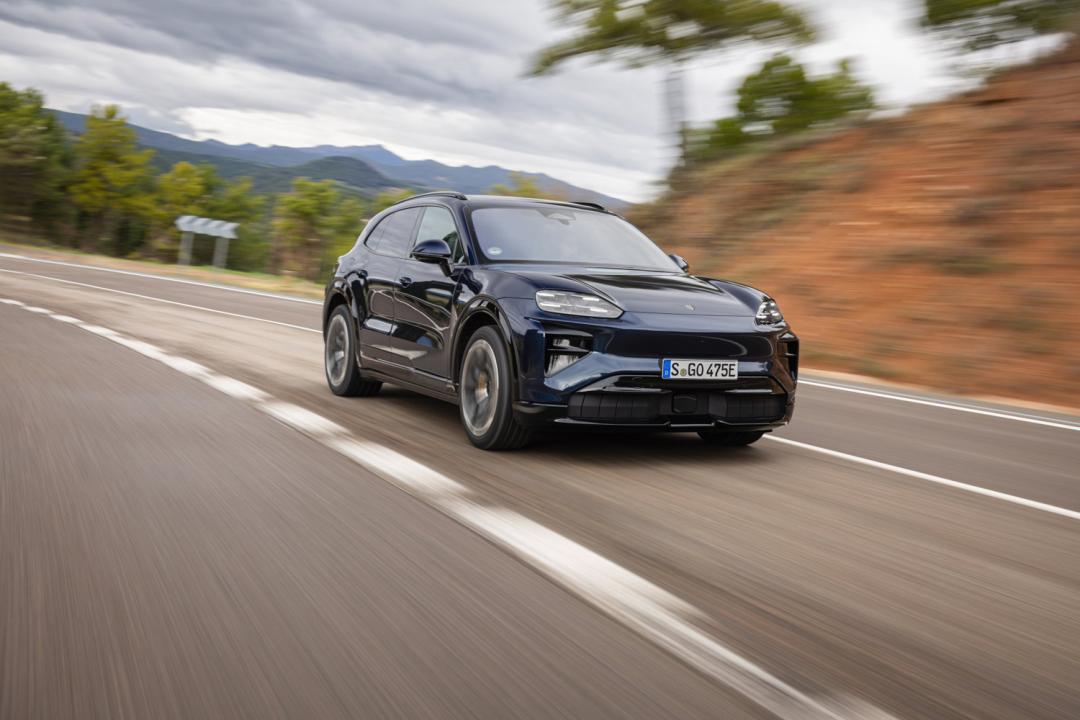
The Porsche Cayenne Turbo Electric looks like a sensible all-electric SUV but the ferocious performance makes it the hottest large EV you can get your hands on right now.
Pros
- Dizzyingly fast but handles as well
- Really clever engineering
- Goes pretty much anywhere off-road
Cons
- We’re still not sure about the Flow Display
- Replacement tyres will make you wince
- Easy to drive but it rather bulky to park
Introduction
I’ve been lucky enough to have had a couple of passenger rides in the Porsche Cayenne Turbo Electric prior to driving it and, boy, it is a brutally fast SUV. In the hands of pro drivers, I’ve been thrown around in both the front and back seats of this electric beast. Now I’ve been able to get behind the wheel of both the Porsche Cayenne Turbo Electric (yours for £130,900 before options) and also the slightly more restrained – not to mention cheaper – Porsche Cayenne Electric (from £83,200). Both are wonderful electric cars.
I’m going to focus on the headline-grabbing Cayenne Turbo Electric, simply because it is such a ferocious machine. It’s everything you’d expect from Porsche; if only there were roads here in the UK where its immense power could be tapped into without breaking the law. Unfortunately we don’t have the Autobahn in Blighty, so buying one could mean most owners will miss out on its full, ball-crushing potential.
Of course, rather more sensible is the cheaper Porsche Cayenne Electric. The stats aren’t anywhere near as mad as the Turbo, but the car is essentially the same. Both are big and bulky too, with the Cayenne Electric weighing in at 2,525kg and the Turbo being an even heavier 2,645kg. However, having been driven at full tilt in this car, I can vouch that it rarely feels heavy or unwieldy. In fact, in either guise, the new Porsche Cayenne Electric is deliciously engaging.
How we test cars
Every electric car reviewed on Stuff is tested on a range of road surfaces and, where possible, in varying weather conditions. We use our years of experience to compare with rivals and assess ergonomics, technology features and general usability. Manufacturers have no visibility on reviews before they appear online, and we never accept payment to feature products.
Find out more about how we test and rate products.
The styling


Porsche has really gone to town with the configuration options for the new Cayenne, with thirteen exterior colours and twelve interior combinations, plus nine alloy wheel designs and a handful of so -called accent packages. However, while the styling has plenty that is new, this is also unmistakably a Cayenne – from the upright stance, distinctive Matrix LED headlights and dramatic profile with its frameless doors, through to the angular rear end with its blingy taillight strip. Trim flourishes on the Turbo model like the side skirts and wheel arch trims (which come with a high-gloss finish) help set it apart from the regular model.
An optional Sport Design Package adds an extra touch of flamboyance, with one variant dubbed Turbonite. This additional level of spiciness lifts areas around the car like the front apron, which against one of the fab new colours creates an excellent level of contrast.
Staying with the seemingly endless options, Porsche also offers an Off-Road package, that helps the SUVs abilities over muddy or rocky terrain, especially when it comes to that front apron that allows owners to approach ridiculous angles of up or down travel without bottoming out.
Better still, the styling of this brooding and very beefy SUV produces a drag coefficient of 0.25, which seems almost impossible when you’re standing in front that chunky front end. Porsche has employed all manner of tricks to make the Cayenne cut through the air more efficiently, including the use of air curtains and air blades to get it down the road. Special aero wheels and an optimised diffuser at the back boost the Cayenne’s aerodynamic properties.
The drive


Which brings me to the driving part of the puzzle. Amazingly, Porsche is still producing combustion engine variants of the Cayenne, but if you’re looking for brute force performance, the Porsche Cayenne Turbo Electric is hard to beat.
The figures are undeniably impressive and, for the size of the car, actually pretty mind-blowing. There’s a top speed of 162mph, 0-62mph arrives in a blisteringly fast 2.5 seconds and getting there enlists no less than 1156bhp. Porsche has ensured that the power is carefully managed for maximum efficiency, with the addition of direct oil cooling in the rear electric motor and a battery that features double-sided cooling. It is certainly built for speed.
Along with the brilliant performance, this monster also delivers on the handling front, thanks to Porsche Active Ride active suspension. This management system does a superb job of controlling all that power and, even when I was giving it the beans, the Cayenne felt super dependable across a variety of road surfaces. Incredibly, it also has a towing capacity of up to 3.5 tonnes should it be needed.
Handling is also boosted by rear steering that delivers five degrees of angle that reduces the turning circle from 12.7 metres to 11.6 metres, which I found made the Cayenne really good at both slow and fast speeds. There was also Porsche Torque Vectoring Plus, which is an electronically controlled differential lock on the rear. Combined, this made the Porsche Cayenne Turbo Electric way more capable that I was expecting. It certainly didn’t drive like a big SUV and echoed the same cool performance vibes as those delivered by the Porsche Macan, only amplified all the way to eleven.
While I mainly drove the Porsche Cayenne Electric on regular roads, I did also get the chance to try it on an off-road course, which was a revelation. Although this SUV is unlikely to see much action in the mud, it was a very capable beast on the rough stuff. It was ridiculously easy to get over all sorts of terrain with the system set up using a couple of button pushes of the off-road programme menu that includes Gravel/Mud, Sand and Rock. In fact, the Cayenne did the bulk of the work in terms of supplying power, while I only had to steer it up and down stupidly steep mud-covered slopes. Miraculously, the instructor told me my car was on regular tyres too.
The technology


One of the headline-grabbing interior highlights in the new Porsche Cayenne was the Flow Display. This centrally located infotainment screen is essentially portrait oriented, but it’s angled towards the centre console at the bottom, which I think might be loved by some and disapproved of by others with its split-level style layout. A bent-in-the-middle screen in a car does sound a bit mad when you tell people about it, but it might make sense to tech junkies who love a little finger-prodding weirdness.
I did like what Porsche has done with its latest suite of graphics though, which were crisp, clear and generally easy to navigate. They worked very well within the 12.25in driver display, which features familiar-style controls albeit reimagined to deliver a little more excitement to match that wild performance. I loved the head-up display too and, weirdly, the Cayenne never felt like it was suffering from screen overload despite the relentless glow coming from the dashboard.
Porsche has integrated the Android Automotive OS for this model, which seemed impressive too on the usability front, while the 3D driver assistance was useful when navigating trickier aspects of my test route. I also thought the Voice Pilot system worked very well compared to some I’ve tried and it made changing core controls, including climate and navigation options, a doddle.
I’m still not sold on the optional 14.9in front passenger display though. This does look good, but I’m just not sure how much I’d ever use it, even though Porsche underlines just how cool it is for passengers who want to watch movies or play games. Options will include tapping in to the likes of Apple Music, Spotify, Amazon Music and YouTube. However, given that most kids are obsessed with their own phones or tablets, and much as I approve of another pricey option in this context, this did seem like a bit of a needless indulgence to me.
Porsche Cayenne Turbo Electic verdict
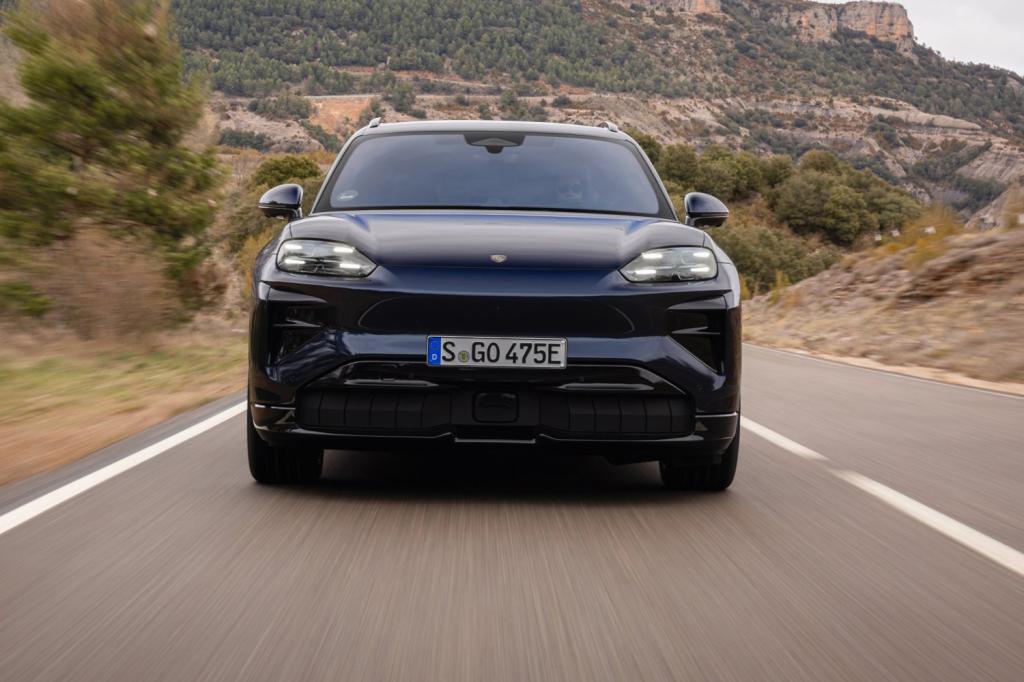
I really liked the Porsche Cayenne Turbo Electric, even if it costs way more than the standard Cayenne. The price also keeps going up if the car is optioned to the max – I got it up to about £180,000 on the Porsche configurator, although I feel like the steering and handling goodies are nigh on essential for getting the best from the Turbo’s charms.
However, I also did a quick check on replacing a set of the enormous tyres on this thing. Anyone pushing the Cayenne on a regular basis will likely munch through a set fairly quickly, so be prepared for around £2000 of rubber costs if you’re an enthusiastic driver.
Still, this is a performance car – and one that feels much sportier than I’d ever expected. Granted, it felt most capable when I was driven around a circuit by a pro driver in the run up to its launch proper, but even during brief moments when I cautiously tapped into its full potential, I easily convinced myself that, actually, £130,000-plus still seemed like a bit of a bargain.
Stuff Says…
The Porsche Cayenne Turbo Electric looks like a sensible all-electric SUV but the ferocious performance makes it the hottest large EV you can get your hands on right now.
Pros
Dizzyingly fast but handles as well
Really clever engineering
Goes pretty much anywhere off-road
Cons
We’re still not sure about the Flow Display
Replacement tyres will make you wince
Easy to drive but it rather bulky to park
Porsche Cayenne Turbo Electric technical specifications
| Specifications | Porsche Cayenne Turbo Electric |
|---|---|
| Powertrain | Permanent magnet synchronous motor |
| Battery | 113kW |
| Power | 1156bhp |
| Torque | 1106lb-ft |
| 0-60mph | 2.5sec |
| Top speed | 162mph |
| Range | 383 miles |
| Charge rate | 400KW |
| Cargo volume | 506 litres |


 Rob Clymo