HP Omen Max 16 review: plentiful performance comes with a weight penalty
RTX 5080 graphics power through games at a competitive price

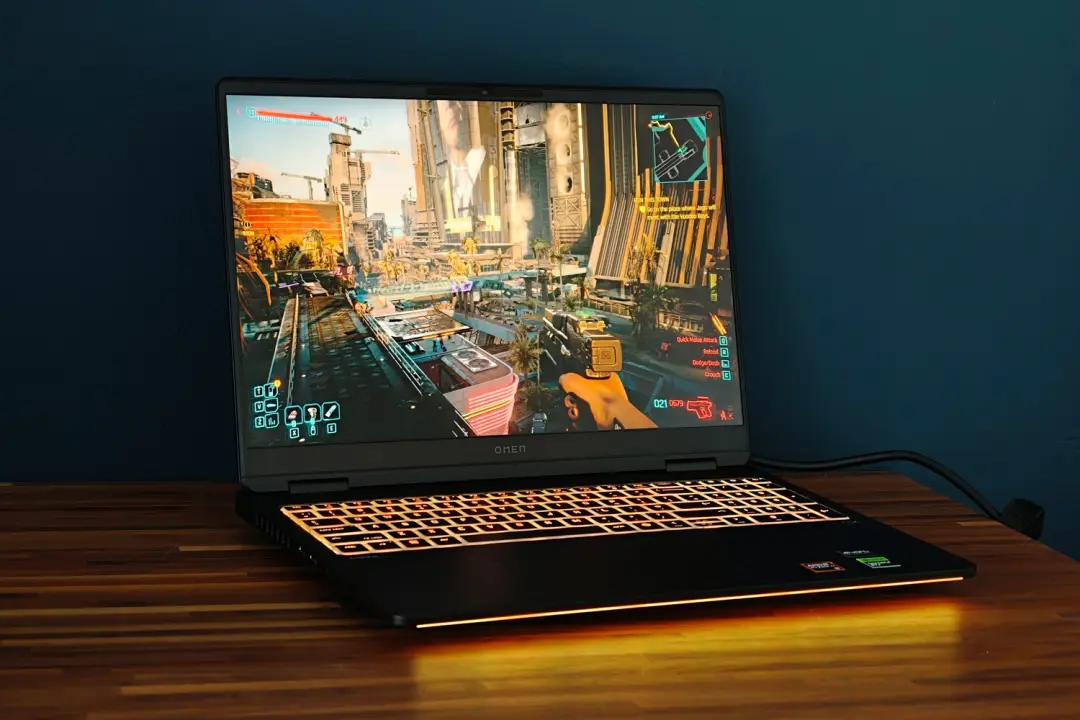
Stuff Verdict
A very capable all-rounder gaming laptop that looks the part and doesn’t skimp on power. Spending extra elsewhere will get you a nicer screen than the HP Omen Max 16, though, and a lighter build.
Pros
- Plentiful performance in games and on the desktop
- Understated looks and decent connectivity
- Powerful sound system for a laptop
Cons
- One of the heavier 16in gaming laptops out there
- Battery life could be better given the internals
- Keyboard could be firmer
Introduction
HP’s Omen Max 16 was one of the first out the gate with Nvidia’s 5000-series laptop graphics chips, but exclusively paired them with Intel hardware. But now that AMD is once again a force to be reckoned with in the notebook world, the firm now has a version with Ryzen silicon that’s just as powerful, and also a tiny bit kinder to your wallet.
The model I reviewed blends a Ryzen AI 9 HX 375 CPU with a GeForce RTX 5080 GPU, not quite putting it on the top of the laptop performance pile but providing more than enough grunt for gaming. It’ll set you back $3100 from HP USA or £2400 in the UK, making it around $200/£100 cheaper than the Intel equivalent.
That also helps it undercut both the Razer Blade 16 and Acer Predator Helios Neo 16S AI, with the latter costing more for a lower-spec GPU. There are a few downsides, though, namely the IPS screen. When most gaming rivals have switched to OLED, could that hold the HP back?
How we test laptops
Every laptop reviewed on Stuff is tested using industry standard benchmarks and apps to assess performance and battery life. We use our years of experience to judge display, sound and general usability. Manufacturers have no visibility on reviews before they appear online, and we never accept payment to feature products.
Find out more about how we test and rate products.
Design & build: subtle stands out
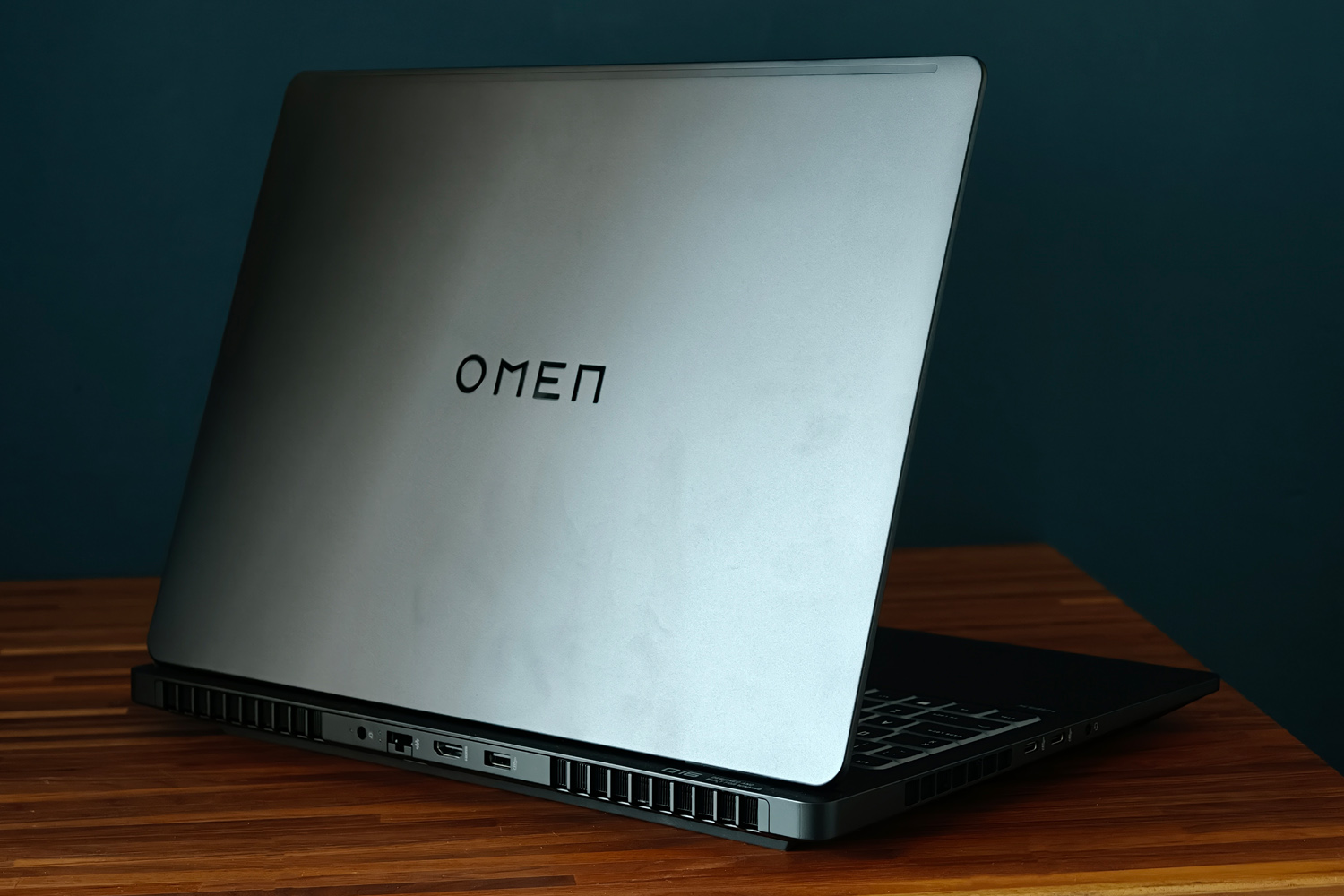
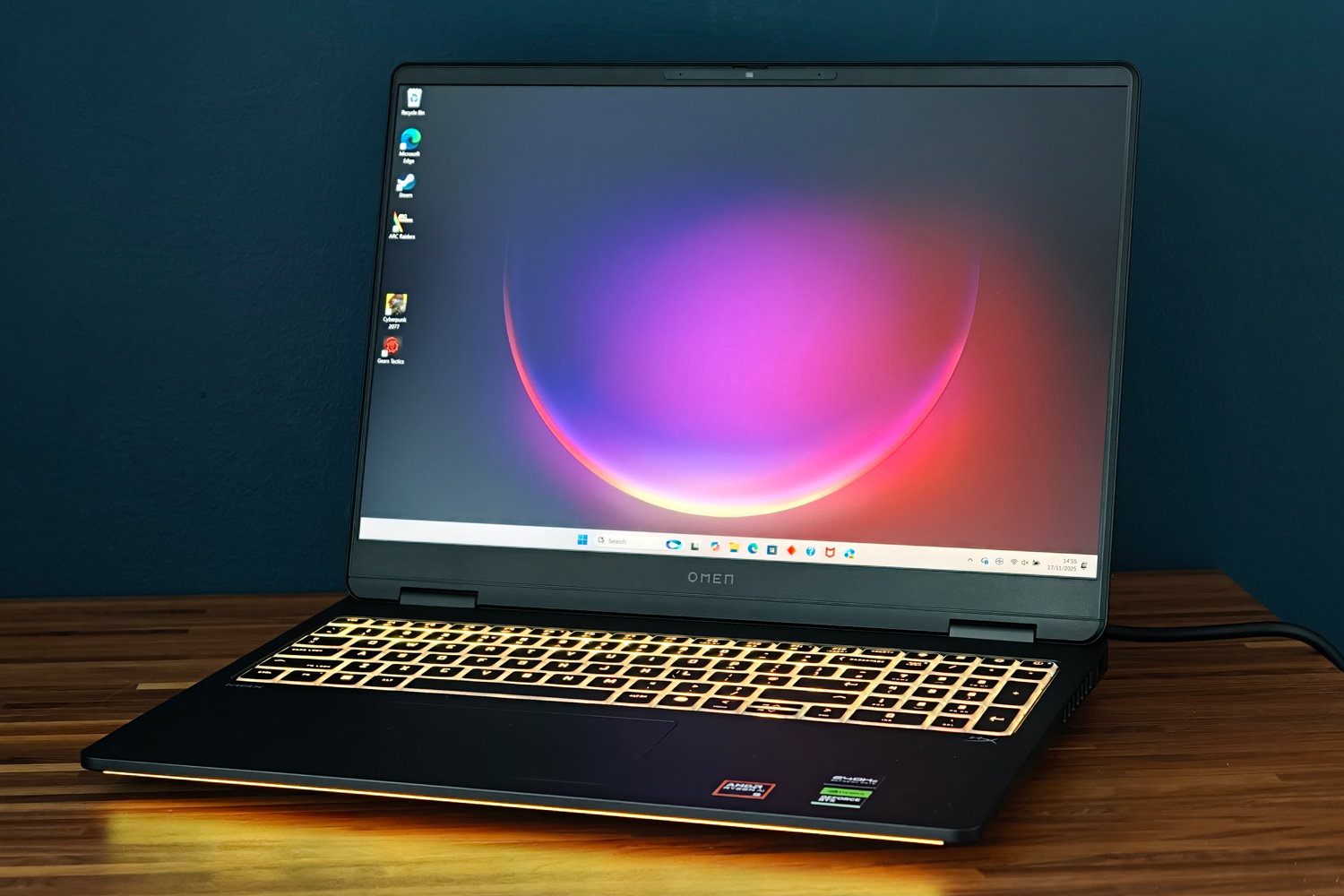
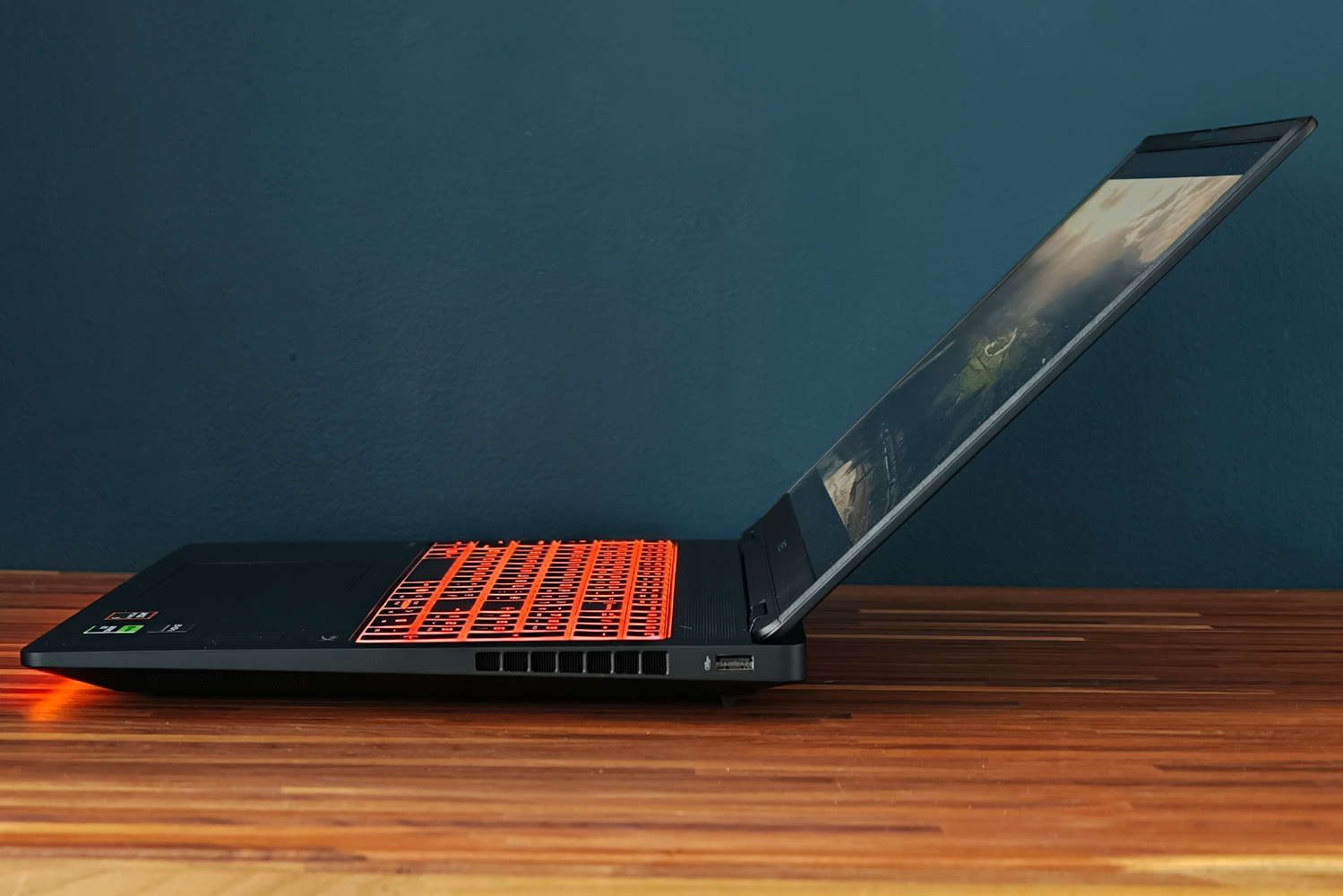
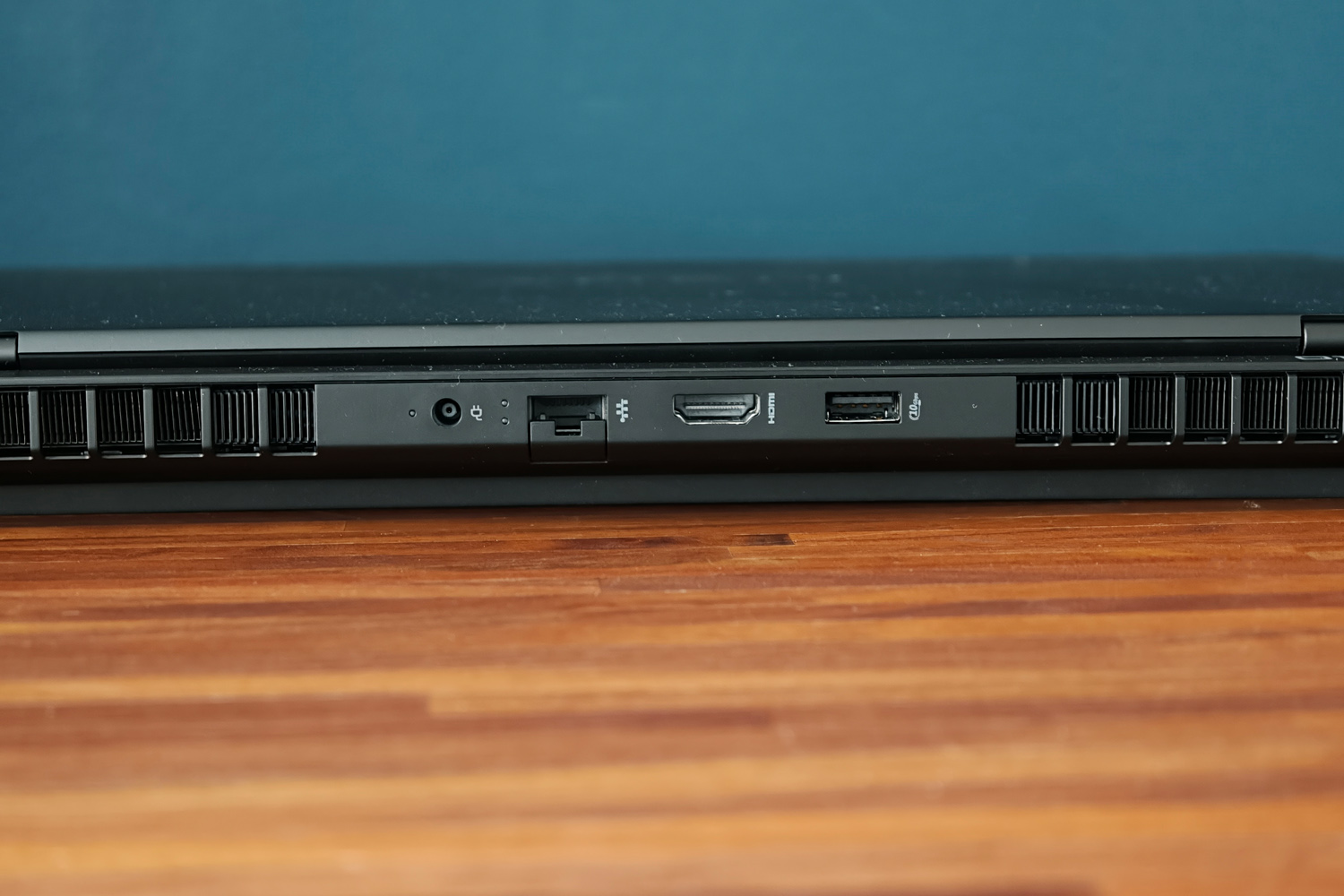
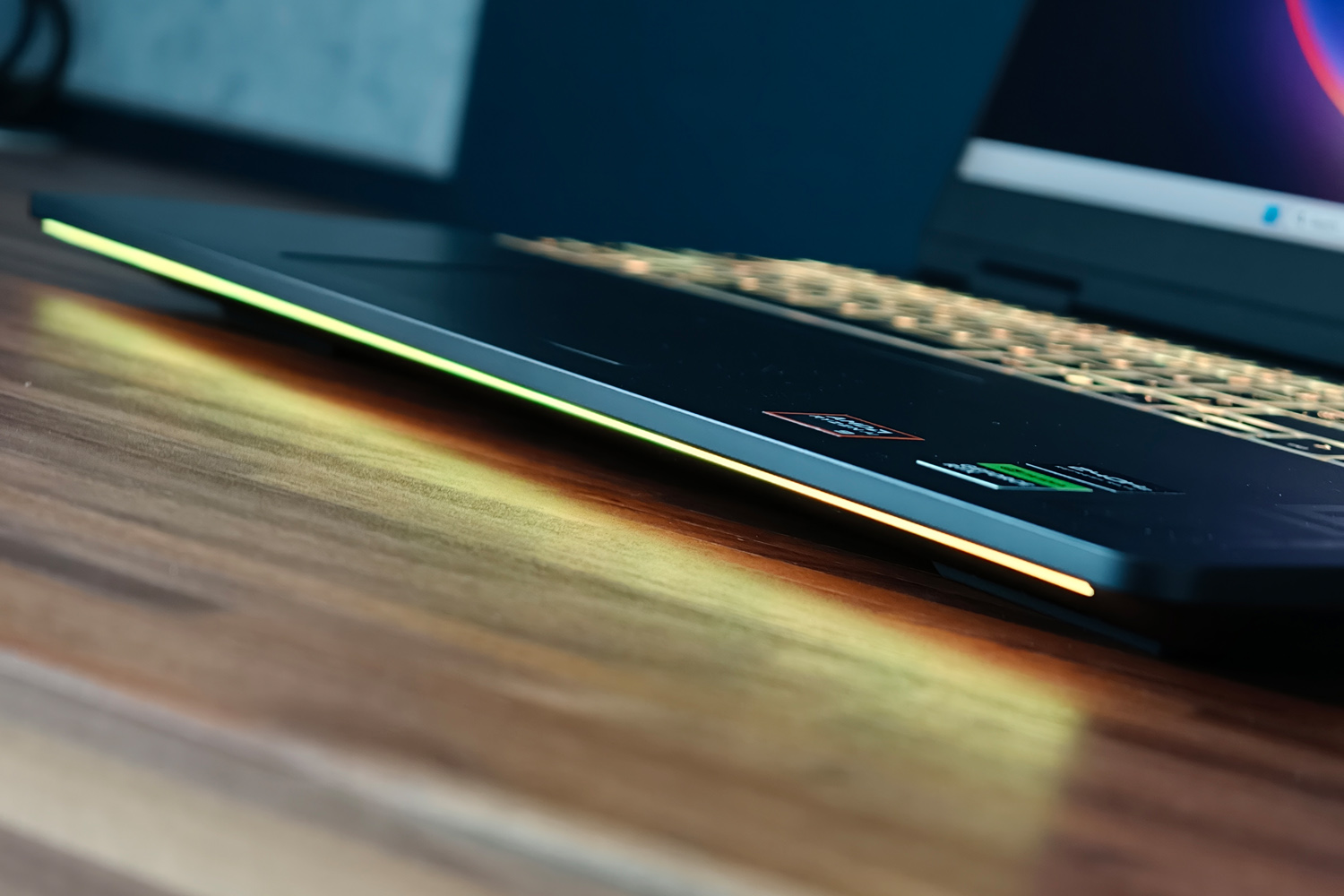
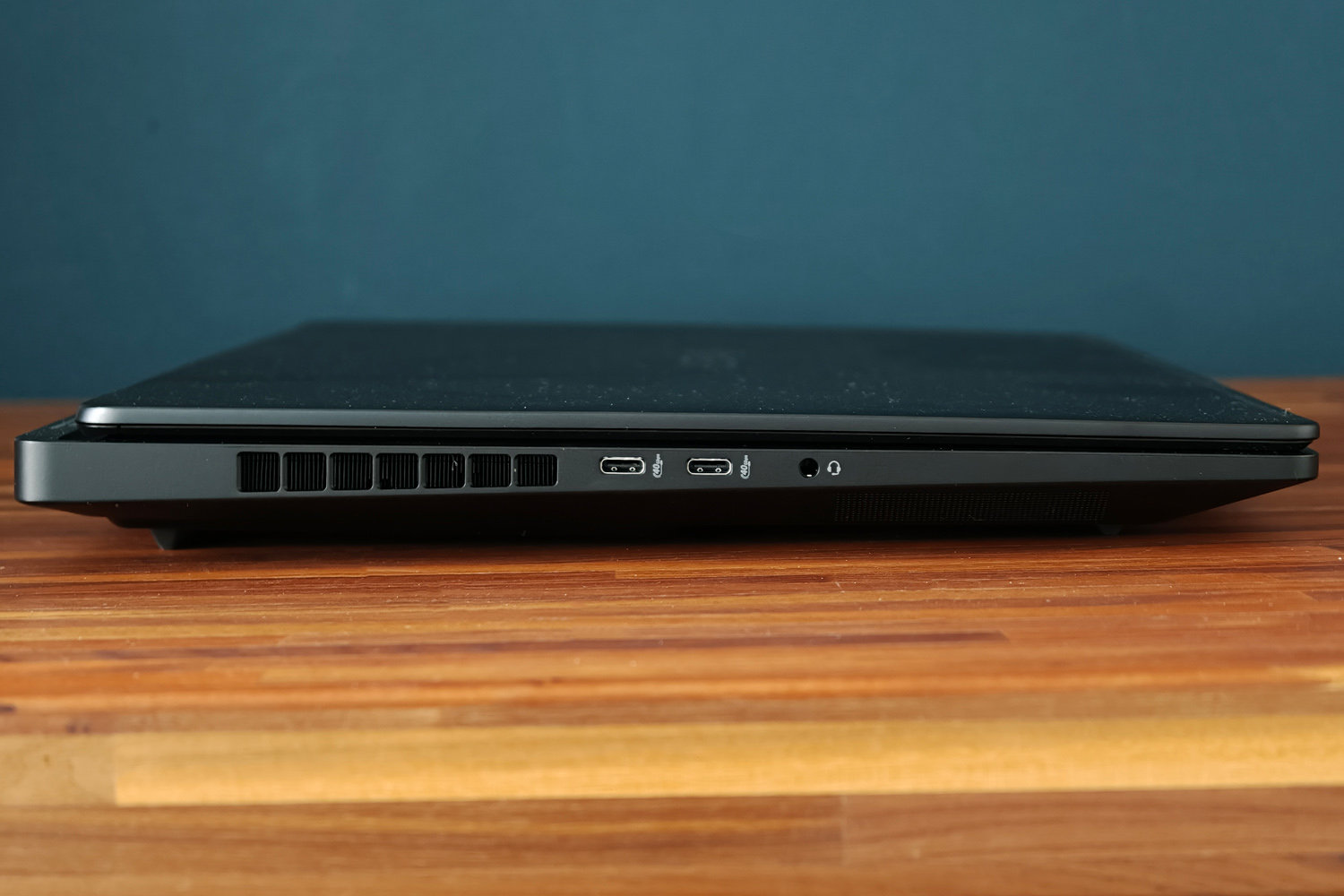
Minimalism isn’t entirely the new gaming laptop norm – shop around and you’ll still find some shouty, RGB-infused head turners – but HP is one of a bunch of brands that’ve dialled back the stand-out styling of previous generations. The latest Omen is something that won’t earn you stares when you whip it out in public, being an all-metal affair with a subtle logo on the lid. The ‘016’ graphic etched into the wrist rest gives a very similar vibe to the Alienware M18 R2 I reviewed last year.
Colour-changing LEDs haven’t been axed entirely. The per-key customisable keyboard has black keycaps with transparent edges which really let the light shine through, and there’s a neat light strip at the front of the laptop that reflected subtly off my polished wood desk.
Plenty of gaming laptops now have ‘chins’ at the rear to make room for bigger fans or extra connectivity; the HP’s is one of the tiniest I’ve seen, but it still leaves room for a pair of sizeable cooling vents, an HDMI output, single USB-A, power and Ethernet ports. They’re ideally placed to give this a permanent place on your desk without leaving wired trailing everywhere.
Another USB-A port, two Thunderbolt 4 USB-Cs and a 3.5mm headset port round out the connectivity options. I’d have liked some kind of card slot, but have to give HP a thumbs up for the ability to connect up to three compatible wireless HyperX gaming peripherals at once without needing to plug in a dongle.
The 1080p webcam has a teensy privacy shutter, but I largely left it open to make better use of the Windows Hello facial recognition. As long as I wasn’t sat directly in front of a bright window, it was speedy enough to recognise me and skip the Windows lock screen.
There’s no escaping the fact this is a pretty chunky laptop. The Omen Max 16 measures 25mm at its thickest point and weighs 2.66kg – about 10mm and 500g more than the latest Razer Blade 16. Add in the equally bulky power brick and it wouldn’t be my first choice if gaming on the move was my top priority. On the plus side, that should mean there’s more room inside for more effective cooling.
Keyboard & touchpad: tapped out
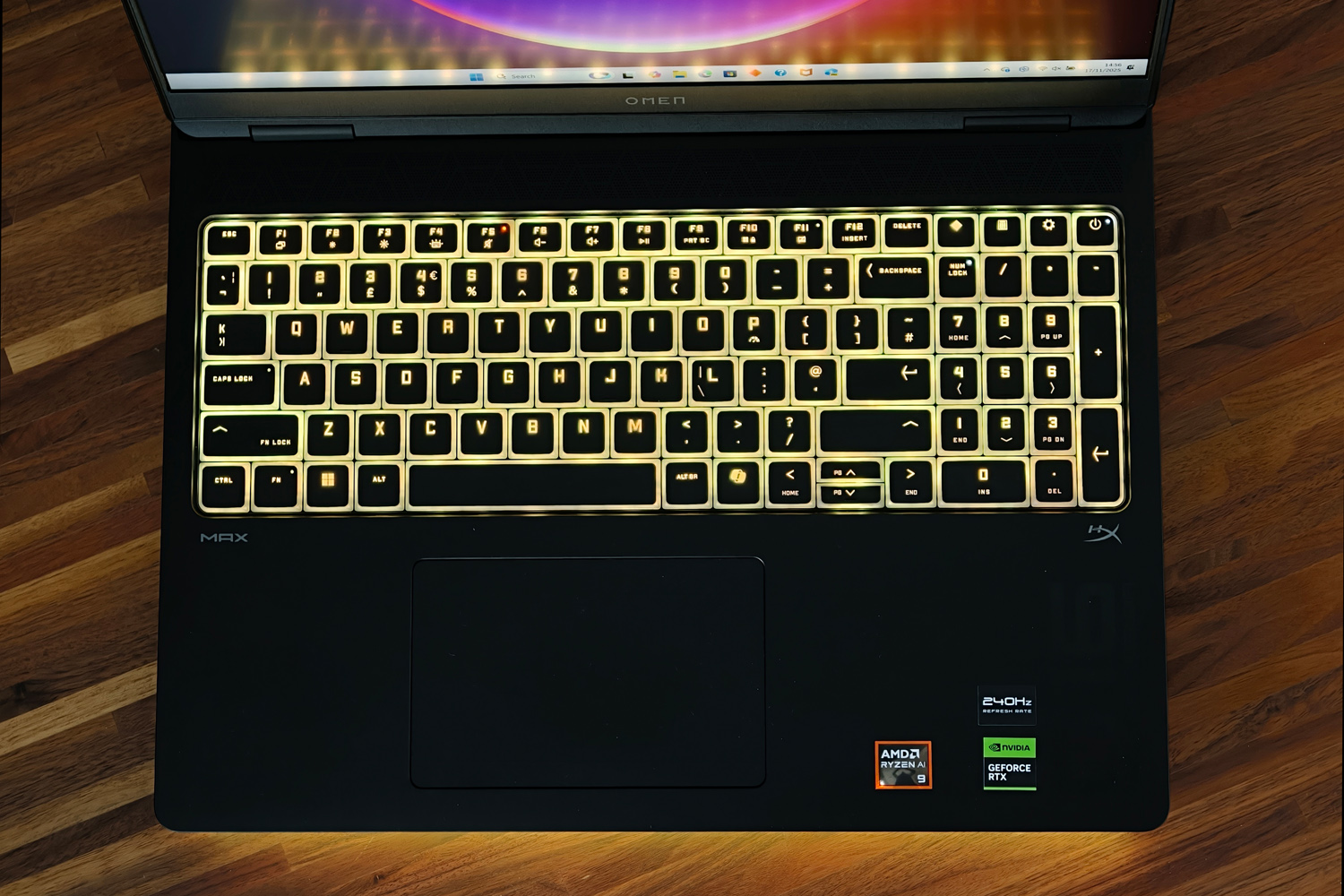
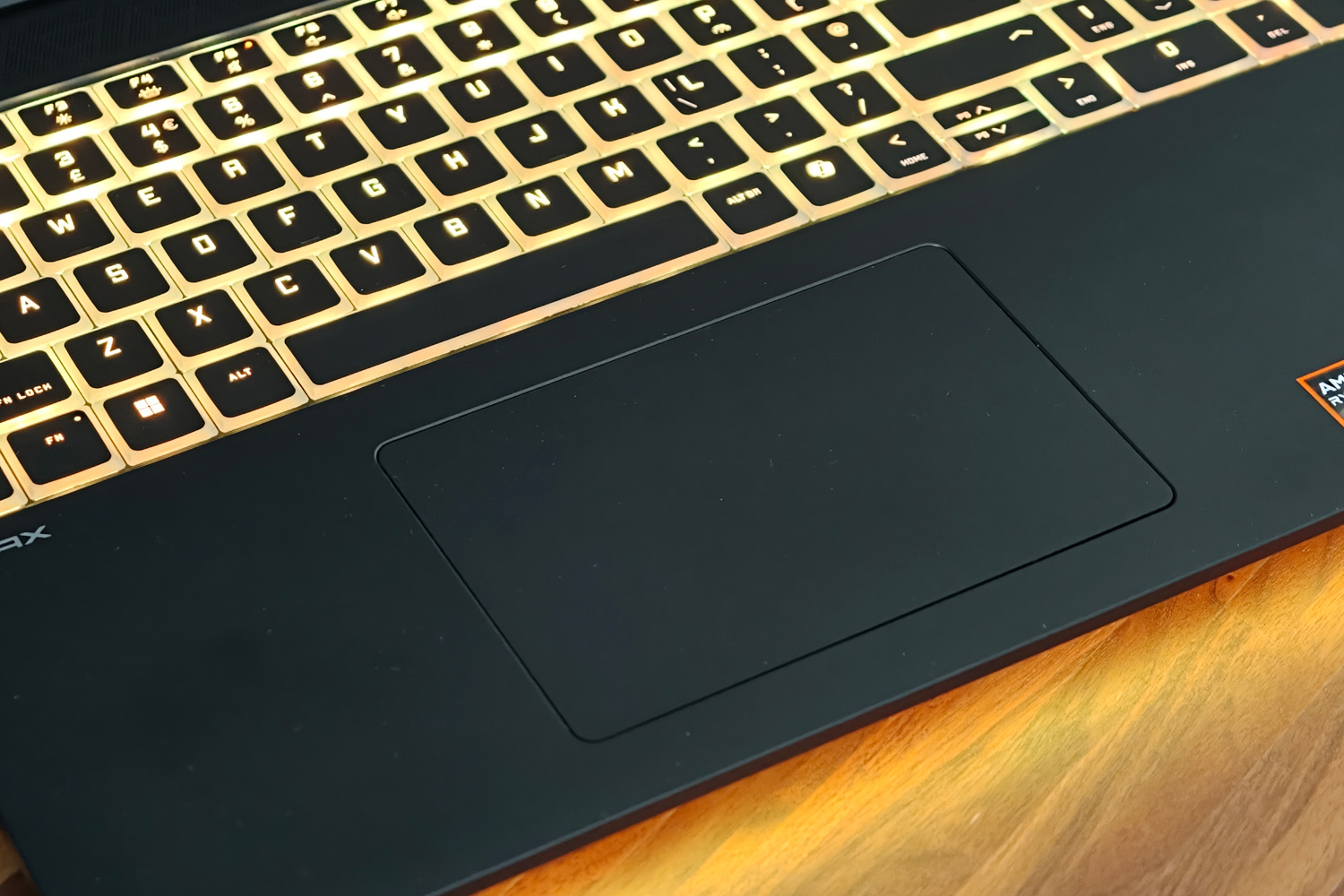
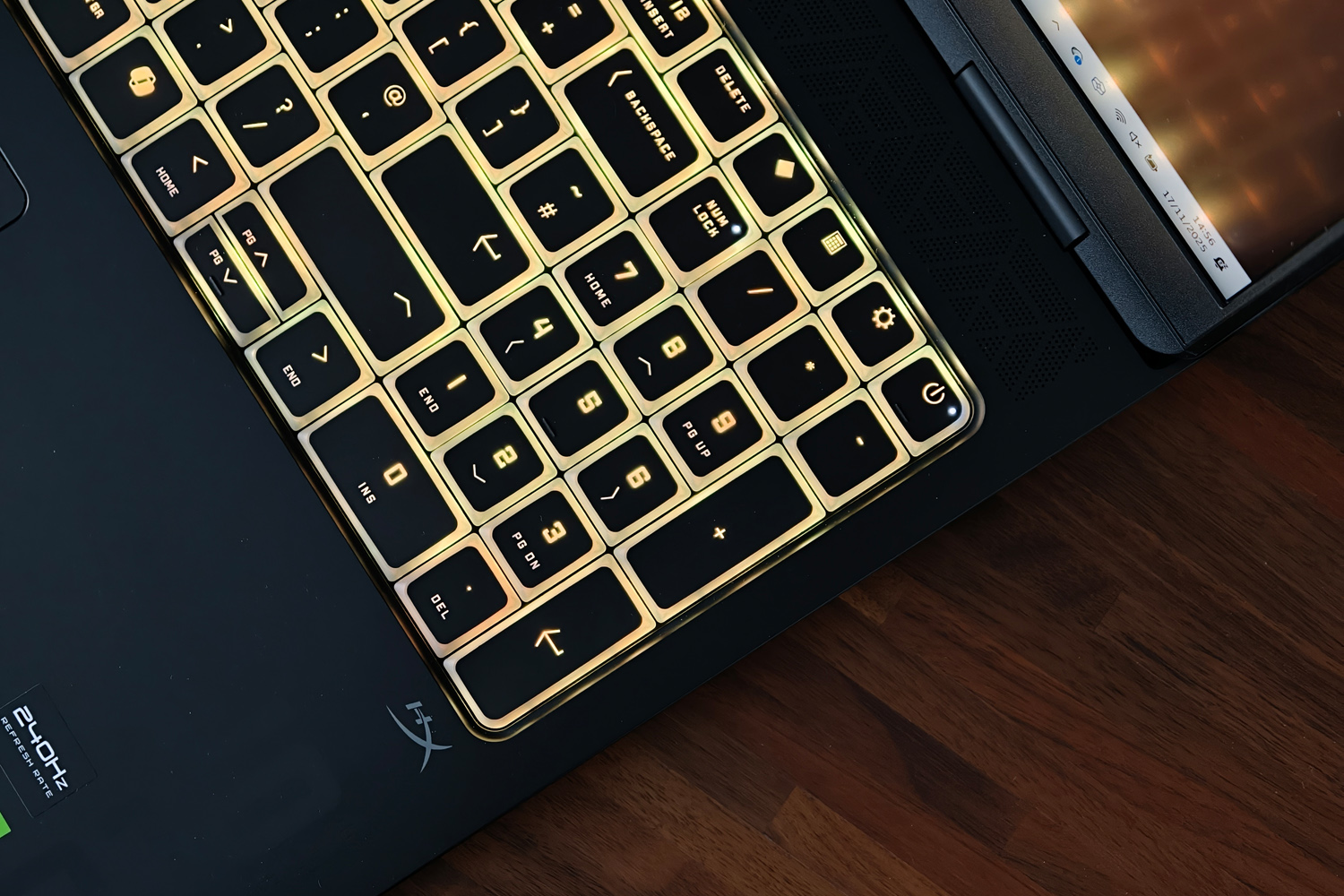
The semi-transparent key caps suggest the Omen Max 16 has a gaming-grade keyboard, but the layout HP has chosen says otherwise. It keeps the numeric keypad, rather than ditching it to give the QWERTY keys more room to breathe like rivals have done. The result is a tightly cramped ‘board – and that still wasn’t enough to accommodate full-size number keys, so they’ve been forced to shrink down a bit. The half-height up and down arrows are fiddly, too.
I thought the typing experience was only OK, with a softer, squidgier feel than other gaming laptops. There wasn’t much in the way of firm tactile feedback, either. It didn’t have a negative impact on my typing speed or accuracy, at least, but for gaming I’d sooner plug in a separate keyboard for a bit of extra precision.
The slightly offset keyboard is a respectable size, leaving room for your wrists while typing, and is recognises multitouch gestures well enough. It’s a physical clicker rather than a haptic one, but with a satisfying click when pushed down. Gamers are going to instantly plug in a mouse or controller either way.
Screen & sound: smooth sailing
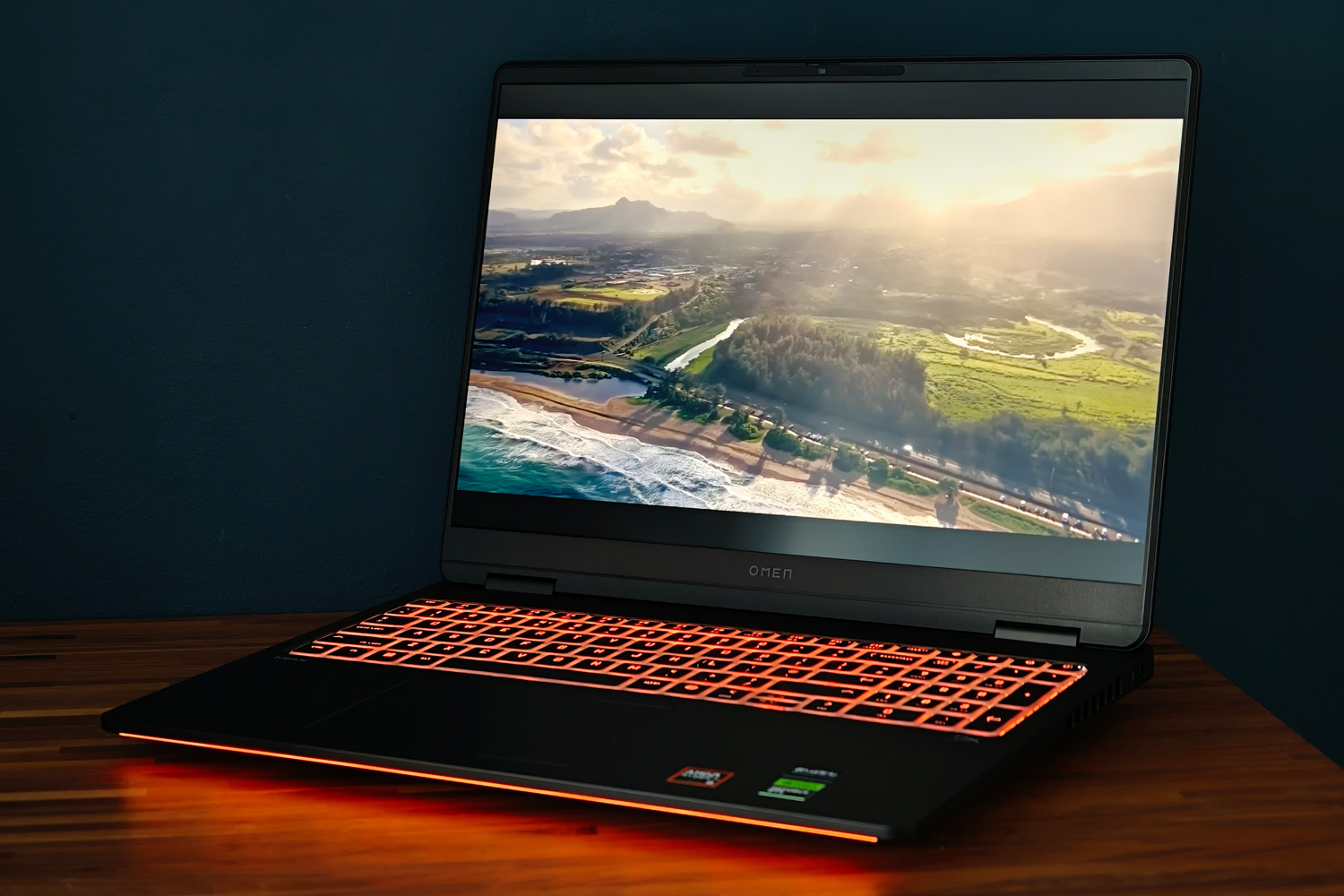

HP does sell the Omen Max 16 with an OLED screen variant, but the one I was sent for testing is a more entry-grade IPS LCD panel. Not that there’s very much entry-grade about it, mind. The 2560×1600 resolution still looks nice and sharp stretched across 16in, and the refresh rate maxes out at a very impressive 240Hz. AMD FreeSync Premium then ensures it stays smooth even if the GPU can’t deliver enough frames while gaming.
The 16:10 aspect ratio strikes the best balance between entertainment, productivity, and gaming. I’m also glad HP didn’t feel the need to make it a touchscreen – I never tend to use ’em on gaming laptops, and leaving it out helps keep the price in check.
While viewing angles are only OK, there’s a good amount of screen tilt and the matte finish helps keep reflections to a minimum. The panel gets usefully bright, and colours have a good amount of punch, though it can’t match an OLED for contrast or black levels. Games with dimly-lit levels had the best impact when I played in the dark.
The Omen Max 16 put in a strong showing on the audio front, its down-firing stereo setup delivering a respectable volume and decent tonal balance. I’ve heard gaming laptops that are louder, but there’s enough low-end here that single-player games and video content didn’t have me instantly reaching for my headphones. Things didn’t get tinny or shrill when cranking the volume, either. The sense of stereo separation is good enough, but a headset is still a must for perfect positional audio.
Performance: another gaming great
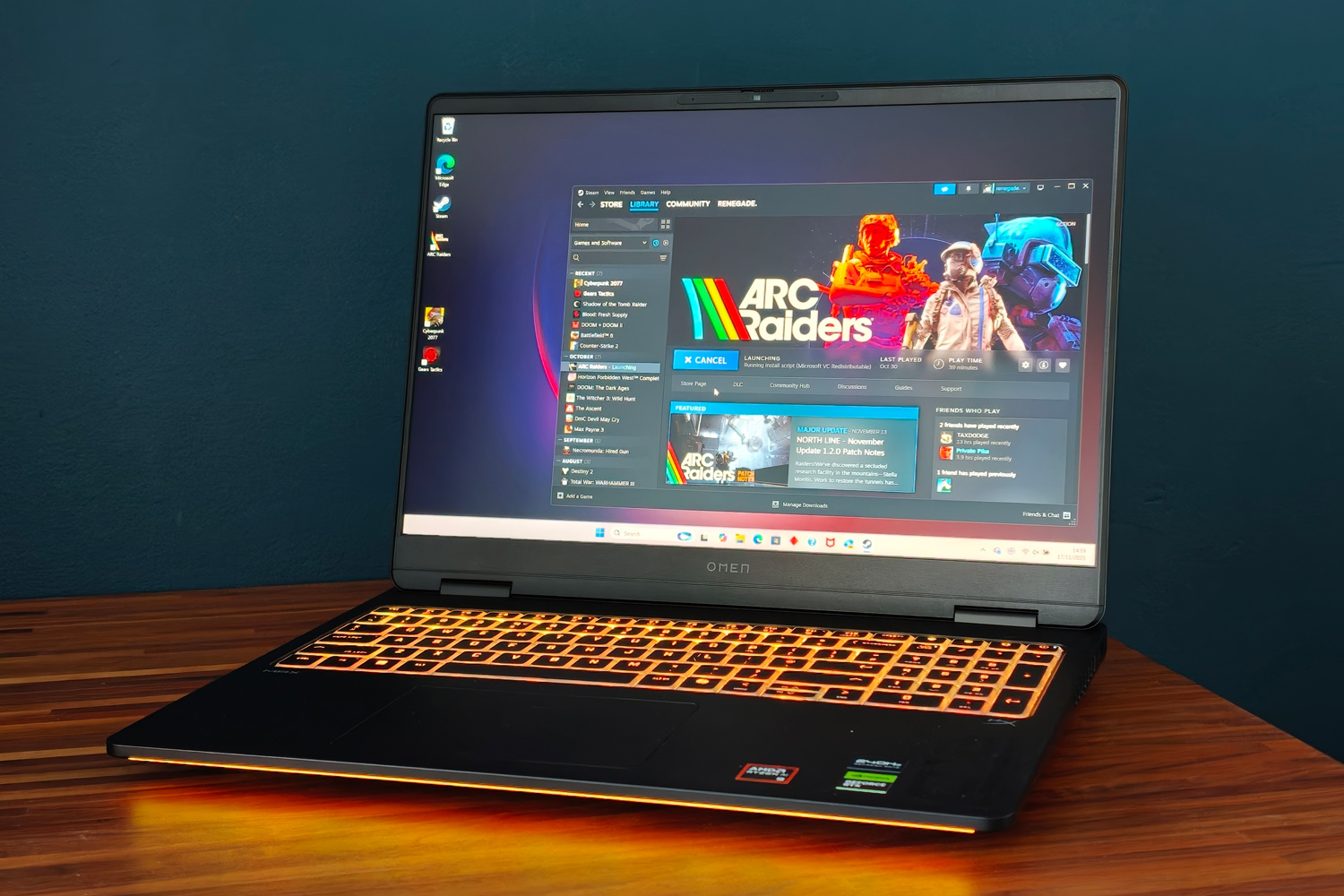
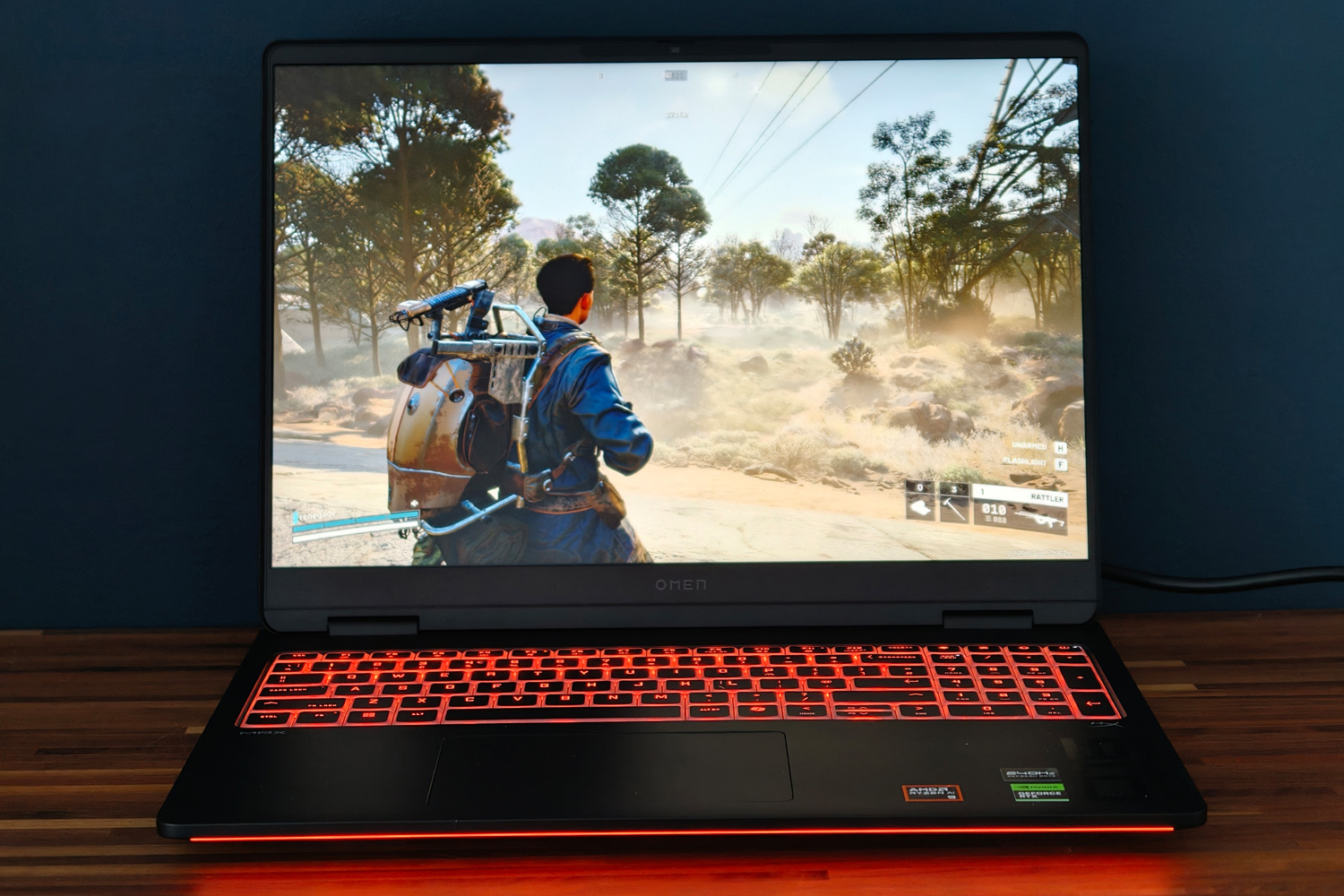
My Omen Max 16 review unit came equipped with a Ryzen AI 9 HX 375, the king of AMD’s 300-series Ryzen chips. It’s a twelve core, 24-thread multitasking monster that’s also surprisingly power efficient, ramping up to a peak 5.1GHz but also sipping volts when idling on the Windows desktop. Here it’s paired with 32GB of RAM and a 1TB SSD, which is the current gaming laptop baseline.
Synthetic tests put it in line with the similarly-equipped Razer Blade 16. While newer Intel CPUs can outmuscle it in some benchmarks, AMD takes the win in others – and puts in a stronger showing in real-world use cases like video encoding. Creative types won’t find anything to moan about here.
| HP Omen Max 16 productivity benchmark scores | |
| Geekbench 6 single-core | 2926 |
| Geekbench 6 multi-core | 15,500 |
| Geekbench AI | 7932 |
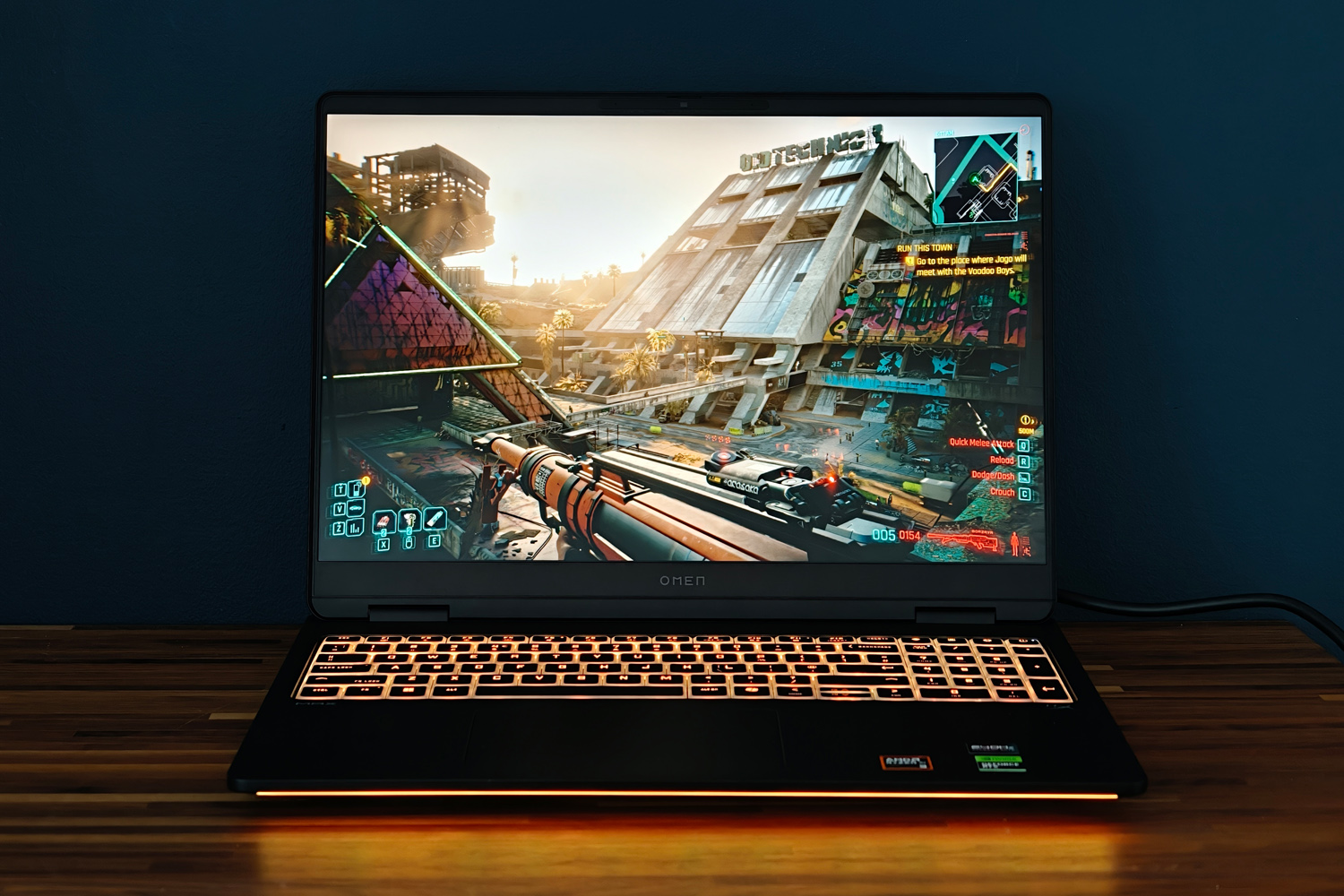
Gaming is the main event, of course, and here the Omen Max 16 delivers a rock solid performance. At the laptop’s native 2560×1600 resolution, there wasn’t a single game in my library that couldn’t hit playable frame rates, at least while ray traced lighting was disabled.
Shadow of the Tomb Raider, one of the first games with ray tracing support, skipped along at a rapid 111fps with every setting cranked; switching to regular lighting boosted performance to 152fps. And that was without any kind of upscaling. Esports titles and less demanding multiplayer games should be able to make the most of this laptop’s 240Hz maximum refresh rate.
Cyberpunk 2077 is a tougher test, but 86.1fps on the Ultra graphics preset felt wonderfully smooth. Only when using the RT Overdrive preset did things tank to unplayable levels, managing 22.18fps at the native resolution. Nvidia’s DLSS becomes a must here, with the new 4x frame generation setting pushing a mighty impressive 161fps with everything turned up to maximum. The GPU is effectively creating new frames with AI rather than rendering them natively, but you’ll genuinely struggle to tell the difference.
You’ll get even higher numbers if you plump for a laptop with an RTX 5090, but not so much higher it justifies the heavily inflated price. This is the current gaming laptop sweet spot.
There’s enough overhead that I never felt the need to try the Omen Gaming Hub’s AI mode, which is meant to adjust settings for best performance in Counter-Strike 2, League of Legends and Apex Legends. The software – one of the only preinstalled apps on an otherwise clean Windows install – also handles fan speeds, macro key mapping, LED lighting and performance profiles.
| HP Omen Max 16 gaming benchmark scores | Native rendering (2560×1600) | DLSS upscaling |
| 3DMark Steel Nomad | 5305 / 53.06fps | N/A |
| Gears Tactics | 155.3fps | N/A |
| Cyberpunk 2077 (RT Overdrive) | 22.18fps | 161.05fps |
| Cyberpunk 2077 (Ultra, RT off) | 86.13fps | 211.86fps |
| Shadow of the Tomb Raider (RT on) | 111fps | 145fps |
| Shadow of the Tomb Raider (RT off) | 152fps | 164ps |
I didn’t feel the Omen Max 16 get dramatically hotter than any of its rivals while gaming, so its vapour chamber cooling system and liquid metal thermal paste were clearly putting in a shift. Given I only had it for a few weeks I can’t say whether the ‘self-cleaning’ fans, which run in reverse in an effort to dislodge accumulated dust, will actually make a difference over the lifespan of the laptop.
Gaming laptops with decent stamina while on battery power used to be unheard of, but AMD has managed what Intel never could. The HP Omen Max 16 lasted for a very respectable seven hours of video playback at 50% brightness, despite its 83Wh cell not being the largest among 16in gaming rigs. Those figures put the AMD-powered Omen some four hours ahead of the Intel equivalent, according to other reviewers – I’ve only tested the version seen here.
That translates to around 5-6 hours of regular use, and puts it in line with the Razer Blade 16, my current pick for gaming and endurance. I also like that you can slowly top up over USB-C with a third-party adapter, so you don’t need to lug the beefy power brick around if you don’t plan on gaming.
HP Omen Max 16 verdict
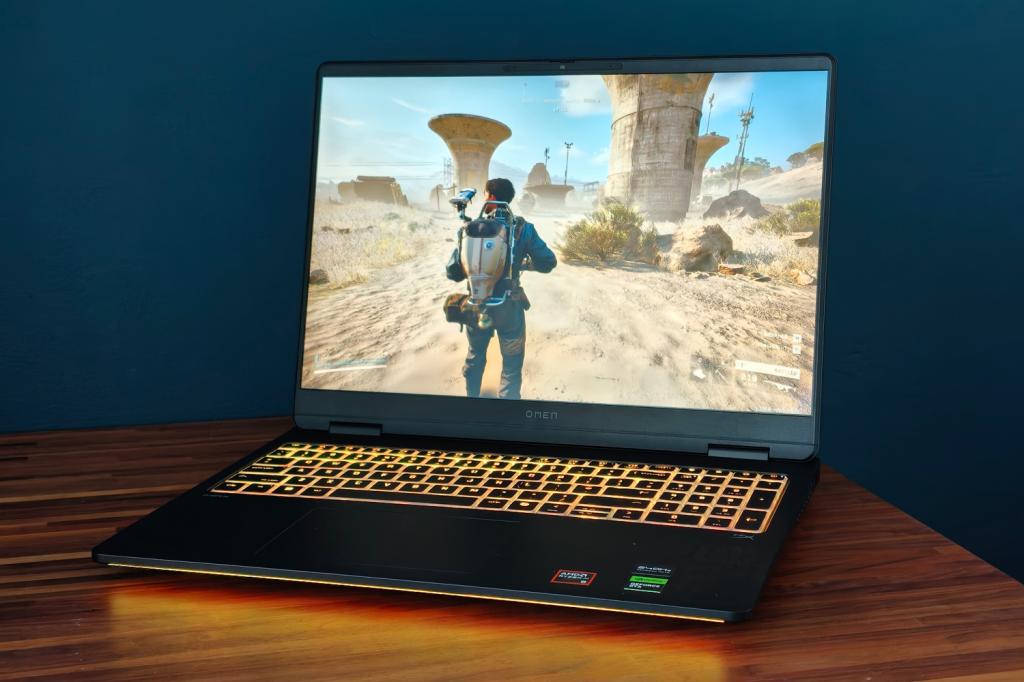
I can’t fault the Omen Max 16’s gaming performance – its RTX 5080 GPU is a potent chip that’s well matched to the screen resolution, and Nvidia’s tricksy upscaling tech should ensure you’ll be playing the latest titles at high details for at least a few years to come. HP has also been pretty competitive on price.
You do have to compromise in a few places, most notably the heavier build and cramped keyboard. This particular model also has a screen that’s merely OK. Personally I’d save a little more cash and go for an alternative with an OLED display, or one that’s a little thinner. Given the Razer Blade 16 is both those things, it gets my vote over this.
Stuff Says…
A very capable all-rounder gaming laptop that looks the part and doesn’t skimp on power. Spending extra elsewhere will get you a nicer screen than the HP Omen Max 16, though, and a lighter build.
Pros
Plentiful performance in games and on the desktop
Understated looks and decent connectivity
Powerful sound system for a laptop
Cons
One of the heavier 16in gaming laptops out there
Battery life could be better given the internals
Keyboard could be firmer
HP Omen Max 16 technical specifications
| Screen | 16in, 2560×1600 LCD w/ 240Hz |
| Processor | AMD Ryzen AI 9 HX 375 |
| Memory | 32GB RAM |
| Graphics | Nvidia GeForce RTX 5080 |
| Storage | 1TB SSD |
| Operating system | Windows 11 |
| Connectivity | HDMI 2.1, 2x USB3, 2x USB-C, 3.5mm headset, Ethernet |
| Battery | 83Wh |
| Dimensions | 357x269x23-25mm, 2.66kg |


 Tom Morgan-Freelander
Deputy Editor
Tom Morgan-Freelander
Deputy Editor