Dell 16 Premium review: gorgeous in more ways than one, but still a bit flawed
The first not-XPS model doesn't stray far from Dell's established formula

Stuff Verdict
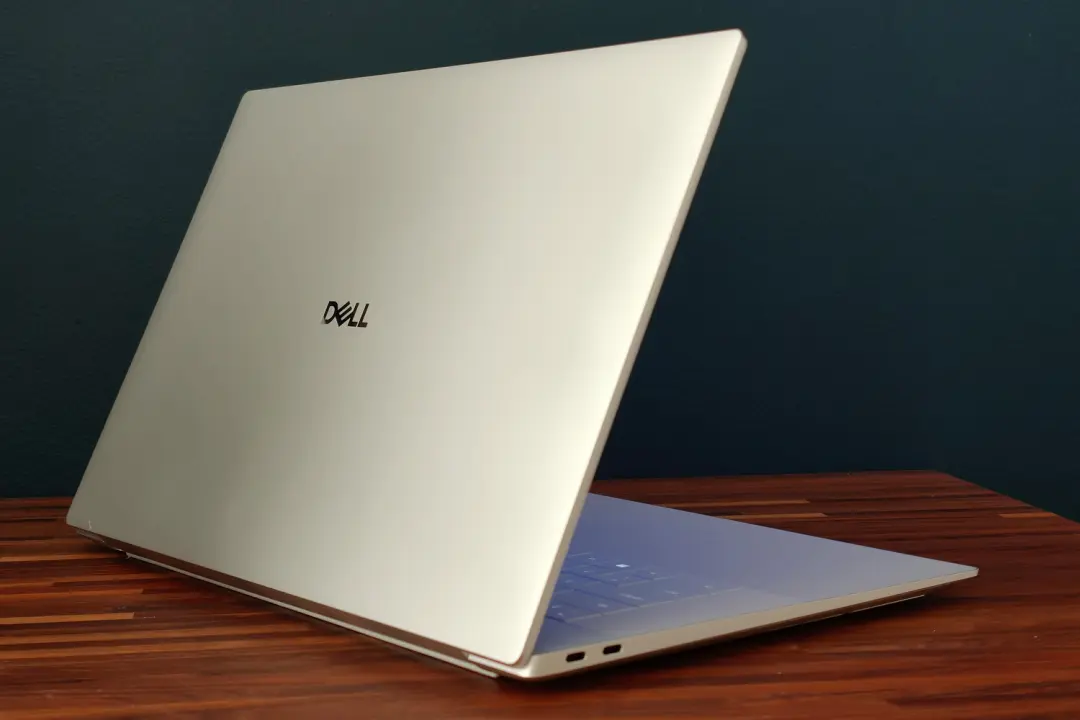
The first post-XPS laptop is easy on the eye and plenty powerful, but usability and battery life take back seats to the Dell 16 Premium’s flashy keyboard and (admittedly beautiful) OLED screen.
Pros
- Sleek looks and sturdy build
- Powerful desktop performance
- Stunning touchscreen and strong speakers
Cons
- Only average battery life
- Touch-sensitive function row remains fiddly
- Connectivity isn’t amazing for a 16in machine
Introduction
If you were shopping for a Windows-powered laptop alternative to the MacBook Pro back in the day, a Dell XPS used to be a safe bet. Things aren’t that clear-cut any more, with rivals having caught up – or overtaking – on design and dimensions as well as price. Maybe that’s why Dell thought it was time for a shake-up?
The XPS name has now been officially retired. Dell Premium essentially takes its place, but with Dell Pro and Dell Plus machines also in the mix, it hasn’t been the easiest rebrand to get your head around. What matters is that the Dell 16 Premium is your new top-spec choice for a creative powerhouse that can also manage a working life spent away from a desk.
While limited-time discounts seem to appear on the regular, the DA16250 spec tested here will officially set you back £2149. The US equivalent costs $2100 but has less memory; stepping up to a matching 32GB forces you to add RTX 5070 dedicated graphics, which hikes the price by an astonishing $1100. That’s less than a 16in MacBook Pro, but more than an MSI Prestige 16 with similar hardware. Shop around and an Asus Zephyrus G16 can be found for practically the same cash.
Given the Dell’s styling hasn’t really changed from the outgoing XPS, does it do enough elsewhere to deserve your attention?
How we test laptops
Every laptop reviewed on Stuff is tested using industry standard benchmarks and apps to assess performance and battery life. We use our years of experience to judge display, sound and general usability. Manufacturers have no visibility on reviews before they appear online, and we never accept payment to feature products.
Find out more about how we test and rate products.
Design & build: a familiar face

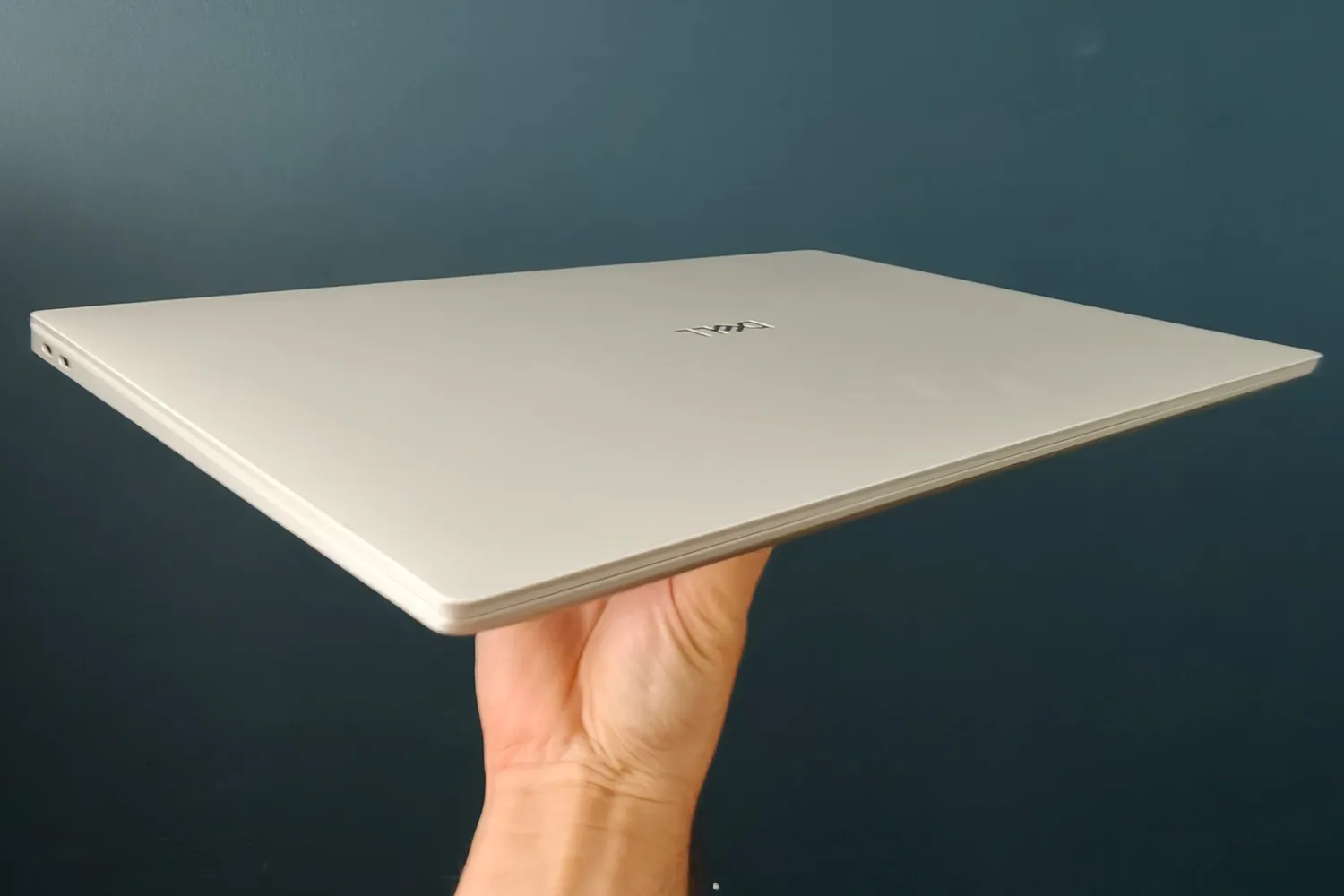
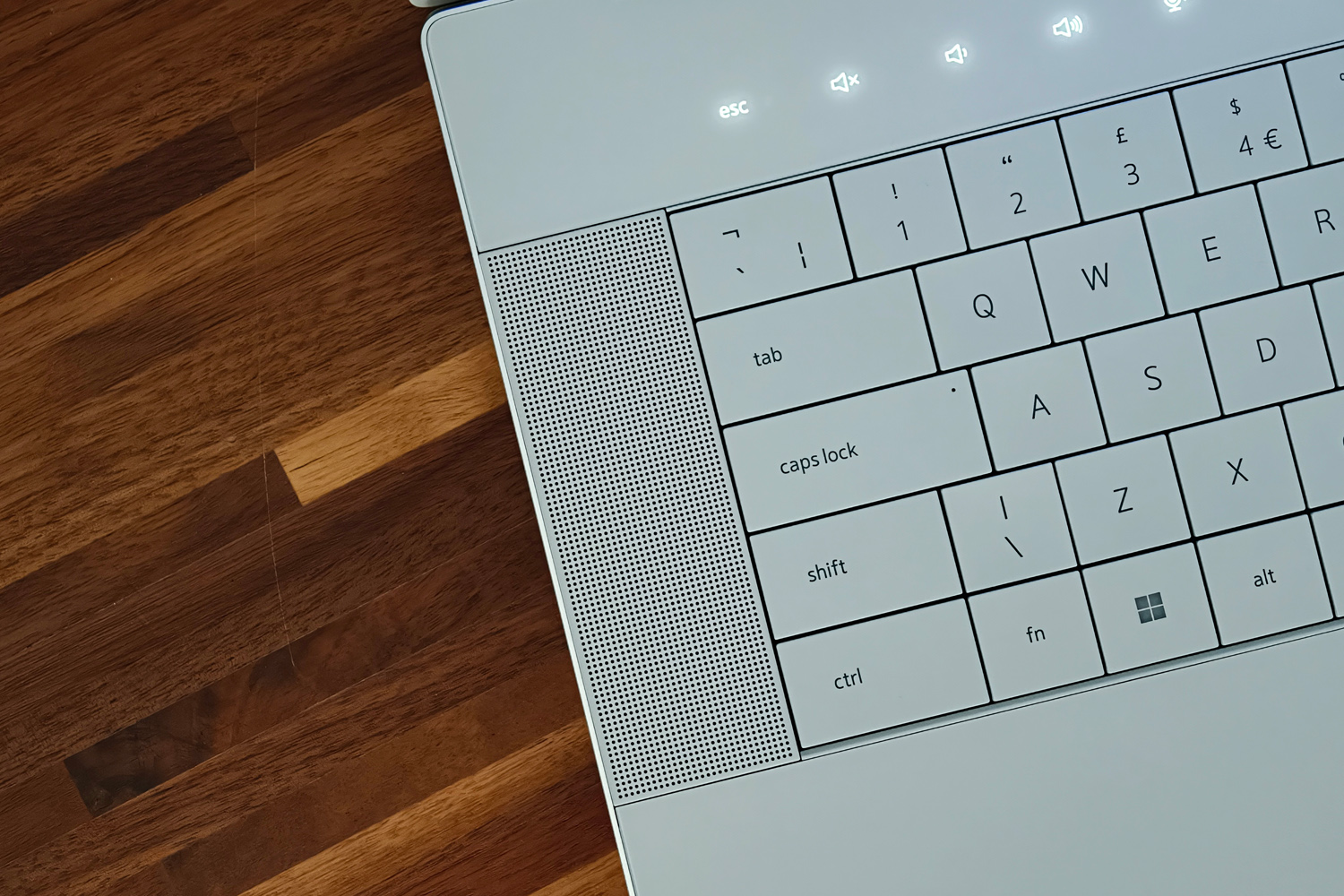
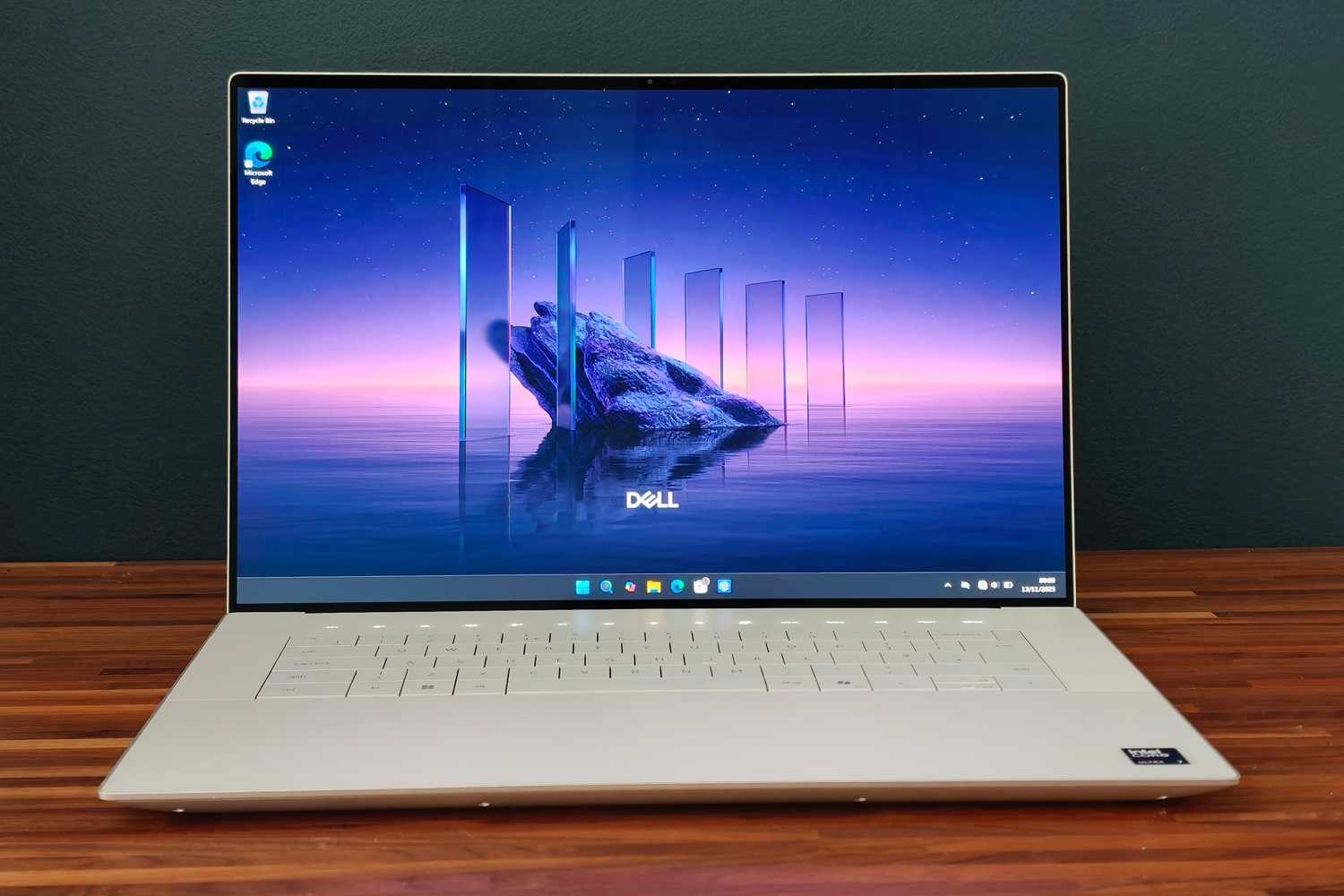
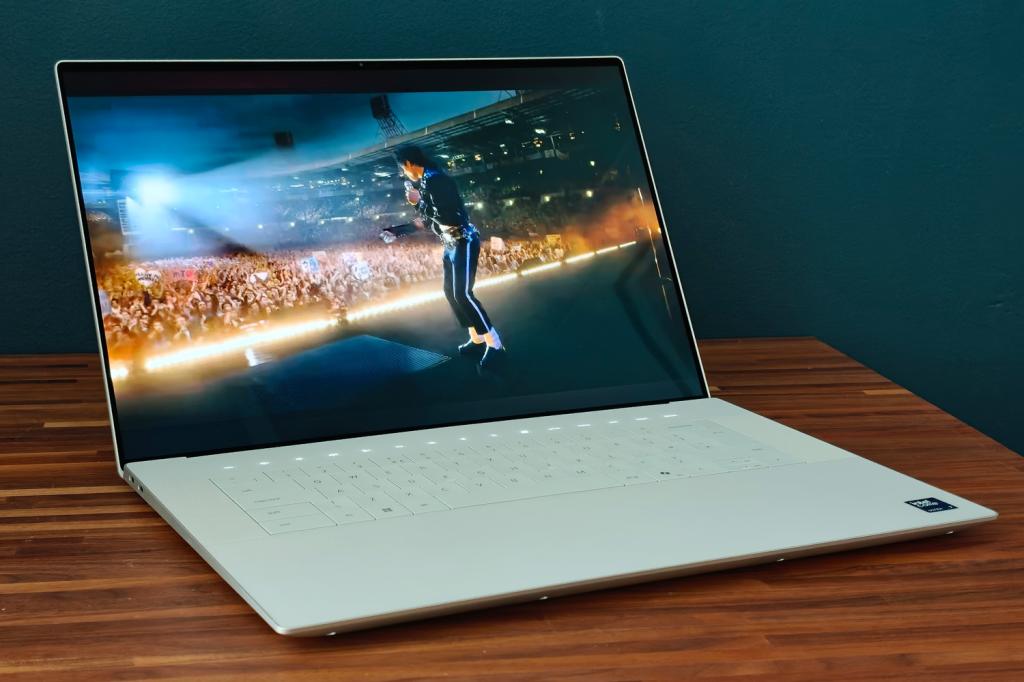
Dell gave its sleekest laptops an ultra-minimal makeover a few years back now, and hasn’t deviated for its new, renamed models. The 16 Premium is a mostly-metal slab, in your choice of Platinum or Graphite colours, with sharp lines and just a pared-back Dell logo on the lid. Open it up and you’ll spot the now-trademark illuminated function row, an invisible touchpad, and a pair of speaker grilles which look like they mean business.
Measurements are very similar to Apple’s latest 16in MacBook Pro, so it’s just as portable. At 2.11kg I wouldn’t call it a featherweight, but equally didn’t mind slinging it in my backpack for a day spent working on the move.
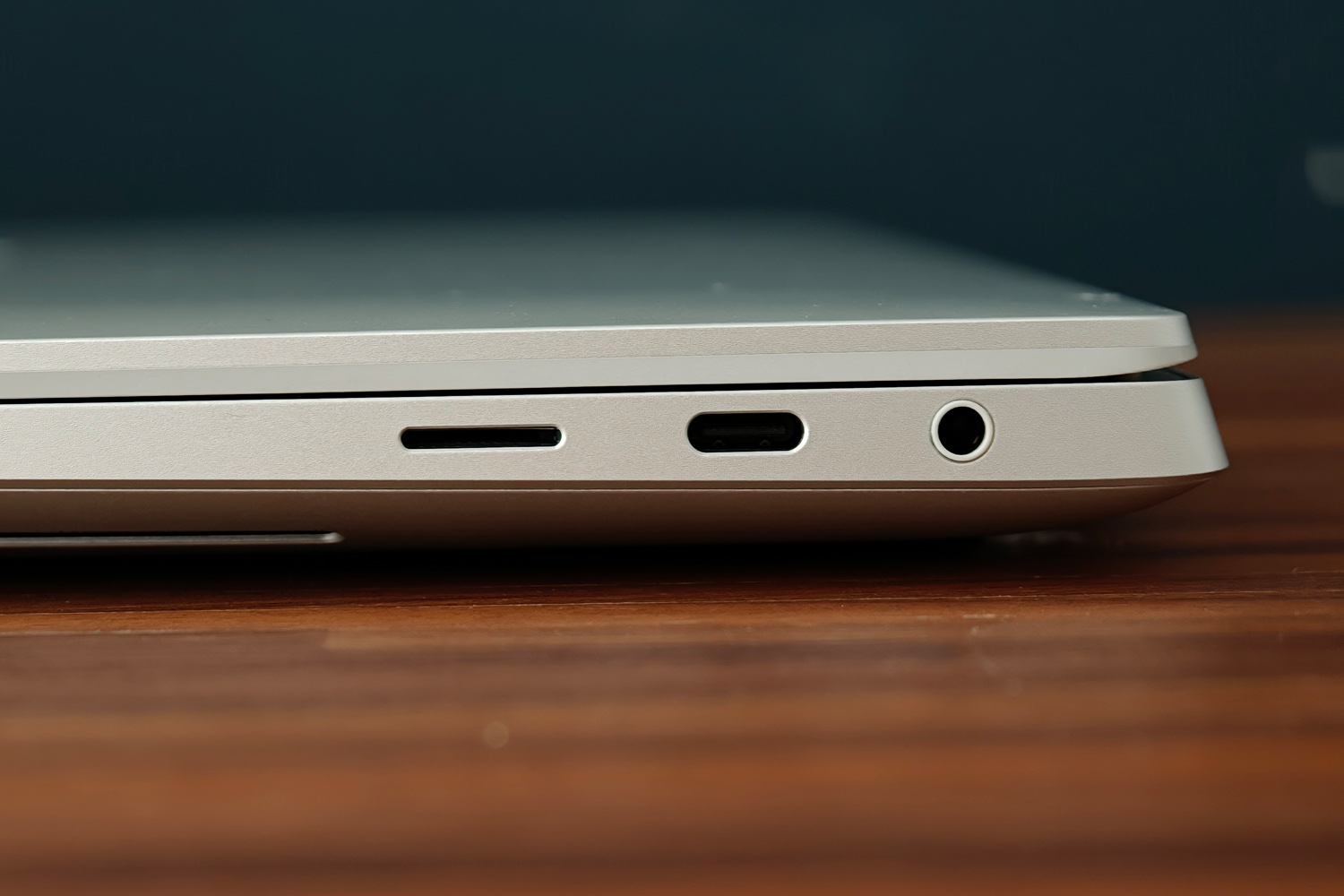
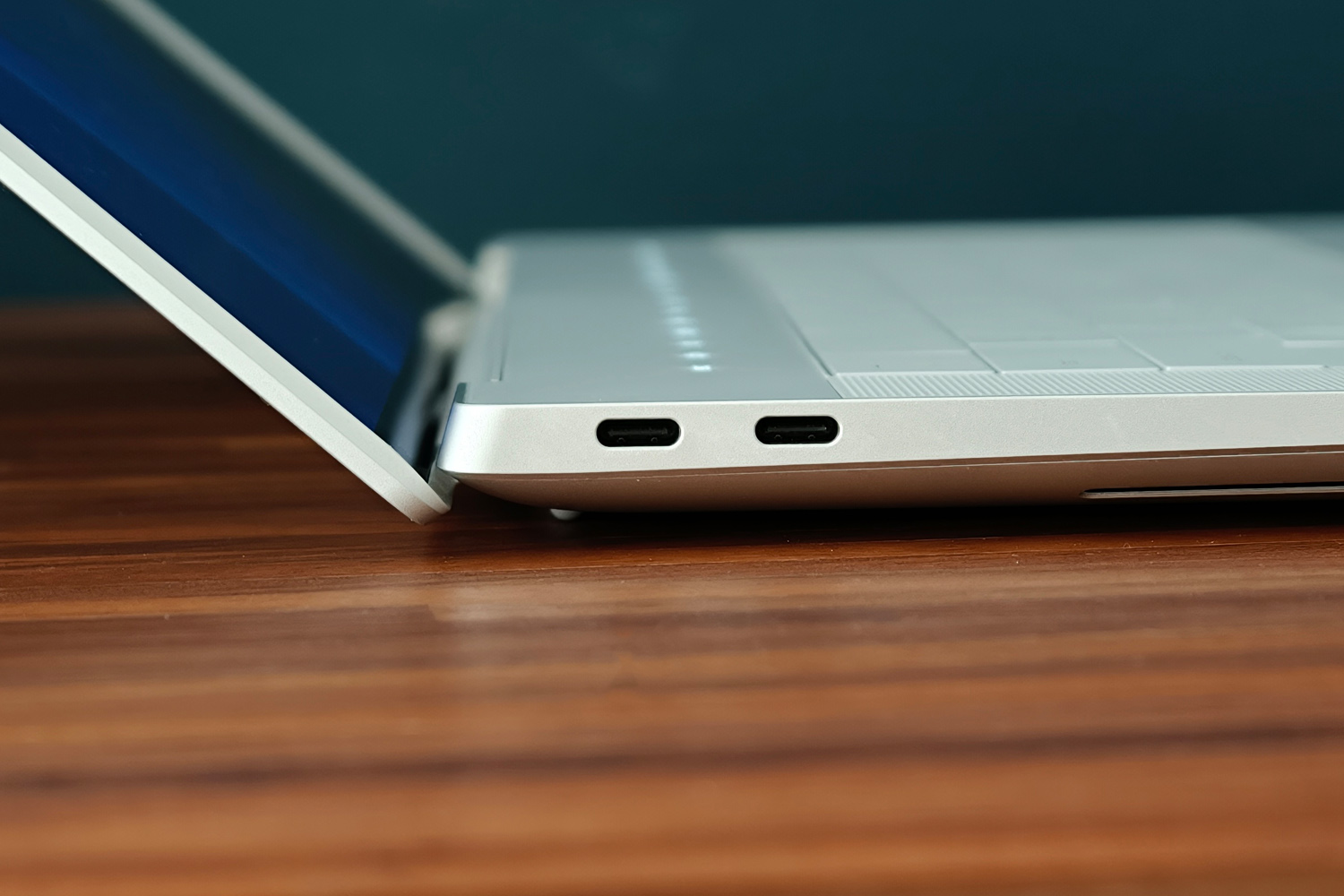
I do wish Dell hadn’t stayed so minimal with the port selection, including just three USB-C/Thunderbolt 4 connections – two on the left, one on the right – a microSD card reader, and a 3.5mm headphone port. I’d argue 16in machines often replace a desktop computer, rather than compliment one like a 13in laptop, and so are more likely to get connected to an external display; you’ll need to supply an adapter to do that here unless your monitor supports USB-C video. A full-size SD slot would’ve been appreciated, too, for hooking up my digital camera’s memory card.
The power button once again doubles as a Windows Hello-certified fingerprint sensor, or you can use the 1080p webcam for slightly less accurate facial recognition.
Keyboard & touchpad: don’t touch me


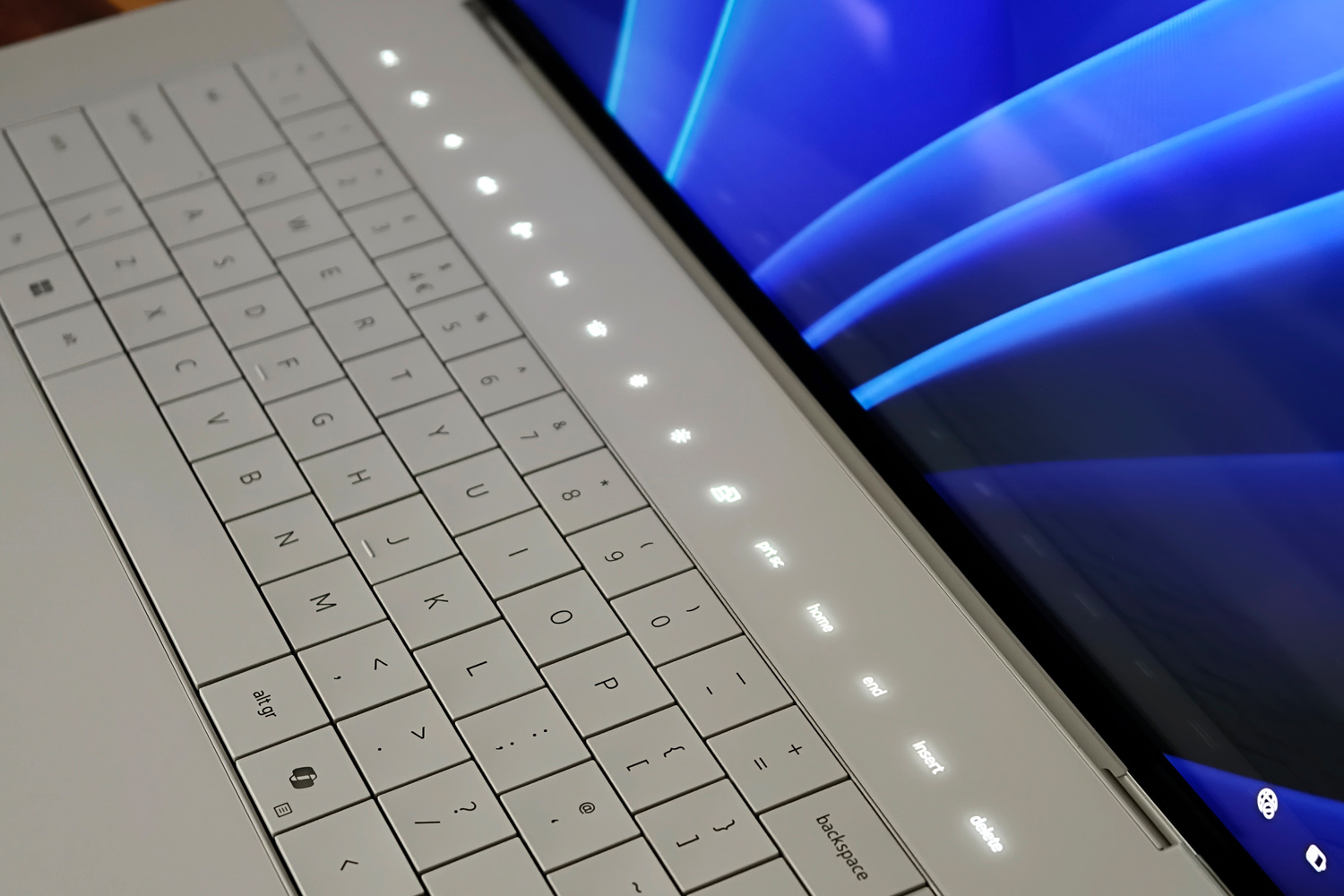
By sticking with the same design beats as the old XPS 16, the Dell Premium 16’s keyboard and touchpad setup run into the same familiar issues.
Things start off well enough. Although the QWERTY keys are tightly grouped together, there’s just enough spacing (and a recess on each one to rest your digits on) that you don’t need to retrain your muscle memory. I found there was a decent amount of key travel, and each one had a springy enough action. The layout hasn’t been compromised at all to make space for the large speaker grilles that sit either side of it, either.
While a white backlight on white keys could make it hard to see each key’s legend during the day, it wasn’t an issue for me. The ambient light sensor is quick to recognise well-lit environments, powering off the backlight automatically.
The row of light-up capacitive keys which replace the function row proves as controversial as it’s ever been, needing the Fn button held down to switch between function buttons and multimedia shortcuts. Relocating the escape and delete keys to the touch row – without providing any sort of haptic feedback – is just as frustrating here as I found it on older XPS laptops. It’s just plain fiddly to use, so I’d be very surprised if Dell doesn’t at least tweak things for the inevitable next generation model.
It might look like Dell has neglected to add a touchpad, but it’s there – just hidden underneath the all-glass wrist rest. With no markings you’d be forgiven for thinking you’d be constantly missing inputs, but the touch surface is bigger than you expect. Haptic feedback could be stronger – there’s nothing physical to click here – but multi-touch gestures and dragging and dropping all work as expected.
Screen & sound: the OLED advantage
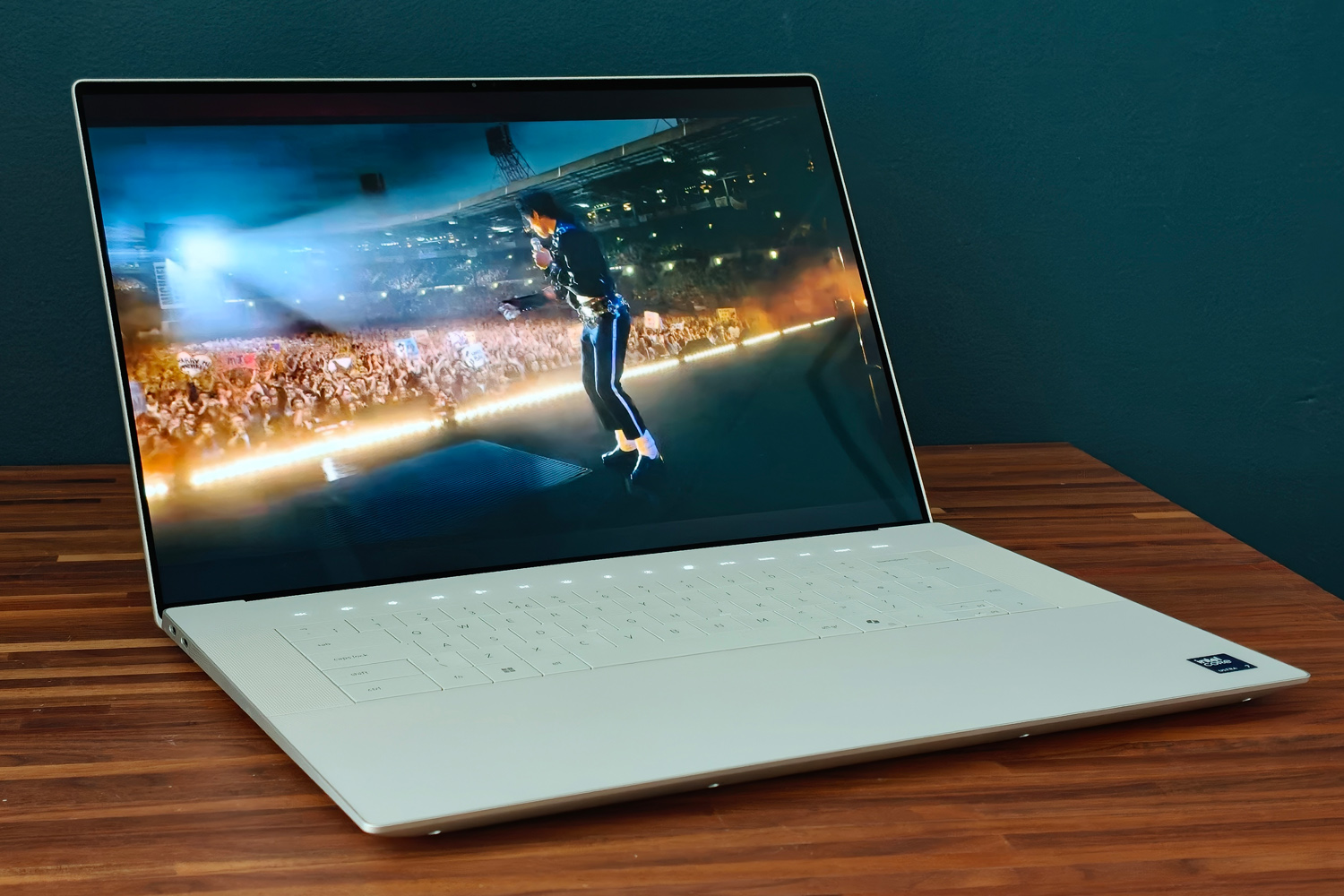
Dell’s “if you build it, they will come” approach means you could spec this laptop with a 1920×1200 non-touch IPS display – though if you want to give your eyes a treat every time you open the lid, pay the extra and get the simply gorgeous 4K OLED touchscreen instead.
Ultra-skinny bezels ensure the 3840×2400 resolution panel fills your vision, while the 48-120Hz adaptive refresh rate brings wonderfully smooth motion. Touch responsiveness is fantastic and viewing angles are up there with the OLED best, showing next to no colour deviation even when taken to extremes.
Colour gamut coverage and accuracy are great, if not quite class-leading, but everything is deliciously vivid overall. Contrast and black levels are as good as I’d expect from a top-tier OLED panel, and HDR support gives compatible streaming content even more impact.
Pitched purely against LCD rivals, the Dell 16 Premium might not impress for overall brightness. It fares very well amongst OLED competition, though, with enough punch I could world next to an open window without any concerns about glare. Light reflections aren’t too troublesome either.
Dell gets a big thumbs up for this laptop’s impressively potent sound system. The stereo speakers are loud and come through clear, with a decent amount of low-end depth. I’d put it second only to the MacBook Pro for all-round ability, and certainly won’t send you scurrying for a pair of headphones.
Performance & battery life: power by the hour
Dell’s laptop lineup has always leaned more heavily on Intel hardware than AMD, and the 16 Premium doesn’t change that. My review unit was powered by an “Arrow Lake” Core Ultra 7 265H, a 16-core chip divided between six performance cores, eight efficiency cores, and two low power efficiency cores. Paired with 32GB of RAM and a 1TB SSD, it’s the spec Dell expects to do best with creative types not needing a dedicated GPU.
That’s because it sticks with Intel’s Arc 140T integrated graphics. While you can step up as far as an Nvidia RTX 5070 (plus 64GB of RAM and 4TB of storage while you’re at it), the resulting price is closer to $4100/£3600, or on par with extreme gaming laptops.
As it stands, the 16 Premium is perfectly suited to desktop duties, having enough grunt for many creative jobs and saving you the need to step up to a pricier Core Ultra 9 system. It comfortably outpaces a Samsung Galaxy Book5 Pro 360, which uses a lower-tier Intel chipset, though it’s bested in cross-platform synthetic tests by the latest MacBook. Things are closer in real-world use cases, but it’s AMD that has the Windows advantage for the most part – a Razer Blade 16 in a similar specification is a genuine alternative here.
| Dell 16 Premium benchmark scores | |
| Geekbench 6 single-core | 2610 |
| Geekbench 6 multi-core | 14531 |
| Geekbench AI | 4744 |
| 3DMark Steel Nomad | 764 |
| Rise of the Tomb Raider (1080p High) | 38fps |
This is by no means a gaming laptop, but integrated graphics aren’t the running joke they used to be, and the Arc 140T is potent enough to run older games and esports titles at a decent lick. Just be prepared to stick to 1080p resolutions and sensible graphics settings, or use Intel’s XESS upscaling. Newer, more demanding titles will be off the table, unless you pay extra for an Nvidia GPU.
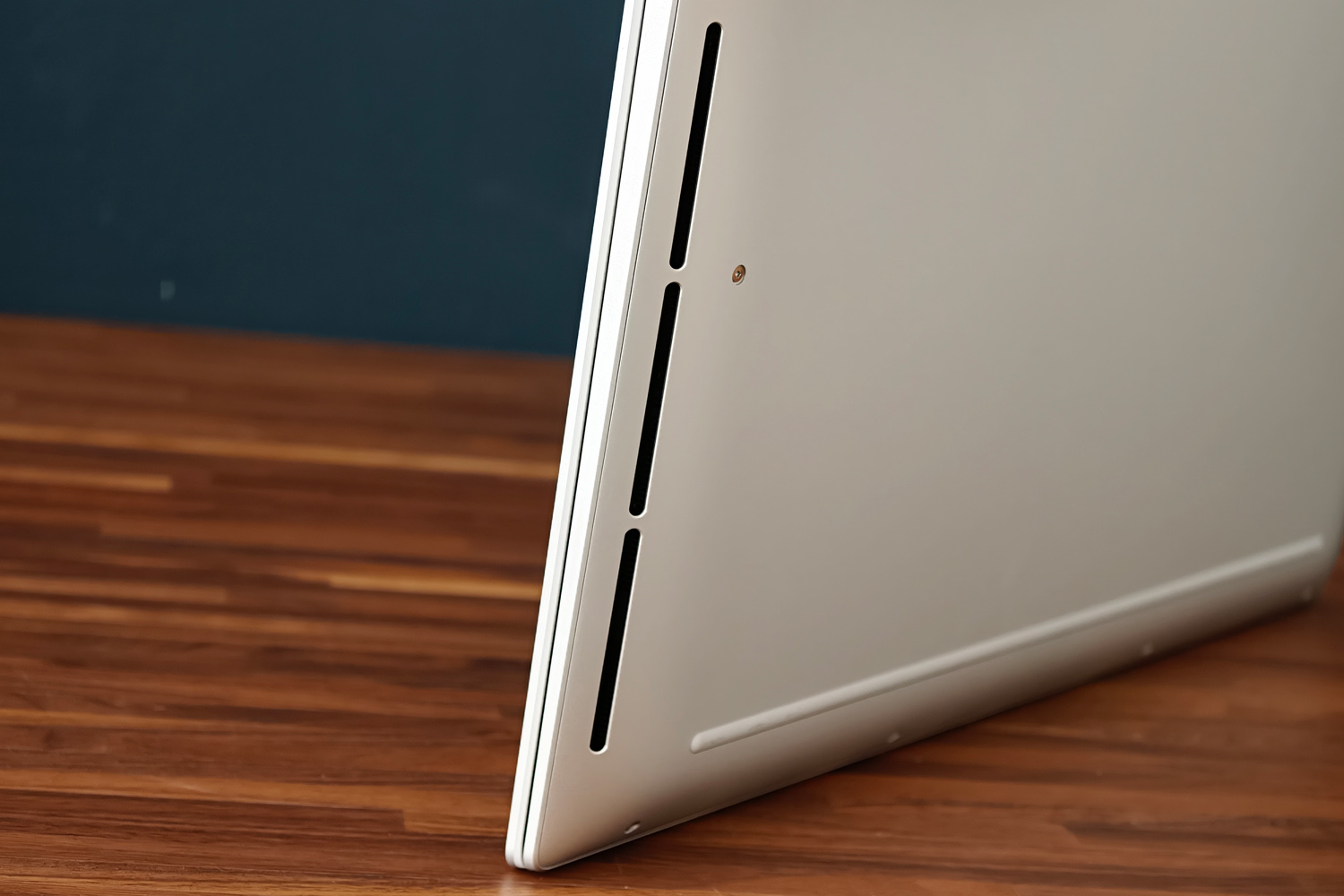
The two internal fans never get obnoxiously loud, and do a great job of keeping the chassis cool to the touch, even when running particularly demanding software.
As much as I loved the Dell 16 Premium’s display, there is one reason to consider sticking with LCD. In my real-world rundown tests, it achieved a distinctly mediocre seven hours, which is a world away from the 20+ a MacBook Pro can manage. The blame falls mainly on the OLED panel.
According to Dell, sacrificing it for the less power-hungry alternative will take video playback from nine hours to a much more respectable 27, though I’ve not had the chance to test that in person.
Dell 16 Premium verdict
Does an XPS by any other name still smell as sweet? For the most part, yes – though Dell hasn’t used its range-spanning rebrand as an opportunity to address the old model’s issues. The Dell 16 Premium looks as sharp as ever and has plenty of performance potential, but the touch-sensitive keyboard is still controversial and connectivity is merely OK for a 16in machine.
Battery life is also disappointing if you go with the OLED screen option – which you’ll absolutely want to do, because it’s gorgeous. Alternatives have builds that aren’t quite as polished, but I’d still give them the nod over this for their longer lifespans – and the fact you can find many with dedicated graphics for the same price as the Dell.
Not wedded to Windows? Then there’s no question the MacBook Pro remains my top pick overall.
Stuff Says…
There’s a lot of XPS DNA in the Dell 16 Premium, for better and worse. It’s easy on the eye and plenty powerful, but usability and battery life take back seats to a flashy keyboard and (admittedly beautiful) OLED screen.
Pros
Sleek looks and sturdy build
Powerful desktop performance
Stunning touchscreen and strong speakers
Cons
Only average battery life
Touch-sensitive function row remains fiddly
Connectivity isn’t amazing for a 16in machine
Dell 16 Premium (DA16250) technical specifications
| Screen | 16in, 3840×2400 AMOLED w/ 120Hz |
| Processor | Intel Core Ultra 7 265H |
| Memory | 32GB RAM |
| Graphics | Intel Arc 140T |
| Storage | 1TB SSD |
| Operating system | Windows 11 |
| Connectivity | 3x USB-C, microSD, 3.5mm |
| Battery | 99.5Whr |
| Dimensions | 358x240x19mm, 2.11kg |


 Tom Morgan-Freelander
Deputy Editor
Tom Morgan-Freelander
Deputy Editor