Dell’s latest XPS 13 is a thinner, lighter love letter to long-time laptop fans
The Windows-powered MacBook Air alternative we've been waiting for?

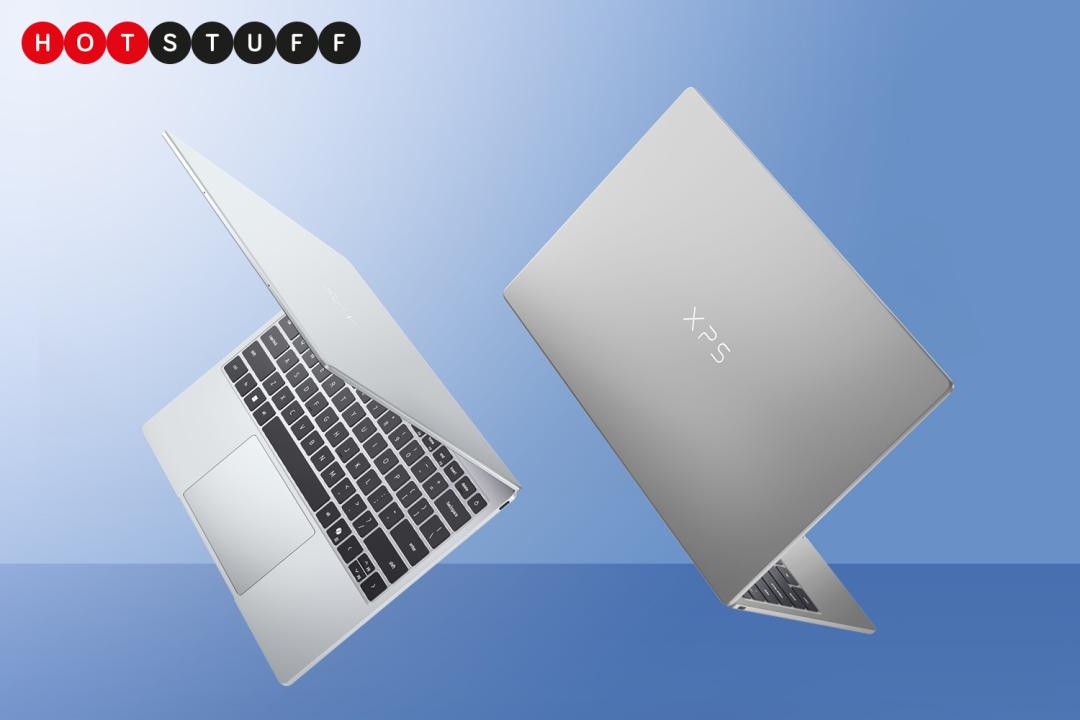
An all-new XPS 13 has been a long time coming for fans of lightweight laptops. At one point Dell was the de facto choice for anyone wanting slick styling and travel-friendly dimensions in a Windows-powered notebook; now the firm’s confusing 2025 rebrand is in the rear view mirror, this latest effort goes where no other XPS has gone before.
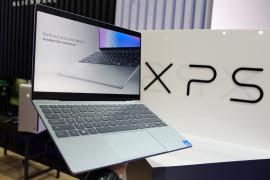
At just 1kg/2.2lbs and only 12.7mm/0.50in, it’s the slimmest and lightest XPS laptop ever. The CNC-machined chassis looks very easy on the eye, whether you go for Sky or Storm colours (marketing speak for “lighter or darker grey aluminium”), while the XPS logo sits proudly on the lid. It closely matches the prototype I got a preview of ahead of CES in January alongside the XPS 14 and XPS 16.
Unlike the outgoing generation, which could be had with either Qualcomm or Intel hardware, the 2026 XPS 13 is only launching with Intel’s Series 3 Core silicon.
The entry-grade XPS 13 comes with a Series 3 Core 5 320, with six CPU cores, two Xe graphics cores and 18 TOPs of on-device AI processing. It can be had with either 8 or 16GB of memory and will launch with 512GB of storage. A 256GB base model will follow later.
Stepping up to the Core Ultra 7 335 laptop gets you eight CPU cores and 4 Xe graphics cores, along with 50 TOPs of AI compute power. There are variants with 16 or 32GB of RAM, and 512GB or 1TB of storage. A dual fan active cooling setup should keep temperatures in check on both models.


The XPS 13’s 13.4in screen uses LCD panel tech, with seemingly no plans to offer an OLED upgrade. As well as being a boon for battery life – Dell reckons the XPS 13 should squeeze up to 17 hours of video playback from its 52Whr cell – the touch-sensitive display hasn’t skimped on specs. It has a 2560×1600 resolution, 30-120Hz variable refresh rate, 500 nits peak brightness and Dell’s familiar InfinityEdge skinny bezels on all four sides. DCI-P3 colour coverage is pegged at 100%, and it’s backed by a quad speaker setup with spatial upmixing.
Connectivity is admittedly anaemic, with just a single USB-C port on either side. On models with the Core Ultra 7 CPUs they also double as Thunderbolt 4 ports. There’s also a 2MP Windows Hello-ready webcam for biometric security.
Dell has gone for an island-style keyboard layout, rather than the tightly grouped keys I never quite gelled with on the XPS 14. It’s fully backlit for low-light working, and has a physical function row – the firm has learned its lesson and firmly ditched the capacitive touch bar that customers hated on the previous generation.
There’s no word on when the new XPS 13 will go on sale, or where pricing will start at.


 Tom Morgan-Freelander
Deputy Editor
Tom Morgan-Freelander
Deputy Editor