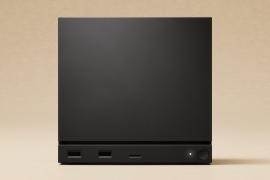
Steam Deck 2: the features we want from Valve’s next-gen gaming handheld
PC-based handhelds have come a long way since the first Steam Deck. Can Valve do even better?

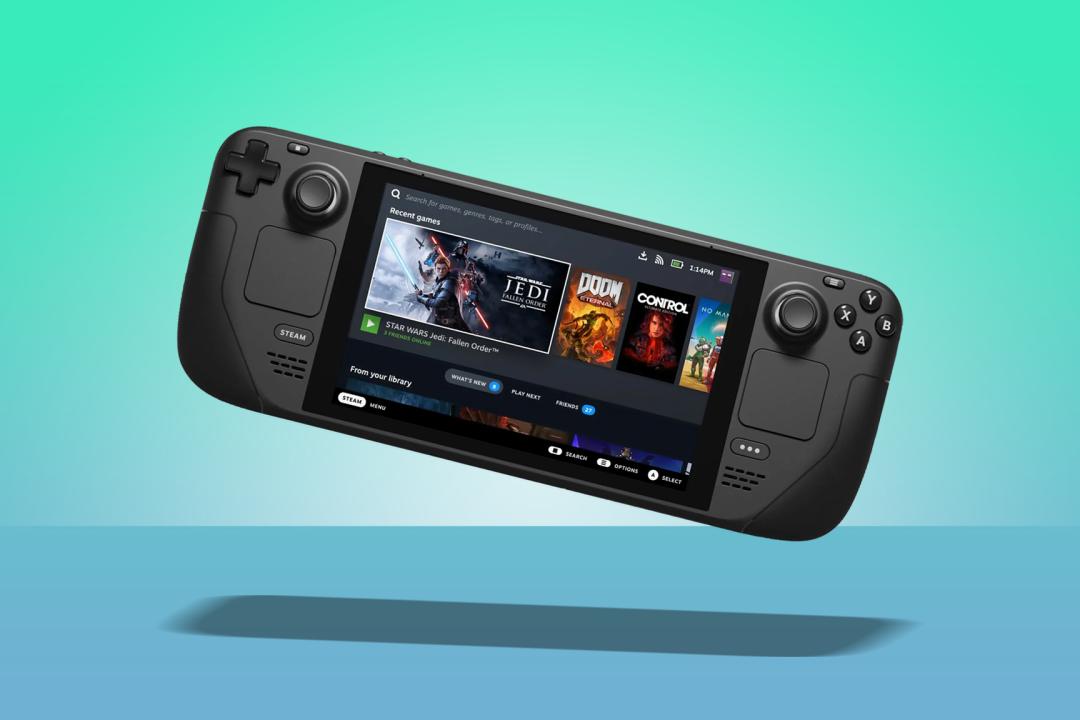
With Valve’s alternative to the home console establishment – the Steam Machine – now officially on sale (and officially expensive), gamer attention has swiftly turned to the Steam Deck 2.
The firm’s first ever handheld console earned near-universal praise and set the template for the PC-based portables that followed. It didn’t just take your Steam library on the move; it played titles from other digital stores, emulated classics, and made a fine substitute for a laptop with minimal tinkering. It proved so popular Valve initially had to restrict supply, and influential enough to get game devs to embrace Linux (the back-end operating system that powers the Steam Deck’s UI) like never before. The Steam Deck OLED eventually addressed the original device’s few issues, with a superior screen and better battery life.
Tech is in a very different place to where it was in 2022, though. Valve’s competitors have multiplied and have access to SteamOS; Intel has gotten in on the action with its powerful yet efficient Arc G3 silicon; and the cost of components has gone sky-high, largely as a result of the ongoing AI boom.
The Steam Deck 2 has its work cut out if it wants to impress, then. We’ve thought of a few ways a Steam Deck successor could improve on today’s model, rounded up the latest rumours, and outlined the challenges Valve has to overcome in order to remain in front.
Is the Steam Deck 2 actually happening?

Valve is most definitely hard at work on a second-gen Steam Deck. Even before the mid-life OLED model arrived the firm was calling the handheld a ‘multi-generational product’, suggesting that it would evolve in some way. Following the OLED’s reveal, Valve Product Designer Lawrence Yang confirmed to Bloomberg that the next Steam Deck would get a “next-generation” power boost – but that we wouldn’t be seeing it for at least two or three years.
The holdup has been hardware. Valve always said it wouldn’t release a second Steam Deck until the available components would make it sufficiently faster than the original model. Developer Pierre-Loup Griffais told IGN in June 2026 “we’re definitely getting there” but chips like the Intel Arc G3 were “still in power envelopes that are not quite the right segment that you’d want for a true handheld experience.”
That likely means Valve is happy to wait until the next processor generation before launching – but a Steam Deck 2 is happening sooner or later.
When will the Steam Deck 2 officially launch?

We don’t have a crystal ball here at Stuff, and Valve is staying tight-lipped – but late 2027 seems like as good a bet as any right now.
This would be enough time for a chipmaker – most likely AMD, given it supplied the current Steam Deck’s custom silicon – to prep its next-gen processors, and hopefully allow the PC hardware market to recover a little from 2026’s painfully inflated RAM and SSD prices.
Valve was forced to raise the price of the Steam Deck OLED by so much it had to confirm it wasn’t actually a new model, while the Steam Machine launched at over $1000 rather than the $749 many had predicted. Rivals with Intel Arc G3 internals are starting to appear at a whopping $1500, making them more expensive than a PlayStation 5 Pro.
It will surely want to wait until it can sell a Steam Deck successor at a more appealing price, giving gamers a big reason to skip the likes of Asus’ Xbox ROG Ally X and Lenovo Legion Go 2.
What will the Steam Deck 2 cost?
See above; it’s impossible to predict pricing while flash memory is so expensive. Some industry analysts are predicting the facilities producing RAM and SSDs won’t actually catch up with demand until September 2027, with retail prices needing even longer before they return to normal. Others are a bit more positive, but basically no-one knows.
The most popular version of the Steam Deck was always the most expensive one; gamers had already gravitated to the 512GB and 1TB Steam Deck OLED long before Valve ended production of the $349/£349 LCD model with 256GB of storage. That move made $549/£479 the new entry-point and $649/£569 the new flagship, with company co-founder Gabe Newell suggesting customers were willing to spend even more should Valve release a more expensive version.
It’s unclear if that sentiment is still true today. Price hikes in May 2026, in response to surging memory costs, bumped the 512GB model from $549/£479 to $789/£649 – an increase of $240/£170 – while the 1TB model went from $649/£569 to $949/£779 – an increase of $300/£210.
If Valve decides there’s still enough demand at these new prices, a Steam Deck 2 could be equally expensive – or even more so. We have our fingers crossed it will still want to be the value champion, with an entry-grade target of $500/£400 once the semiconductor industry returns to normal.
Stuff’s Steam Deck 2 feature wish list
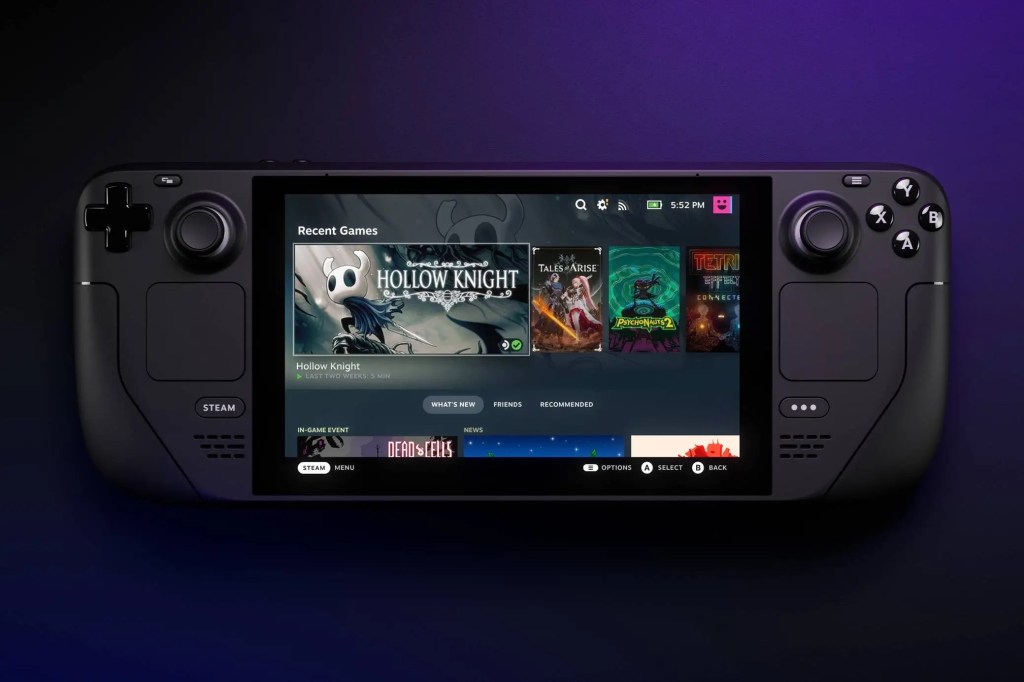
We gave the OG Steam Deck four stars back in 2022, singing the praises of its astounding performance, intuitive UI and endlessly customisable controls. A year later the Steam Deck OLED earned the same score. In the time since Valve has pushed out many software updates to iron out kinks, add new features, and generally streamline gamers’ play experience.
That said, there’s still room to improve. Look no further than the following suggestions of what we’d like to see in a successor to work out what would have raised that score to the full five stars.
A better OLED display
The Steam Deck OLED’s 7.4in screen was larger, brighter, more colourful and had a faster refresh rate than the original model’s 7in LCD. It also added HDR support, something that still eludes a lot of Windows-based handhelds. But it stuck to the same 1280×800 resolution, on account of the underlying hardware not being any faster.
A Steam Deck 2 should be OLED from the off – no basic LCD version please – with at least a Full HD resolution and 1-120Hz variable refresh rate. That would allow it to play play games smoothly at less than 60fps or give less demanding titles a smoother appearance. Naturally the upgraded hardware would have no trouble rendering the extra pixels.
More (and faster) connectivity
Both the original Steam Deck and the Deck OLED have a single USB-C port, used for both charging and connecting peripherals. It basically created a cottage industry of docks, adapters and accessories for anyone wanting to keep their Deck juiced up while also having a controller, headset, keyboard or other gear plugged in. The Steam Deck 2 needs to double up on ports so owners don’t need to lug extra dongles around, and if they could handle faster transfer speeds that would be a big win.
The same goes for the microSD card slot; it’s great to be able to add extra capacity without opening the Steam Deck up and replacing its sole M.2 SSD, but speeds aren’t fast enough for modern games. If the Steam Deck 2 used the same microSD Express slot as the Nintendo Switch 2, you’d be able to run newer titles off the expandable storage rather than have to regularly make room on the internal SSD.
Longer battery life
The Steam Deck OLED’s 50wHr battery pack helped deliver a sizeable 30-50% battery life improvement over the original model – but when you’re absorbed in a new game, the last thing you want to see is a low battery alert. With some rivals finding room for 80Whr cells, I’d like to see Valve follow suit. A bigger battery, combined with SteamOS’s fantastic power efficiency and some low-level CPU tweaks, could make for an impressively long-lasting handheld.
A sensible price
I don’t care if we have to wait two or even three more years for a Steam Deck 2, if it means Valve can sell it at a price the average gamer can actually afford. Outlandish memory and SSD storage prices have made the new crop of Intel Arc G3 handhelds virtually unobtainable for most people; given value for money was such a key part of the original Steam Deck’s success, its replacement absolutely cannot cost as much as a gaming laptop.


 Tom Morgan-Freelander
Deputy Editor
Tom Morgan-Freelander
Deputy Editor